物理化学学报 >> 2024, Vol. 40 >> Issue (7): 2306029.doi: 10.3866/PKU.WHXB202306029
所属专题: 电化学前沿
金属纳米晶体电催化剂的电化学合成:原理、应用与挑战
赵路甜1, 郭杨格1, 罗柳轩1, 闫晓晖1, 沈水云1,2,*( ), 章俊良1,2
- 1 上海交通大学机械与动力工程学院, 燃料电池研究所, 上海 200240
2 上海交通大学, 能源与机械工程教育部重点实验室, 上海 200240
-
收稿日期:2023-06-14修回日期:2023-07-30录用日期:2023-08-23发布日期:2023-12-01 -
通讯作者:Email: shuiyun_shen@sjtu.edu.cn (沈水云) -
基金资助:国家重点研发计划(2021YFB4001301); 上海交通大学“深蓝计划”基金(SL2021ZD105)
Electrochemical Synthesis for Metallic Nanocrystal Electrocatalysts: Principle, Application and Challenge
Lutian Zhao1, Yangge Guo1, Liuxuan Luo1, Xiaohui Yan1, Shuiyun Shen1,2,*(), Junliang Zhang1,2
- 1 Institute of Fuel Cells, School of Mechanical Engineering, Shanghai Jiao Tong University, Shanghai 200240, China
2 MOE Key Laboratory of Power & Machinery Engineering, Shanghai Jiao Tong University, Shanghai 200240, China
-
Received:2023-06-14Revised:2023-07-30Accepted:2023-08-23Published:2023-12-01 -
Contact:Email: shuiyun_shen@sjtu.edu.cn (Shuiyun Shen) -
Supported by:the National Key Research and Development Program of China(2021YFB4001301); the Oceanic Interdisciplinary Program of Shanghai Jiao Tong University(SL2021ZD105)

摘要:
金属纳米晶体催化剂由于其独特的电子性质,在电化学能源转化反应中表现出优异的催化性能。为了提升催化剂的活性和耐久性,需要精确调控其晶体结构和形貌。然而,传统的制备方法往往需要严苛的条件,如高温、高压和特定的有机物,以控制晶体的生成和生长过程。这限制了能够合成的金属基催化剂的种类,并导致清洗复杂和有机物残留的问题。电化学方法通过电化学响应获取体系过程信息,并可以通过调控参数来调节晶体的生长,特别是非水体系的电化学方法为活泼过渡金属催化剂的合成提供了可行的途径。然而,电化学方法对所处体系的变化十分敏感,这使得从小面积电极制备催化剂扩展到电极级别的催化层制备面临严峻挑战,因为这一转变会导致电化学机理和由此带来的合成方法条件的变化。本文基于晶体生长机理,探讨了电化学制备金属晶体的可行性,并综述了电化学沉积方法制备纳米级金属电催化剂的研究。最后,对电化学制备纳米级金属晶体催化剂面临的挑战进行了分析,并提出了实现更广泛应用的建议。通过电化学方法制备金属纳米晶体催化剂在提高制备的可控性、减少有机物残留等方面具有潜在的优势,但也需要克服相关技术和方法上的难题,以实现其在能源转化等领域的应用。
引用本文
赵路甜, 郭杨格, 罗柳轩, 闫晓晖, 沈水云, 章俊良. 金属纳米晶体电催化剂的电化学合成:原理、应用与挑战[J]. 物理化学学报, 2024, 40(7), 2306029. doi: 10.3866/PKU.WHXB202306029
Lutian Zhao, Yangge Guo, Liuxuan Luo, Xiaohui Yan, Shuiyun Shen, Junliang Zhang. Electrochemical Synthesis for Metallic Nanocrystal Electrocatalysts: Principle, Application and Challenge[J]. Acta Phys. -Chim. Sin. 2024, 40(7), 2306029. doi: 10.3866/PKU.WHXB202306029
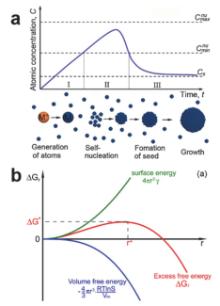
图1
"
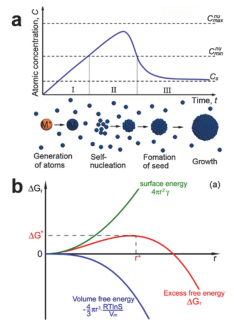
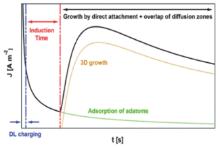
图2
"
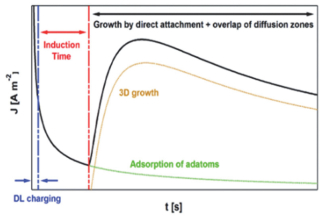
图3
"
图4
"
图5
"
图6
"
图7
"
图8
"
图9
"
| 1 |
doi: 10.1002/adma.202004654 |
| 2 |
doi: 10.1126/sciadv.abf3989 |
| 3 |
doi: 10.1016/j.mattod.2020.09.024 |
| 4 |
doi: 10.1126/sciadv.aap9252 |
| 5 |
doi: 10.1002/fuce.2021701012 |
| 6 |
doi: 10.1038/s41526-022-00242-3 |
| 7 |
doi: 10.1038/s41467-022-33145-8 |
| 8 |
doi: 10.1038/s41467-021-23115-x |
| 9 |
doi: 10.1038/s41467-023-37382-3 |
| 10 |
doi: 10.1007/s11708-022-0828-6 |
| 11 |
doi: 10.1007/s11708-023-0861-0 |
| 12 |
doi: 10.1021/acscatal.8b00689 |
| 13 |
doi: 10.1021/acs.chemrev.7b00488 |
| 14 |
doi: 10.1002/adma.201802234 |
| 15 |
doi: 10.1039/c7ee02444d |
| 16 |
doi: 10.1016/j.xcrp.2023.101427 |
| 17 |
doi: 10.1002/sstr.202200281 |
| 18 |
doi: 10.1021/acscatal.0c04646 |
| 19 |
doi: 10.1038/s41467-020-14980-z |
| 20 |
doi: 10.1038/s41560-020-00710-8 |
| 21 |
doi: 10.1002/anie.201710556 |
| 22 |
doi: 10.1021/acs.chemrev.9b00248 |
| 23 |
doi: 10.1016/j.joule.2021.05.005 |
| 24 |
doi: 10.1021/acscatal.8b02712 |
| 25 |
doi: 10.1002/smsc.202100011 |
| 26 |
doi: 10.1002/adfm.202110036 |
| 27 |
doi: 10.1038/s41929-020-00525-6 |
| 28 |
doi: 10.1038/s41570-019-0096-0 |
| 29 |
doi: 10.1021/acscatal.9b04746 |
| 30 |
doi: 10.1016/j.ccr.2021.214340 |
| 31 |
doi: 10.1002/smtd.202100736 |
| 32 |
doi: 10.1002/smtd.202200790 |
| 33 |
doi: 10.1038/s41929-023-00951-2 |
| 34 |
doi: 10.1016/j.nanoen.2022.107124 |
| 35 |
doi: 10.1016/j.jhazmat.2021.126628 |
| 36 |
doi: 10.1002/adma.201004377 |
| 37 |
|
|
万昭敏; 魏星; 彭伟; 尹征磊; 肖丽; 庄林. 物理化学学报, 2016, 32, 1467.
doi: 10.3866/PKU.WHXB201604144 |
|
| 38 |
doi: 10.1126/science.aad4998 |
| 39 |
doi: 10.1002/aenm.202100265 |
| 40 |
doi: 10.1016/j.chempr.2019.07.011 |
| 41 |
doi: 10.1039/c5cs00958h |
| 42 |
doi: 10.1007/s11708-017-0487-1 |
| 43 |
doi: 10.1021/acs.chemrev.5b00703 |
| 44 |
doi: 10.1002/smll.201002022 |
| 45 |
doi: 10.1002/ange.200603068 |
| 46 |
doi: 10.1039/c2cs35289c |
| 47 |
doi: 10.1016/j.nantod.2016.04.003 |
| 48 |
doi: 10.1016/j.nantod.2008.10.010 |
| 49 |
doi: 10.1002/anie.201402986 |
| 50 |
doi: 10.1002/anie.200802248 |
| 51 |
doi: 10.1038/nmat1957 |
| 52 |
doi: 10.1021/jz401269w |
| 53 |
doi: 10.1038/cgt.2016.38 |
| 54 |
doi: 10.1039/c7nr03889e |
| 55 |
doi: 10.1021/acscatal.6b00714 |
| 56 |
doi: 10.1016/j.nanoen.2016.02.030 |
| 57 |
doi: 10.1002/smll.200701295 |
| 58 |
doi: 10.1016/j.jechem.2019.05.006 |
| 59 |
doi: 10.1021/ja108948z |
| 60 |
doi: 10.1039/c7nr08529j |
| 61 |
doi: 10.1039/c4sc02792b |
| 62 |
doi: 10.1016/0022-0728(84)80207-7 |
| 63 |
doi: 10.1016/j.electacta.2016.04.094 |
| 64 |
doi: 10.1016/0022-0728(84)80208-9 |
| 65 |
doi: 10.1007/s11708-017-0466-6 |
| 66 |
doi: 10.1007/s11708-018-0586-7 |
| 67 |
doi: 10.1007/s11708-017-0493-3 |
| 68 |
doi: 10.1007/s11708-017-0495-1 |
| 69 |
doi: 10.1021/acsami.6b15725 |
| 70 |
doi: 10.1002/anie.201806300 |
| 71 |
doi: 10.1016/j.nanoen.2021.105940 |
| 72 |
doi: 10.1016/S1872-2067(08)60075-3 |
| 73 |
doi: 10.1016/0022-0728(87)80260-7 |
| 74 |
doi: 10.1016/0169-4332(93)90240-C |
| 75 |
doi: 10.1149/1.2100636 |
| 76 |
doi: 10.1007/BF00247782 |
| 77 |
doi: 10.1002/er.6155 |
| 78 |
doi: 10.1002/smtd.201900050 |
| 79 |
doi: 10.1038/nmat2976 |
| 80 |
doi: 10.1038/s41929-022-00796-1 |
| 81 |
doi: 10.1038/nchem.1412 |
| 82 |
doi: 10.1038/ncomms15802 |
| 83 |
doi: 10.1038/s41929-019-0364-x |
| 84 |
doi: 10.1007/s11708-017-0491-5 |
| 85 |
doi: 10.1016/j.apsusc.2019.144472 |
| 86 |
doi: 10.1021/ja0508828 |
| 87 |
doi: 10.1039/d0ta03475d |
| 88 |
doi: 10.1016/j.electacta.2017.05.039 |
| 89 |
doi: 10.1016/j.nanoms.2019.11.005 |
| 90 |
doi: 10.1126/science.1140484 |
| 91 |
doi: 10.1016/j.joule.2020.10.002 |
| 92 |
doi: 10.1002/anie.201310597 |
| 93 |
doi: 10.1039/b814058h |
| 94 |
doi: 10.1021/ja102177r |
| 95 |
doi: 10.1039/b819751b |
| 96 |
doi: 10.1021/acs.cgd.8b00892 |
| 97 |
doi: 10.1016/j.electacta.2010.06.045 |
| 98 |
doi: 10.1039/b609164d |
| 99 |
doi: 10.1002/anie.200905413 |
| 100 |
doi: 10.1021/jacs.5b13473 |
| 101 |
doi: 10.1021/ja2042029 |
| 102 |
doi: 10.1021/ja106394k |
| 103 |
doi: 10.1021/ja100571h |
| 104 |
doi: 10.1021/jacs.1c00880 |
| 105 |
doi: 10.1021/acs.jpclett.0c01261 |
| 106 |
doi: 10.1039/d2nr01900k |
| 107 |
doi: 10.1021/jacs.0c12478 |
| 108 |
doi: 10.1016/j.apcatb.2021.120119 |
| 109 |
doi: 10.1021/acsami.8b19052 |
| 110 |
doi: 10.1021/cm048887b |
| 111 |
doi: 10.1039/c6sc03194c |
| 112 |
doi: 10.1002/smll.202100129 |
| 113 |
doi: 10.1002/anie.201702430 |
| 114 |
doi: 10.1021/acsenergylett.8b01206 |
| 115 |
doi: 10.1002/cssc.201702138 |
| 116 |
doi: 10.1002/adma.202003414 |
| 117 |
doi: 10.1002/anie.201700388 |
| 118 |
doi: 10.1016/j.jallcom.2021.163103 |
| 119 |
doi: 10.1016/j.jpowsour.2015.09.027 |
| 120 |
doi: 10.1016/j.jcis.2019.09.090 |
| 121 |
doi: 10.1021/acsanm.1c00134 |
| 122 |
doi: 10.1039/c7ta01791j |
| 123 |
doi: 10.1016/j.electacta.2008.02.024 |
| 124 |
doi: 10.1021/ja904225q |
| 125 |
doi: 10.1016/j.jelechem.2022.116022 |
| 126 |
doi: 10.1016/j.coelec.2023.101289 |
| 127 |
doi: 10.1149/2.0281501jes |
| 128 |
doi: 10.1016/0013-4686(95)00321-5 |
| 129 |
doi: 10.1021/jacs.7b06846 |
| 130 |
doi: 10.1002/smll.201600027 |
| 131 |
doi: 10.1021/acsami.8b07742 |
| 132 |
doi: 10.1021/ja403041g |
| 133 |
doi: 10.1021/ja300756y |
| 134 |
doi: 10.1021/acs.nanolett.7b01510 |
| 135 |
doi: 10.1021/ja501293x |
| 136 |
doi: 10.1002/adma.201502725 |
| 137 |
doi: 10.1002/adfm.201001138 |
| 138 |
doi: 10.1016/0925-8388(93)90370-3 |
| 139 |
doi: 10.1016/S0013-4686(99)00434-X |
| 140 |
doi: 10.1016/S0022-0728(98)00283-6 |
| 141 |
doi: 10.1039/d0cp03277h |
| 142 |
doi: 10.1007/s10008-016-3314-4 |
| 143 |
doi: 10.1021/jp805051p |
| 144 |
doi: 10.1021/ja00469a029‚ |
| 145 |
doi: 10.1126/science.1191778 |
| 146 |
doi: 10.1038/s41467-017-00421-x |
| 147 |
doi: 10.1038/s41467-019-12851-w |
| 148 |
doi: 10.1016/s1872-2067(21)63860-3 |
| 149 |
doi: 10.1016/j.apcatb.2022.121831 |
| 150 |
doi: 10.1016/j.jallcom.2015.09.137 |
| 151 |
doi: 10.1021/cr1003248 |
| 152 |
doi: 10.1016/j.molliq.2019.112038 |
| 153 |
doi: 10.1021/ar700221n |
| 154 |
doi: 10.1016/s1002-0721(14)60520-2 |
| 155 |
doi: 10.1002/cphc.201500713 |
| 156 |
doi: 10.1016/j.trechm.2019.03.003 |
| 157 |
doi: 10.1149/2.1751712jes |
| 158 |
doi: 10.1039/c2cs35178a |
| 159 |
doi: 10.1002/adfm.202011102 |
| 160 |
doi: 10.1016/j.matlet.2011.08.003 |
| 161 |
doi: 10.1016/j.apsusc.2011.05.106 |
| 162 |
doi: 10.1021/ja048266j |
| 163 |
doi: 10.1039/c4ta05302h |
| 164 |
doi: 10.1021/acsaem.7b00177 |
| 165 |
doi: 10.1016/j.ijhydene.2019.09.104 |
| 166 |
doi: 10.1039/c6ta10812a |
| 167 |
doi: 10.1039/d1ta05515a |
| 168 |
doi: 10.1179/174591908x327581 |
| 169 |
doi: 10.1016/j.electacta.2016.11.101 |
| 170 |
doi: 10.1021/acs.jpcc.5b03580 |
| 171 |
doi: 10.1021/jp209743h |
| 172 |
doi: 10.1016/j.electacta.2019.134677 |
| 173 |
doi: 10.1016/j.jpowsour.2018.07.102 |
| 174 |
doi: 10.1016/j.ijhydene.2018.06.188 |
| [1] | 程康娟, 刘春晓, 王友鹏, 江秋, 郑婷婷, 李旭, 夏川. 用于电合成过氧化氢的贵金属催化剂和反应器设计[J]. 物理化学学报, 2025, 41(10): 100112 - . |
| [2] | 刘震震,石勇,李春艳,肇启东,李新勇. 电化学合成Cu3(BTC)2-MOF及用于NH3选择性催化还原NO[J]. 物理化学学报, 2015, 31(12): 2366 -2374 . |
|
||