物理化学学报 >> 2025, Vol. 41 >> Issue (5): 100039.doi: 10.1016/j.actphy.2024.100039
所属专题: 光催化中的S型异质结
微观结构调控的g-C3N4在光催化NO转化中的最新进展:吸附/活化位点的关键作用
王慧1, LabidiAbdelkader1, 任梦涵1, ShaikFeroz2, 王传义1,*( )
)
- 1 陕西科技大学环境科学与工程学院, 西安 710021
2 Department of Mechanical Engineering, Prince Mohammad Bin Fahd University, Al Khobar, 31952, Kingdom of Saudi Arabia
-
收稿日期:2024-11-06修回日期:2024-12-03录用日期:2024-12-06发布日期:2025-04-18 -
通讯作者:Email:wangchuanyi@sust.edu.cn; Tel.: +86-29-86131724 (王传义) -
基金资助:国家自然科学基金(52161145409); 国家自然科学基金(21976116); 国家外国专家局(“一带一路”创新人才交流外国专家项目)(2023041004L); 高端外国专家项目(G2023041021L); 德国洪堡基金会(集团联动项目)
Recent Progress of Microstructure-Regulated g-C3N4 in Photocatalytic NO Conversion: The Pivotal Roles of Adsorption/Activation Sites
Hui Wang1, Abdelkader Labidi1, Menghan Ren1, Feroz Shaik2, Chuanyi Wang1,*()
- 1 School of Environmental Science and Engineering, Shaanxi University of Science and Technology, Xi'an 710021, China
2 Department of Mechanical Engineering, Prince Mohammad Bin Fahd University, Al Khobar, 31952, Kingdom of Saudi Arabia
-
Received:2024-11-06Revised:2024-12-03Accepted:2024-12-06Published:2025-04-18 -
Contact:Email: wangchuanyi@sust.edu.cn; Tel.: +86-29-86131724 (Chuanyi Wang) -
Supported by:the National Natural Science Foundation of China(52161145409); the National Natural Science Foundation of China(21976116); SAFEA of China ("Belt and Road" Innovative Talent Exchange Foreign Expert Project)(2023041004L); High-end Foreign Expert Project(G2023041021L); Alexander-von-Humboldt Foundation of Germany (Group-Linkage Program)

摘要:
光催化一氧化氮(NO)转化技术具有高效、经济、环保的特点,可以使用g-C3N4去除NO。通过微观结构调控在g-C3N4表面引入新的吸附位点可以改变g-C3N4与气体分子之间的构效关系,从而提高光催化NO转化活性并抑制NO2的产生。然而,很少有综述文章关注g-C3N4基材料微观结构变化对NO和O2的吸附和活化的微观影响。这对NO转化领域的材料设计工作以及从根本上提高NO转化活性和选择性的策略具有重要指导意义。因此,我们的工作系统地总结了通过微观结构调控引入吸附和活化位点的策略,并强调了这些位点在光催化NO转化过程中的作用。目的是阐明吸附和活化位点对吸附行为的影响以及这些位点与反应路径之间的相关性。最后,介绍了提高g-C3N4在光催化NO转化领域的吸附和活化水平的发展趋势和未来前景,以期为g-C3N4基光催化材料的开发和实际应用提供重要参考。
引用本文
王慧, LabidiAbdelkader, 任梦涵, ShaikFeroz, 王传义. 微观结构调控的g-C3N4在光催化NO转化中的最新进展:吸附/活化位点的关键作用[J]. 物理化学学报, 2025, 41(5), 100039. doi: 10.1016/j.actphy.2024.100039
Hui Wang, Abdelkader Labidi, Menghan Ren, Feroz Shaik, Chuanyi Wang. Recent Progress of Microstructure-Regulated g-C3N4 in Photocatalytic NO Conversion: The Pivotal Roles of Adsorption/Activation Sites[J]. Acta Phys. -Chim. Sin. 2025, 41(5), 100039. doi: 10.1016/j.actphy.2024.100039
图1
"
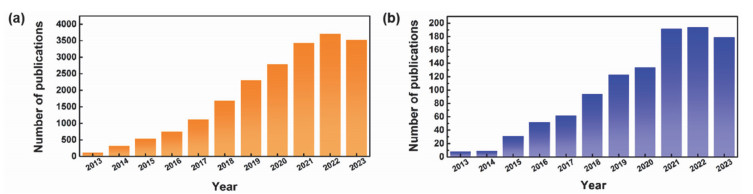
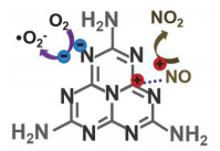
图2
"
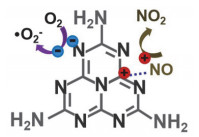
表1
"
| No. | Microstructure control method | Type | Photocatalyst amount (g) | Light source | Initial Conc. | Conv. (%) | NO2 Conc. | Ref. |
| 1 | Vacancy engineering | N2C vacancy | 0.1 | 150 W commercial tungsten halogen lamp equipped with a 420 nm cut-off filter | 600 ppb | 41.84 | 77.8 ppb | [ |
| 2 | N3C vacancy | 0.1 | 150 W tungsten halogen lamp | – | 57.1 | 82.15 ppb | [ | |
| 3 | N3C vacancy | 0.2 | 30 W LED (Visible region) | 600 ppb | 66.7 | 26.8 ppb | [ | |
| 4 | N3C vacancy | 0.2 | LED lamp | 600 ppb | 40.3 | 87.7 ppb | [ | |
| 5 | C vacancy | 0.2 | LED lamp (λ ≥ 448 nm) | 600 ppb | 47.0 | 30 ppb | [ | |
| 6 | non-intrinsic O vacancies | 0.1 | 300 W xenon lamp equipped with a cut-off filter (λ>420 nm) | 500 ppb | 47.7 | 25 ppb | [ | |
| 7 | Doping | Sulfur doping | 0.2 | 150 W visible light LED lamp (λ > 400 nm) | 600 ppb | 53 | 58.86 ppb | [ |
| 8 | Boron doping | 0.1 | 500 W Xe lamp | 600 ppb | 54 | – | [ | |
| 9 | Sulfur doping | 0.025 | LED array (450 nm centre wavelength) | 1 ppm | 50 | 200 ppb | [ | |
| 10 | C self doping | 0.2 | 150 W commercial tungsten halogen lamp | 550 ppb | 56.77 | – | [ | |
| 11 | Sulfur doping | 0.2 | Xe lamp | 500 ppb | 78.0 | – | [ | |
| 12 | Na+, Li+ interlayer doping | 0.2 | 30 W visible LED lamp | 600 ppb | 82 | 3.7 ppb | [ | |
| 13 | Zn interlayer doping | 0.1 | 150 W metal halide lamp (λ greater than 420 nm) | 600 ppb | 49 | 5.88 ppb | [ | |
| 14 | Ca interlayer doping | 0.2 | 150 W commercial tungsten halogen lamp | 500 ppb | 54.78 | – | [ | |
| 15 | Sr cavity filling | 0.05 | xenon lamp with a 420 nm filter | 600 ppb | 55 | 66 ppb | [ | |
| 16 | Functional group modification | Oxygenated functional group | 0.2 | 150 W commercial tungsten halogen lamp equipped with a UV light cutoff filter (420 nm) | 500 ppb | 45.5 | – | [ |
| 17 | Cyano and hydroxyl groups | 0.05 | 300 W xenon lamp equipped with a cut-off filter (λ > 420 nm) | 600 ppb | 46.2 | 77.61 ppb | [ | |
| 18 | hydroxyl groups | 0.2 | Visible light LED lamp (λ ≥ 420 nm) | 600 ppb | 65.0 | 117 ppb | [ | |
| 19 | Oxygenated functional group | 0.1 | 150 W commercial tungsten halogen lamp | 500 ppb | 50.4 | – | [ | |
| 20 | Cocatalyst loading | SrSO4 loading | 0.05 | 30 W LED lamp | 600 ppb | 67.5 | 85.05 ppb | [ |
| 21 | CaCO3 loading | 0.2 | LED lamp (λ > 420 nm) | 550 ppb | 51.18 | 107.5 ppb | [ | |
| 22 | ZIF-67/CoOOH loading | 0.2 | 150 W metal halide lamp with a 420 nm cutoff | 500 ppb | 52.5 | 0 | [ | |
| 23 | Au loading | 0.2 | 150 W commercial halogen tungsten lamp | 500 ppb | 41.0 | 10.25 ppb | [ | |
| 24 | Construction of and heterojunctions | (BiO)2CO3@ g-C3N4 heterojunction | – | 150 W commercial tungsten halogen lamp | – | 53.28 | – | [ |
| 25 | g-C3N4/BO0.2N0.8 heterojunction | 0.2 | Metal halide lamp (150 W) was used as the light source with a visible light filter (λ > 420 nm). | 500 ppb | 30.2 | 4.53 ppb | [ | |
| 26 | Pd1/g-C3N4-UiO-66-NH2 heterojunction | 10–40 | 300 W Xenon lamp | 40–70 ppm | 93.91 | 1.02 ppm | [ | |
| 27 | Graphene quantum dots/g-C3N4 | 0.08 | 300 W Xe lamp | 600 ppb | 90.0 | 140.4 ppb | [ | |
| 28 | UiO-67/g-C3N4 S- scheme heterojunction | 0.2 | Tungsten halogen lamp (150 W) | 500 ppb | 60.4 | – | [ | |
| 29 | CeO2/g-C3N4 S- scheme heterojunction | 0.05 | 300 W Xe lamp | 600 ppb | 73.8 | 96 ppb | [ |
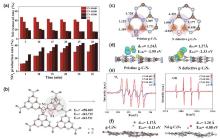
图3
"
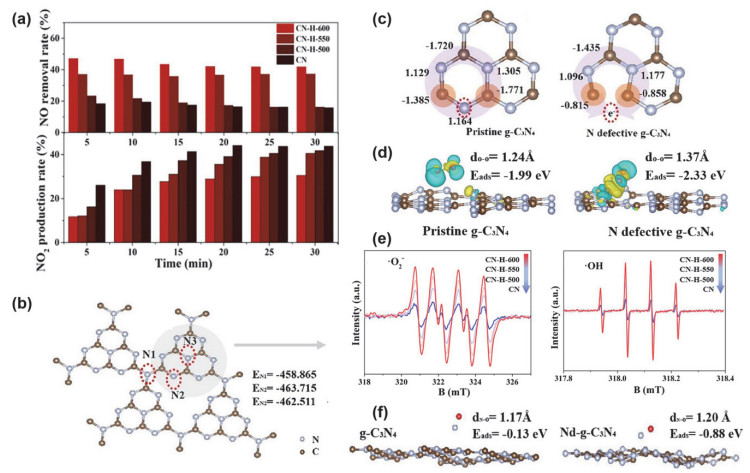
图4
"
图5
"
图6
"
图7
"
图8
"
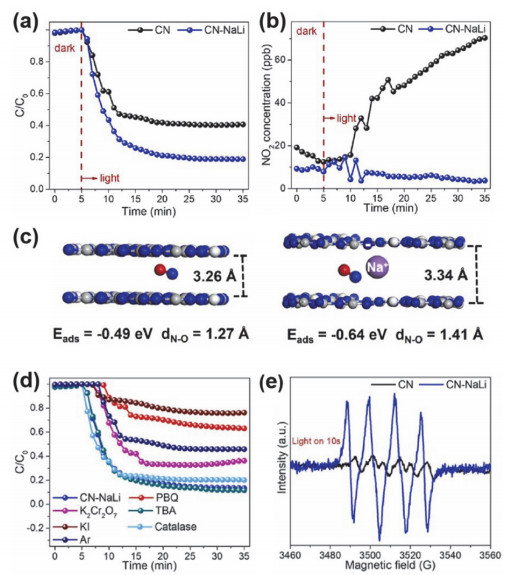
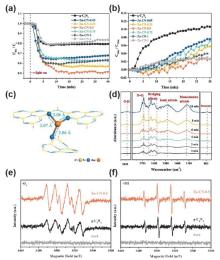
图9
"
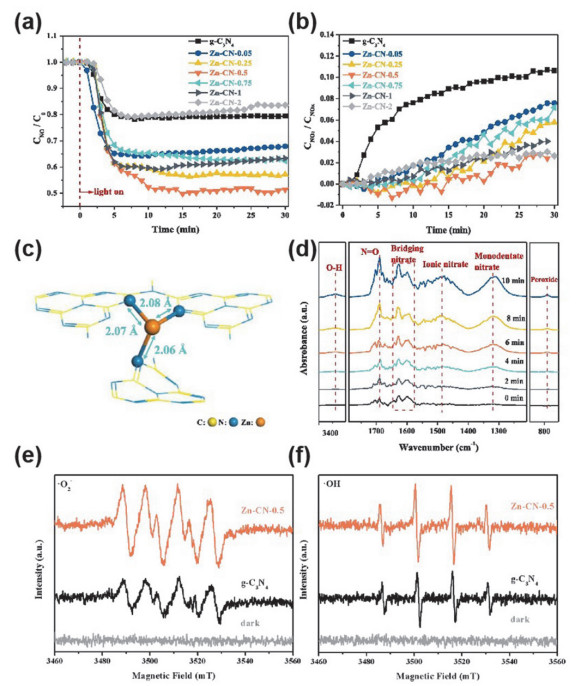
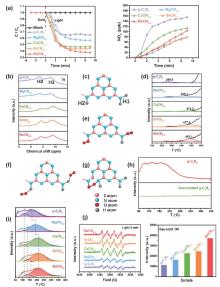
图10
"
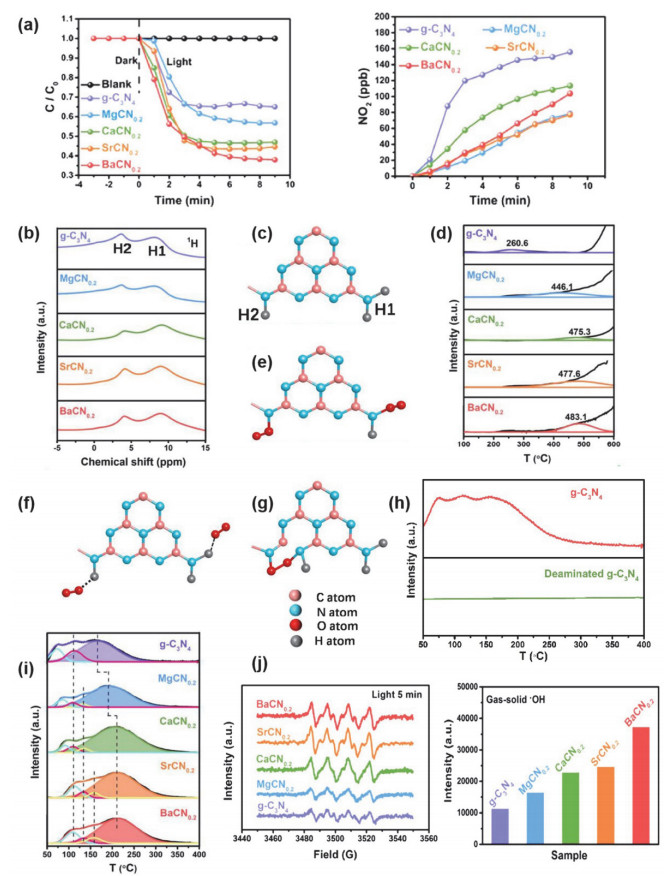
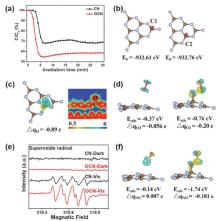
图11
"
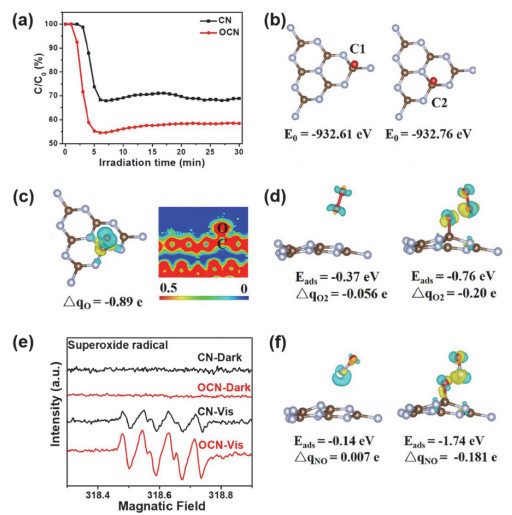
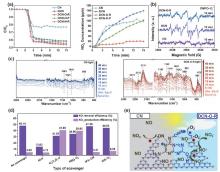
图12
"
图13
"
图14
"
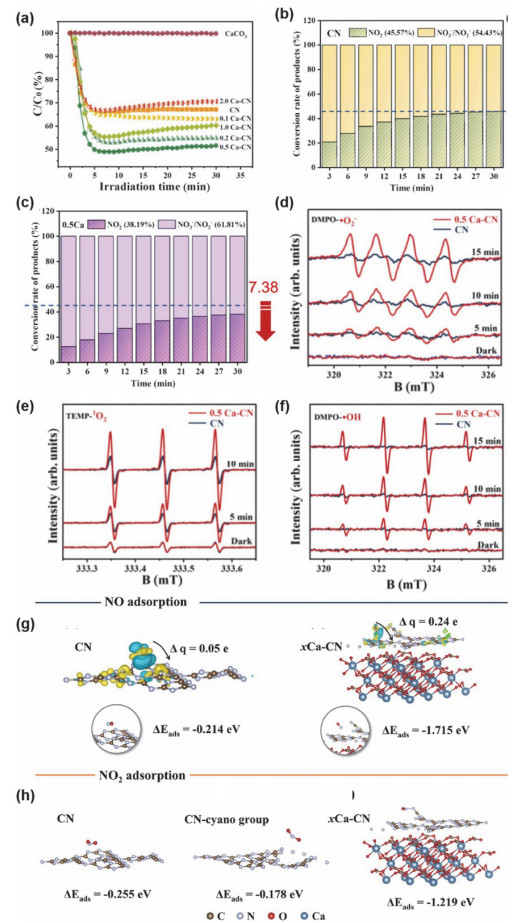
图15
"
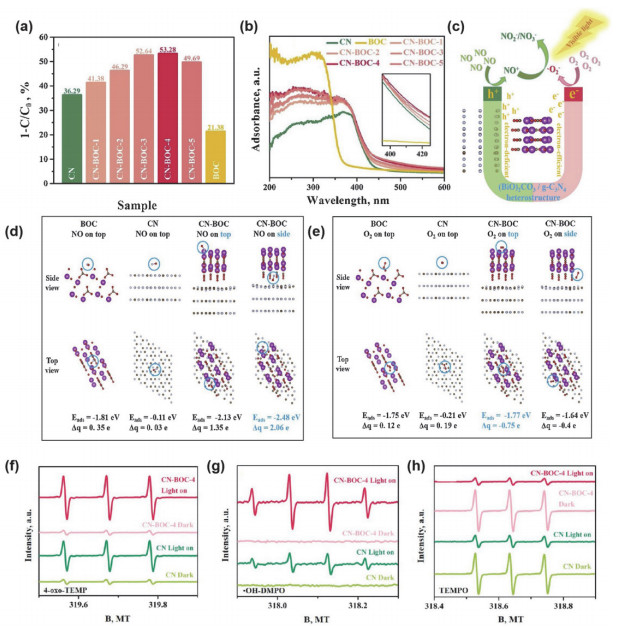
图16
"
图17
"
| 1 |
doi: 10.1016/j.tox.2004.02.005 |
| 2 |
doi: 10.1016/j.apcatb.2015.11.013 |
| 3 |
doi: 10.1021/acs.iecr.5b02062 |
| 4 |
doi: 10.1016/j.apenergy.2009.03.022 |
| 5 |
doi: 10.1016/j.jhazmat.2007.03.023 |
| 6 |
doi: 10.1126/science.aaa3145 |
| 7 |
doi: 10.1021/es4025595 |
| 8 |
doi: 10.1021/jp200488p |
| 9 |
doi: 10.1021/jp056473f |
| 10 |
doi: 10.1016/S1872-2067(16)62573-1 |
| 11 |
doi: 10.1016/j.jphotochemrev.2012.08.002 |
| 12 |
doi: 10.1016/j.apcatb.2015.09.046 |
| 13 |
doi: 10.1016/j.apcatb.2016.06.027 |
| 14 |
doi: 10.1016/j.apcatb.2014.12.050 |
| 15 |
doi: 10.1016/j.apcatb.2013.09.042 |
| 16 |
doi: 10.1021/ja1068596 |
| 17 |
doi: 10.1006/jcat.2000.3076 |
| 18 |
doi: 10.1021/acsomega.2c02405 |
| 19 |
doi: 10.1016/j.pecs.2023.101098 |
| 20 |
doi: 10.1039/d1cy01776d |
| 21 |
doi: 10.1016/j.apcatb.2024.123734 |
| 22 |
doi: 10.1016/j.apcatb.2022.122238 |
| 23 |
doi: 10.1002/anie.201705772 |
| 24 |
doi: 10.1007/s12274-022-4203-z |
| 25 |
doi: 10.1007/s10934-022-01197-2 |
| 26 |
doi: 10.1016/j.cej.2020.126540 |
| 27 |
doi: 10.1016/j.apcatb.2022.121216 |
| 28 |
doi: 10.1016/j.ijhydene.2021.11.252 |
| 29 |
doi: 10.1002/sstr.202200371 |
| 30 |
doi: 10.1016/j.mattod.2020.09.004 |
| 31 |
doi: 10.1016/j.apcatb.2022.121521 |
| 32 |
doi: 10.1016/j.apcatb.2020.118700 |
| 33 |
doi: 10.1039/d2gc02748h |
| 34 |
doi: 10.1016/j.jiec.2021.09.033 |
| 35 |
doi: 10.1016/j.apsusc.2017.06.073 |
| 36 |
doi: 10.1016/j.apcatb.2017.07.010 |
| 37 |
doi: 10.1016/j.cjche.2020.02.020 |
| 38 |
doi: 10.1016/j.apcatb.2020.119481 |
| 39 |
doi: 10.1038/s41586-021-04229-0 |
| 40 |
doi: 10.1016/j.mtphys.2023.101080 |
| 41 |
doi: 10.1016/j.arabjc.2023.104542 |
| 42 |
doi: 10.1016/j.cej.2019.04.003 |
| 43 |
doi: 10.1016/j.apsusc.2022.153104 |
| 44 |
doi: 10.1016/j.jallcom.2022.163806 |
| 45 |
doi: 10.1021/acs.langmuir.2c00371 |
| 46 |
doi: 10.1016/j.envpol.2021.117510 |
| 47 |
doi: 10.1021/acsami.8b21987 |
| 48 |
doi: 10.1016/j.apsusc.2019.144199 |
| 49 |
doi: 10.1039/d1en00937k |
| 50 |
doi: 10.1016/j.jallcom.2022.164371 |
| 51 |
doi: 10.1016/j.cej.2020.125347 |
| 52 |
doi: 10.1016/j.vacuum.2020.109293 |
| 53 |
doi: 10.1016/j.jphotochem.2023.114965 |
| 54 |
doi: 10.1016/j.apcatb.2023.123604 |
| 55 |
doi: 10.1016/j.ccr.2021.213947 |
| 56 |
doi: 10.1016/j.jece.2023.110164 |
| 57 |
doi: 10.1016/j.nanoen.2022.108032 |
| 58 |
doi: 10.1007/s10311-022-01437-6 |
| 59 |
doi: 10.1002/adma.201500033 |
| 60 |
doi: 10.1016/j.jcis.2019.10.088 |
| 61 |
doi: 10.1021/acs.langmuir.2c03035 |
| 62 |
doi: 10.1016/j.chemosphere.2021.132098 |
| 63 |
doi: 10.1016/j.apcatb.2018.03.054 |
| 64 |
doi: 10.1016/j.apcatb.2018.08.030 |
| 65 |
doi: 10.3866/PKU.WHXB202209037 |
| 66 |
doi: 10.1021/acs.energyfuels.1c00624 |
| 67 |
doi: 10.1016/j.cej.2019.122282 |
| 68 |
doi: 10.1002/aenm.202004001 |
| 69 |
doi: 10.1016/j.mtphys.2024.101487 |
| 70 |
doi: 10.1016/j.cej.2020.124421 |
| 71 |
doi: 10.1016/j.apcatb.2019.118281 |
| 72 |
doi: 10.1016/j.nanoen.2023.109197 |
| 73 |
doi: 10.1016/j.chemosphere.2023.137813 |
| 74 |
doi: 10.3390/ma13133038 |
| 75 |
doi: 10.1039/C8CY0088 |
| 76 |
doi: 10.1016/j.apcatb.2023.122522 |
| 77 |
doi: 10.1016/j.apcatb.2022.121719 |
| 78 |
doi: 10.1016/j.cej.2022.140084 |
| 79 |
doi: 10.1016/j.apcatb.2018.08.019 |
| 80 |
doi: 10.1016/j.apcatb.2020.119007 |
| 81 |
doi: 10.1016/j.cej.2019.03.182 |
| 82 |
doi: 10.3390/catal13111433 |
| 83 |
doi: 10.1016/j.seppur.2024.128695 |
| 84 |
doi: 10.1016/j.apcatb.2018.09.078 |
| 85 |
doi: 10.1016/j.apcatb.2019.01.013 |
| 86 |
doi: 10.1016/j.jhazmat.2022.130040 |
| 87 |
doi: 10.1016/j.jallcom.2021.160318 |
| 88 |
doi: 10.1016/j.cej.2019.122184 |
| 89 |
doi: 10.1016/j.apcatb.2019.118251 |
| 90 |
doi: 10.1021/acsami.0c09216 |
| 91 |
doi: 10.1016/j.cej.2023.146768 |
| 92 |
doi: 10.1016/j.carbon.2022.02.004 |
| 93 |
doi: 10.1016/j.jcis.2024.02.221 |
| 94 |
doi: 10.1016/j.jallcom.2022.167819 |
| 95 |
doi: 10.1016/j.apsusc.2019.143994 |
| 96 |
doi: 10.1016/j.cej.2018.09.208 |
| 97 |
doi: 10.1016/j.jechem.2020.05.001 |
| 98 |
doi: 10.1021/acs.energyfuels.4c00160 |
| 99 |
doi: 10.1002/adfm.202315426 |
| 100 |
doi: 10.19728/j.issn1672-6634.2023080011 |
| 101 |
doi: 10.3866/PKU.WHXB201905080 |
| 102 |
doi: 10.1039/c9cy01030k |
| 103 |
doi: 10.1021/acs.jpclett.3c03621 |
| 104 |
doi: 10.1016/j.cjsc.2023.100202 |
| 105 |
doi: 10.1021/jacs.6b11878 |
| 106 |
doi: 10.1039/C9TA00339H |
| 107 |
doi: 10.1039/C8NJ02991A |
| 108 |
doi: 10.1002/smll.202300109 |
| 109 |
doi: 10.1016/j.apsusc.2021.151299 |
| 110 |
doi: 10.1063/5.0029374 |
| 111 |
doi: 10.1039/D4QI00255E |
| 112 |
doi: 10.19728/j.issn1672-6634.2023040004 |
| 113 |
doi: 10.1016/S1872-2067(23)64496-1 |
| 114 |
doi: 10.1016/j.jmst.2023.11.081 |
| 115 |
doi: 10.3866/PKU.WHXB202309031 |
| 116 |
doi: 10.1016/S1872-2067(24)60072-0 |
| 117 |
doi: 10.1016/S1872-2067(23)64607-8 |
| 118 |
doi: 10.1002/anie.201914949 |
| 119 |
doi: 10.1002/anie.201916012 |
| 120 |
doi: 10.1016/j.jorganchem.2023.122951 |
| 121 |
doi: 10.3866/PKU.WHXB202212016 |
| 122 |
doi: 10.3866/PKU.WHXB202212026 |
| 123 |
doi: 10.1016/j.seppur.2023.125302 |
| 124 |
doi: 10.3390/ma16103745 |
| 125 |
doi: 10.1016/S1872-2067(23)64551-6 |
| 126 |
doi: 10.1007/s10311-023-01583-5 |
| [1] | 吕宪伟, 丁信元, 龚家兴, 闫旭焕, 黄大勇, 耿建新, 袁忠勇. 轨道杂化在光催化与电催化中的研究进展[J]. 物理化学学报, 2026, 42(2): 100151 - . |
| [2] | 刘宇, 李鹏飞, 刘翼泽, 孙再成. 碳点作为单一光催化剂的最新进展[J]. 物理化学学报, 2026, 42(2): 100167 - . |
| [3] | 彭国强, 李秀艳, 李敏, 苏志博, 胡发露, 周国伟. 高效金属-有机框架的工程设计用于光催化CO2还原[J]. 物理化学学报, 2026, 42(2): 100164 - . |
| [4] | 张宇航, 李意, 曹玥晗, 帅英杰, 周宇, 周莹. Ir调控中间体生成类型抑制光催化甲烷转化中产物过氧化[J]. 物理化学学报, 2026, 42(2): 100173 - . |
| [5] | 陈芸, 邓代洁, 徐丽, 朱兴旺, 李赫楠, 孙成明. 共价键调控电荷转移以实现自供能电化学传感平台对重金属离子的灵敏分析[J]. 物理化学学报, 2026, 42(1): 100144 - . |
| [6] | 赵呈孝, 李昭霖, 吴东方, 杨小飞. SBA-15模板化共价三嗪框架增强光催化产氢[J]. 物理化学学报, 2026, 42(1): 100149 - . |
| [7] | 黄火帅, 韦之栋, 严嘉玮, 池家晟, 苏千翔, 陈铭夏, 江治, 孙洋洲, 上官文峰. 揭示ZnxCd1−xS固溶体光催化析氢中的直接-间接带隙跃迁机制[J]. 物理化学学报, 2026, 42(1): 100141 - . |
| [8] | 陈轼逸, 付家龙, 裘建平, 常国菊, 郝仕油. 废弃医用口罩衍生的碳量子点增强BiOBr/g-C3N4 S型异质结光催化降解聚对苯二甲酸乙二醇酯(PET)[J]. 物理化学学报, 2026, 42(1): 100135 - . |
| [9] | 项书宏, 杨旅, 徐应生, 曹国新, 周宏建. 利用碳纳米管分散的亚铁氰化锌钾电极选择性电吸附高盐放射性废水中的铯(Ⅰ)[J]. 物理化学学报, 2025, 41(9): 100097 - . |
| [10] | 韦梦兰, 欧晓霞, 王艺濛, 张梦圆, 滕飞, 王凯旋. S型异质结g-C3N4/Bi2WO6高效降解左氧氟沙星:性能、机理及降解路径[J]. 物理化学学报, 2025, 41(9): 100105 - . |
| [11] | 李静萍, 严素定, 吴佳曦, 程强, 王楷. LiFePO4改善无机/有机S型光催化剂的过氧化氢光合作用[J]. 物理化学学报, 2025, 41(9): 100104 - . |
| [12] | 吴琦, 王长华, 李莹莹, 张昕彤. 增强g-C3N4@BN范德华异质结界面上的三重态电子转移增强光催化合成H2O2[J]. 物理化学学报, 2025, 41(9): 100107 - . |
| [13] | 张凤英, 梅杨林, 蒋毓蔓, 郑申申, 郑凯波, 周莹. 瞬态吸收光谱在太阳能转化利用中的研究进展[J]. 物理化学学报, 2025, 41(9): 100118 - . |
| [14] | 王文龙, 郝文韬, 何浪, 乔佳, 李宁, 陈朝秋, 覃勇. 碳量子点/TiO2 S型异质结的能带和吸附工程促进光催化CO2甲烷化[J]. 物理化学学报, 2025, 41(9): 100116 - . |
| [15] | 蔡家杰, 程畅, 刘博文, 张建军, 姜传佳, 程蓓. CdS/DBTSO-BDTO S型异质结光催化制氢及其电荷转移动力学[J]. 物理化学学报, 2025, 41(8): 100084 - . |
|
||