物理化学学报 >> 2025, Vol. 41 >> Issue (8): 100086.doi: 10.1016/j.actphy.2025.100086
二维共价有机框架作为光催化剂在有机合成中的研究进展
袁乐汪1,†, 彭垚垚1,†, 管宗杰1, 方煜1,2,*( )
)
- 1 湖南大学化学化工学院, 湖南 长沙 410082
2 中国科学院福建物质结构研究所, 结构化学国家重点实验室, 福建 福州 350002
-
收稿日期:2025-02-11修回日期:2025-03-18录用日期:2025-03-28发布日期:2025-06-07 -
通讯作者:Email: yu.fang@hnu.edu.cn (方煜) -
作者简介:† These authors contributed equally to this work.
-
基金资助:国家自然科学基金(22371067)
Insights into the development of 2D covalent organic frameworks as photocatalysts in organic synthesis
Lewang Yuan1, Yaoyao Peng1, Zong-Jie Guan1, Yu Fang1,2,*()
- 1 College of Chemistry and Chemical Engineering, Hunan University, Changsha 410082, Hunan Province, China
2 State Key Laboratory of Structural Chemistry, Fujian Institute of Research on the Structure of Matter, Chinese Academy of Sciences, Fuzhou 350002, Fujian Province, China
-
Received:2025-02-11Revised:2025-03-18Accepted:2025-03-28Published:2025-06-07 -
Contact:Email: yu.fang@hnu.edu.cn (Yu Fang) -
Supported by:National Natural Science Foundation of China(22371067)

摘要:
二维共价有机框架(2D COFs)具有拓扑可调性、大比表面积、易于功能化以及出色的稳定性等特性,这些特性使得它们在多相光催化领域中的应用日益广泛。本文首先概述了2D COFs的合成方法,包括溶剂热、离子热、机械化学、微波辅助、声化学和界面合成方法。它简要介绍了影响光催化性能的各种因素,包括结晶度和稳定性、能带结构、电荷转移能力、孔径和比表面积以及光源。随后,讨论转向总结和分析2D COFs作为光催化剂在有机小分子转化反应(如光催化氧化、还原和偶联反应)中的进展。最后,对2D COFs在光催化有机转化领域面临的机遇和挑战进行了总结和展望。
引用本文
袁乐汪, 彭垚垚, 管宗杰, 方煜. 二维共价有机框架作为光催化剂在有机合成中的研究进展[J]. 物理化学学报, 2025, 41(8), 100086. doi: 10.1016/j.actphy.2025.100086
Lewang Yuan, Yaoyao Peng, Zong-Jie Guan, Yu Fang. Insights into the development of 2D covalent organic frameworks as photocatalysts in organic synthesis[J]. Acta Phys. -Chim. Sin. 2025, 41(8), 100086. doi: 10.1016/j.actphy.2025.100086
表1
"
| Catalysts | Synthesis method | Reaction | Ref. | ||
| Original | Renamed | Reaction type | Conversion type | ||
| COF-1 | 1 | solvothermal | – | [ | |
| COF-5 | 2 | – | |||
| TAPB-TaBr2 | 3 | solvothermal | – | [ | |
| CTF-1 | 4 | ionic thermal | – | [ | |
| CTF-2 | 5 | ionic thermal | – | [ | |
| TzPm-COF | 6 | microwave-assisted | Cross-coupling | C–N Cross-coupling | [ |
| CONs | 7 | sonochemical | – | [ | |
| TPDA-DHBD | 8 | interface synthesis | – | [ | |
| ivCOF-O | 9 | solvothermal | – | [ | |
| vCOF-N | 10 | modification | – | ||
| TBC-COF | 11 | solvothermal | H2O2 Production | [ | |
| TBD-COF | 12 | ||||
| BTT-BPy-PCOF | 13 | solvothermal/protonation | Hydrogen Evolution | [ | |
| Cu3-TPA-COF | 14 | solvothermal | CO2 Reduction | [ | |
| Cu3-TAPB-COF | 15 | ||||
| Cu3-TAPT-COF | 16 | ||||
| PTH-S-COF | 17 | solvothermal | H2O2 Production | [ | |
| PTH-SO-COF | 18 | ||||
| PTH-SO2-COF | 19 | ||||
| LZU-190 | 20 | solvothermal | Oxidation | Aryl Boronic Acid Oxidation | [ |
| Cy-N3-COF | 21 | photocatalytic | [ | ||
| TAD-COF | 22 | solvothermal | [ | ||
| PyPor-COF | 23 | solvothermal | Oxidation of Sulfides | [ | |
| COF-366 (Ni) | 24 | solvothermal | [ | ||
| TpBpy-COF | 25 | solvothermal | [ | ||
| TPBD-H-COF | 26 | solvothermal | Oxidative Coupling of Amines | [ | |
| TPBD-F-COF | 27 | ||||
| TPBD-NO2-COF | 28 | ||||
| TPBD-CN-COF | 29 | ||||
| TpDAF-COF | 30 | solvothermal | [ | ||
| TpMFC-COF | 31 | ||||
| TpFFC-COF | 32 | ||||
| TpDPP-Py COFs | 33 | solvothermal | [ | ||
| DPP-Py COFs | 34 | ||||
| COF-JLU22 | 35 | solvothermal | Reduction | Dehalogenation Reduction | [ |
| DTF-ANDI-COF | 36 | solvothermal | [ | ||
| COFD5 | 37 | solvothermal | [ | ||
| COFD19 | 38 | ||||
| Am-COFD5 | 39 | modification (NHC) | |||
| Am-COFD19 | 40 | ||||
| COF-Vx | 41 | solvothermal | Nitro Reduction | [ | |
| COF-Sx | 42 | modification | |||
| Pt@COF-Sx | Pt@42 | ||||
| TAPP-COF | 43 | solvothermal | [ | ||
| Ag10@TAPP-COF | Ag@43 | modification | |||
| Tsc-COF | 44 | solvothermal | Cross-coupling | C–C Cross-coupling | [ |
| Tch-COF | 45 | ||||
| TU-COF | 46 | ||||
| Pd@TU-COF | Pd@46 | modification | Cross-coupling | C–C Cross-coupling | [ |
| AntCOF | 47 | solvothermal | [ | ||
| Pd/AntCOF | Pd/47 | modification | |||
| Tp-Bpy | 48 | solvothermal | C–N Cross-coupling | [ | |
| Ir@Tp-Bpy | Ir@48 | modification | |||
| Ni-Ir@Tp-Bpy | Ni-Ir@48 | ||||
| TTT-DHTD-COF | 49 | solvothermal | [ | ||
| SCN | 50 | solvothermal | C–O Cross-coupling | [ | |
| NiSCN | 51 | modification | |||
| BPh-COF | 52 | solvothermal | [ | ||
| AC-COF | 53 | ||||
| Ace-COF | 54 | solvothermal | C–S Cross-coupling | [ | |
| Ace-COF-Ni | 54-Ni | modification | |||
| Bpy-sp2c-COF | 55 | solvothermal | [ | ||
| Ni@Bpy-sp2c-COF | Ni@55 | modification | |||
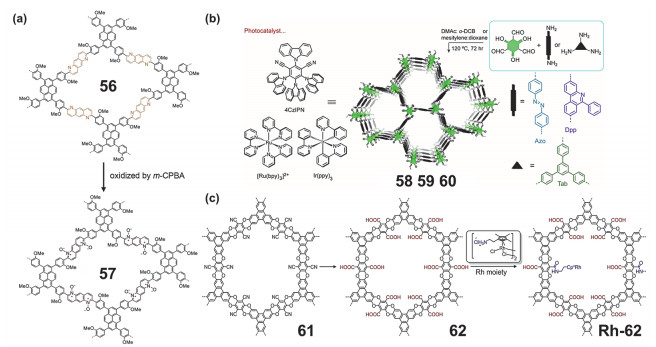
| NQ-COFE5 | 56 | solvothermal | C-H Functionalization | [ | |
| NQ-COFE5-O | 57 | modification (m-CPBA) | |||
| TpAzo | 58 | solvothermal | C-H Borylation | [ | |
| TpDpp | 59 | ||||
| TpTab | 60 | ||||
| COF-316 | 61 | solvothermal | C-H Activation | [ | |
| COF-316-COOH | 62 | modification | |||
| Rh-COF-316 | Rh-62 | ||||
| COF-318 | 63 | solvothermal | |||
| COF-318-COOH | 64 | modification | |||
| Rh-COF-318 | Rh-64 | ||||
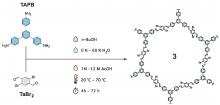
图1
"
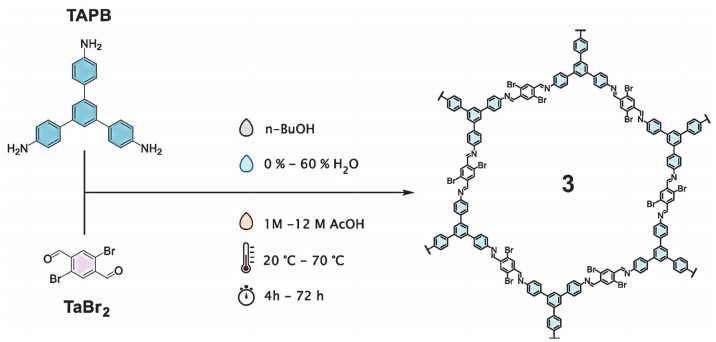
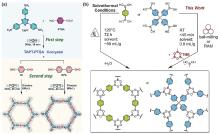
图2
"
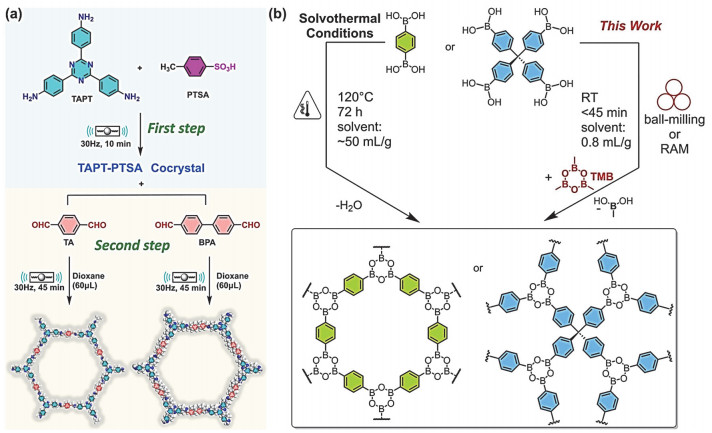
图3
"
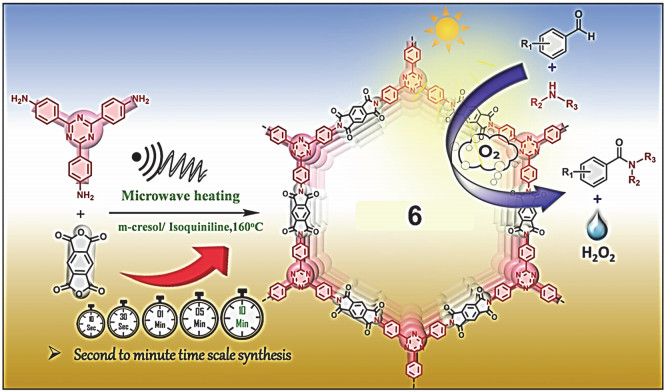
图4
"
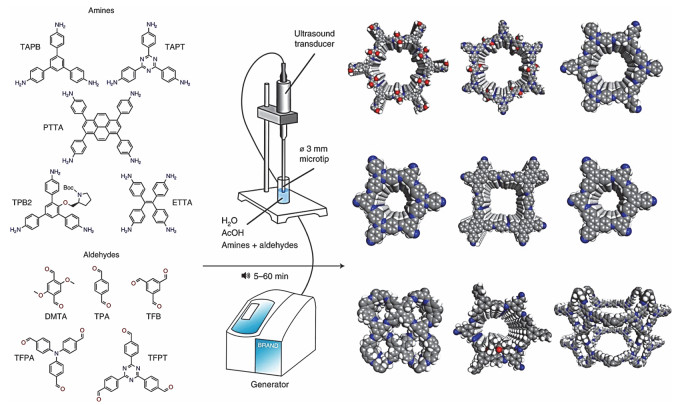
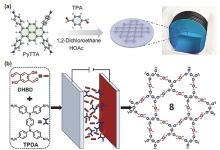
图5
"
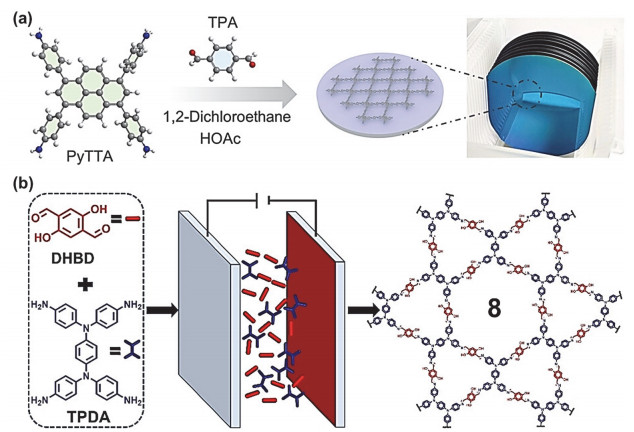
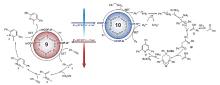
图6
"
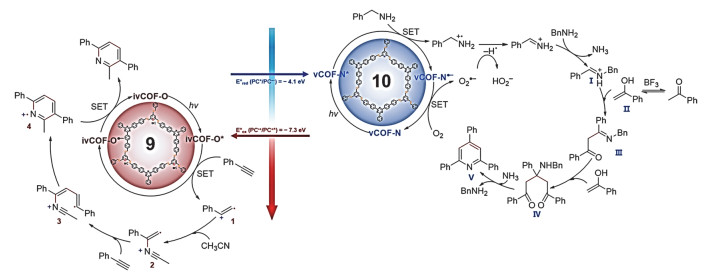
图7
"
图8
"
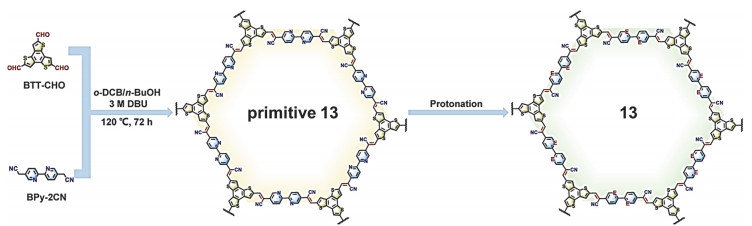
图9
"
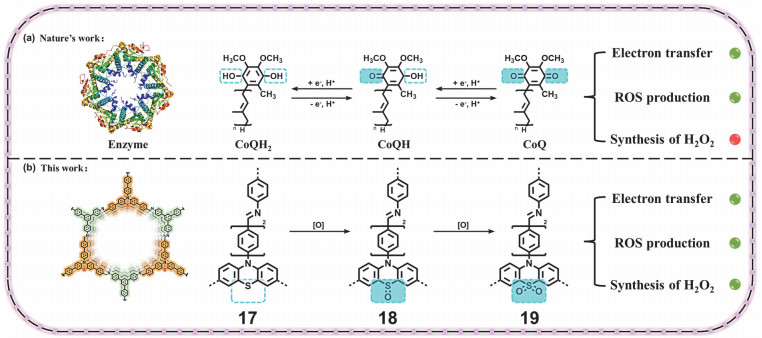
图10
"
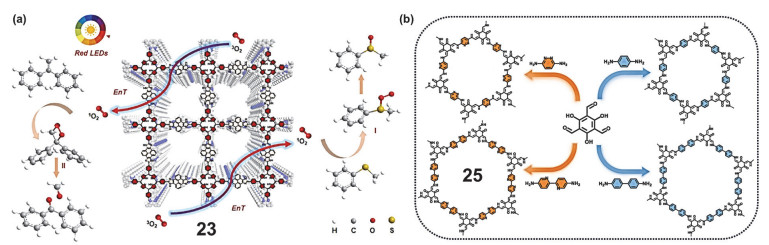
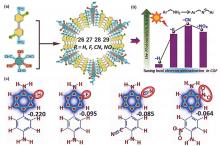
图11
"
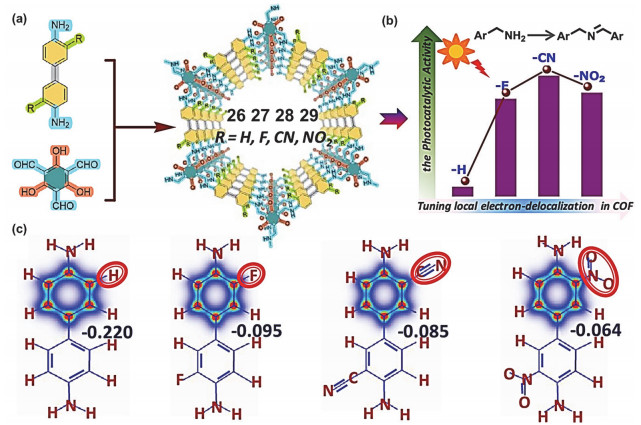
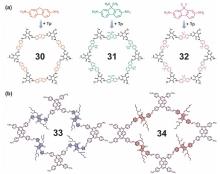
图12
"
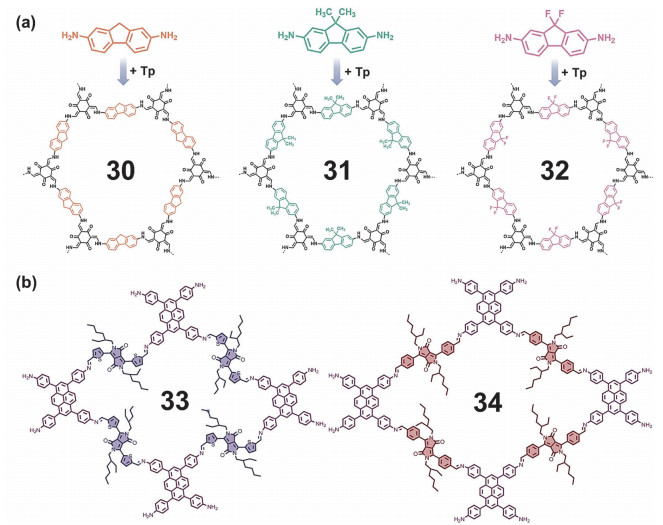
图13
"
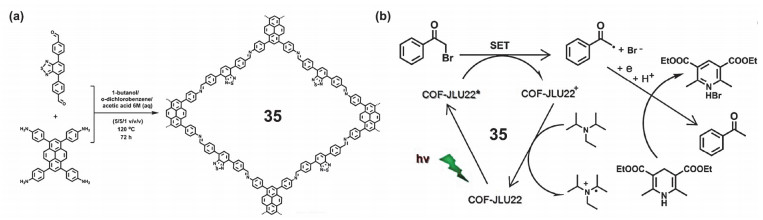
图14
"
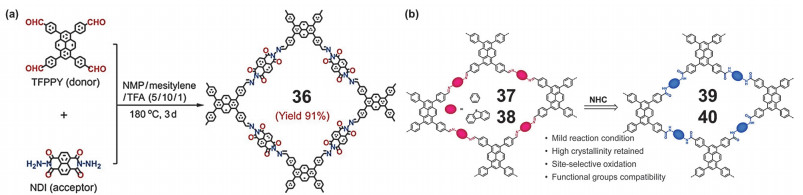
图15
"
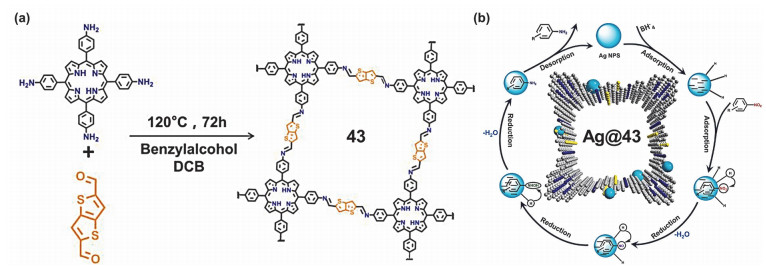
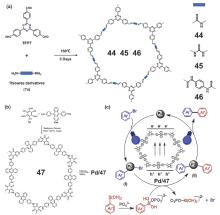
图16
"
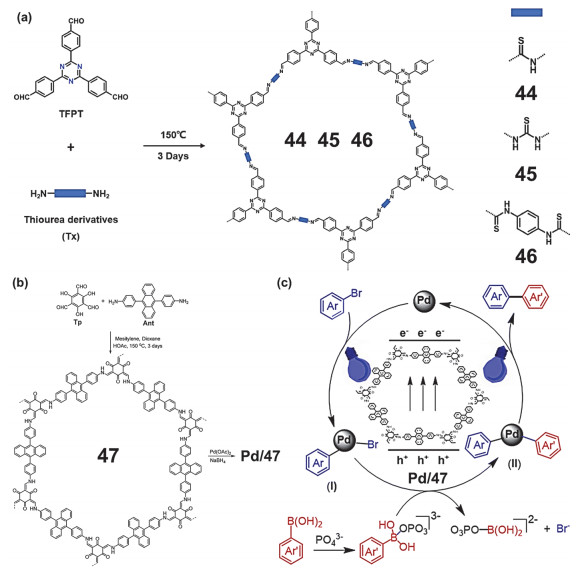
图17
"
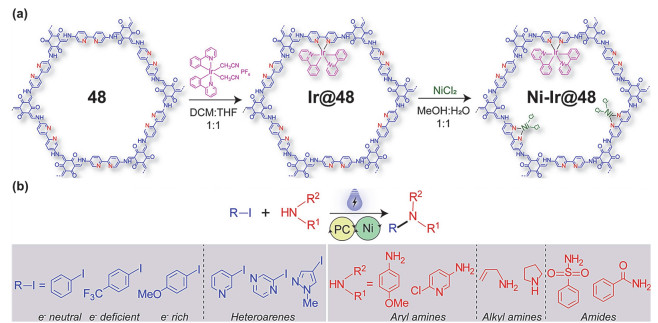
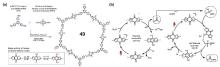
图18
"
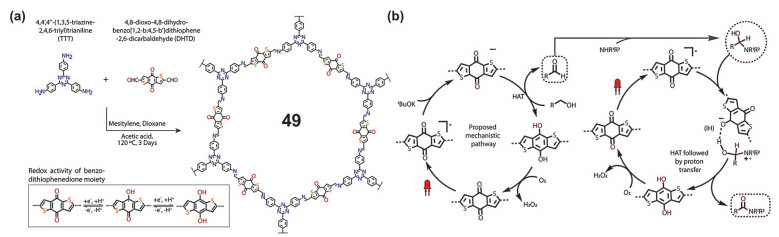
图19
"
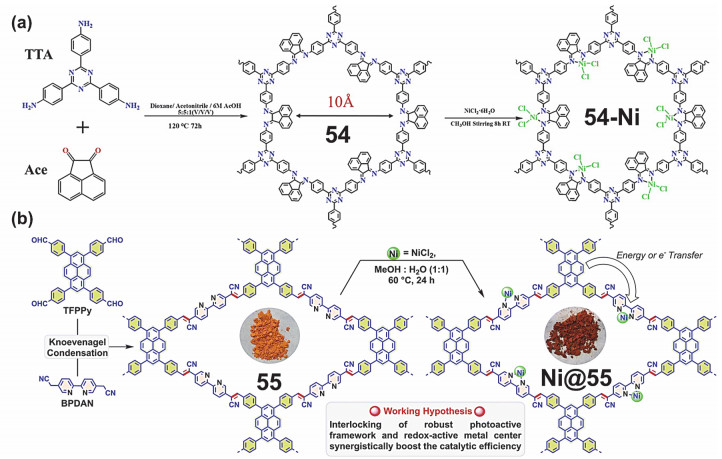
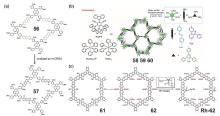
图20
"
| 1 |
doi: 10.1021/jacs.3c00950 |
| 2 |
doi: 10.1021/acs.chemrev.9b00685 |
| 3 |
doi: 10.1021/cr100347k |
| 4 |
doi: 10.1002/anie.202111627 |
| 5 |
doi: 10.1021/ja4017842 |
| 6 |
doi: 10.1002/adsc.200390000 |
| 7 |
doi: 10.1002/adma.200903436 |
| 8 |
doi: 10.1021/acs.chemrev.1c00243 |
| 9 |
doi: 10.3866/PKU.WHXB202306048 |
| 10 |
doi: 10.1021/cm802981m |
| 11 |
doi: 10.3866/PKU.WHXB202303029 |
| 12 |
doi: 10.1038/s41586-024-08227-w |
| 13 |
doi: 10.1002/anie.202415454 |
| 14 |
doi: 10.1002/anie.202101036 |
| 15 |
doi: 10.3866/PKU.WHXB202010010 |
| 16 |
doi: 10.1016/j.mcat.2024.114045 |
| 17 |
doi: 10.3866/pku.Whxb202406026 |
| 18 |
doi: 10.1126/science.1120411 |
| 19 |
doi: 10.1126/science.1128383 |
| 20 |
doi: 10.1016/j.nanoen.2020.104525 |
| 21 |
doi: 10.1002/anie.202300224 |
| 22 |
doi: 10.1002/smll.202311064 |
| 23 |
doi: 10.1021/jacs.2c11454 |
| 24 |
doi: 10.1002/anie.202403093 |
| 25 |
doi: 10.3866/pku.Whxb202101002 |
| 26 |
doi: 10.1039/c1cs15085e |
| 27 |
doi: 10.1021/jacs.3c09729 |
| 28 |
doi: 10.1038/s41467-024-49036-z |
| 29 |
doi: 10.1039/c0cc04386a |
| 30 |
doi: 10.1016/j.rser.2017.05.284 |
| 31 |
doi: 10.1039/d1sc05504f |
| 32 |
doi: 10.1039/c7cc09866a |
| 33 |
doi: 10.1021/acsami.9b19870 |
| 34 |
doi: 10.1021/acs.chemrev.9b00550 |
| 35 |
doi: 10.1039/d0na00537a |
| 36 |
doi: 10.1002/anie.202410097 |
| 37 |
doi: 10.1021/jacs.8b06460 |
| 38 |
doi: 10.1002/anie.202404539 |
| 39 |
doi: 10.1016/j.mser.2024.100771 |
| 40 |
doi: 10.1007/s00706-019-2364-6 |
| 41 |
doi: 10.1038/s41929-019-0242-6 |
| 42 |
doi: 10.1002/anie.202317876 |
| 43 |
doi: 10.3866/PKU.WHXB202407020 |
| 44 |
doi: 10.1002/adfm.202413943 |
| 45 |
doi: 10.1016/j.jphotochem.2017.03.016 |
| 46 |
doi: 10.1039/d3sc02440g |
| 47 |
doi: 10.1021/jacs.2c01814 |
| 48 |
doi: 10.1002/cctc.201901061 |
| 49 |
doi: 10.1002/anie.201107017 |
| 50 |
doi: 10.1016/s1872-2067(17)62959-0 |
| 51 |
doi: 10.1021/jacs.0c09684 |
| 52 |
doi: 10.1002/anie.200705710 |
| 53 |
doi: 10.1038/s41467-019-11264-z |
| 54 |
doi: 10.1002/anie.202412420 |
| 55 |
doi: 10.1002/anie.202407092 |
| 56 |
doi: 10.1126/science.1137014 |
| 57 |
doi: 10.1002/anie.200300594 |
| 58 |
doi: 10.1021/jacs.4c14971 |
| 59 |
doi: 10.1002/adfm.202305735 |
| 60 |
doi: 10.1039/d0cs00017e |
| 61 |
doi: 10.1007/s40242-022-1434-1 |
| 62 |
doi: 10.1039/d4cy01083c |
| 63 |
doi: 10.1002/anie.202108069 |
| 64 |
doi: 10.3866/pku.Whxb202303032 |
| 65 |
doi: 10.1002/anie.202318180 |
| 66 |
doi: 10.1021/acs.chemrev.8b00400 |
| 67 |
doi: 10.1016/j.apcatb.2018.12.065 |
| 68 |
doi: 10.1002/adma.201703646 |
| 69 |
doi: 10.1021/acsami.3c16724 |
| 70 |
doi: 10.1002/anie.202404886 |
| 71 |
doi: 10.1007/s40242-022-2007-z |
| 72 |
doi: 10.1021/jacs.9b09502 |
| 73 |
doi: 10.1007/s11434-016-1053-7 |
| 74 |
doi: 10.1039/d1qo01873f |
| 75 |
doi: 10.3390/catal10070720 |
| 76 |
doi: 10.1002/adma.202209475 |
| 77 |
doi: 10.1002/adma.201601694 |
| 78 |
doi: 10.3866/pku.Whxb202405005 |
| 79 |
doi: 10.1039/d4ee03766a |
| 80 |
doi: 10.1016/j.trac.2022.116793 |
| 81 |
doi: 10.1039/d1cs00684c |
| 82 |
doi: 10.1039/c5cs00380f |
| 83 |
doi: 10.1002/anie.201709766 |
| 84 |
doi: 10.1039/b913880n |
| 85 |
doi: 10.1021/acscatal.3c05454 |
| 86 |
doi: 10.1126/science.1102896 |
| 87 |
doi: 10.1002/anie.202313520 |
| 88 |
doi: 10.1039/c5ee02575c |
| 89 |
doi: 10.1002/anie.202423055 |
| 90 |
doi: 10.1002/smll.202303632 |
| 91 |
doi: 10.1038/s41467-023-38884-w |
| 92 |
doi: 10.1021/acs.accounts.4c00061 |
| 93 |
doi: 10.3866/PKU.WHXB202408002 |
| 94 |
doi: 10.1002/adfm.202401562 |
| 95 |
doi: 10.1002/anie.202410300 |
| 96 |
doi: 10.1021/acs.chemrev.6b00512 |
| 97 |
doi: 10.1002/anie.202309775 |
| 98 |
doi: 10.1038/s41586-019-1554-z |
| 99 |
doi: 10.1016/j.joule.2019.06.023 |
| 100 |
doi: 10.1002/cctc.201700856 |
| 101 |
doi: 10.1039/c4sc00016a |
| 102 |
doi: 10.1002/anie.202314988 |
| 103 |
doi: 10.1016/j.seppur.2021.118873 |
| 104 |
doi: 10.1038/nphoton.2012.175 |
| 105 |
doi: 10.1002/adfm.202311655 |
| 106 |
doi: 10.1039/d4sc01780c |
| 107 |
doi: 10.1016/j.ensm.2022.12.015 |
| 108 |
doi: 10.1021/jacs.2c13541 |
| 109 |
doi: 10.1039/d0cs00278j |
| 110 |
doi: 10.1039/d4sc04358h |
| 111 |
doi: 10.1016/j.cej.2022.137779 |
| 112 |
doi: 10.1021/jacs.3c11944 |
| 113 |
doi: 10.1021/acs.chemrev.9b00201 |
| 114 |
doi: 10.1038/s41467-019-12310-6 |
| 115 |
doi: 10.1021/acs.chemmater.3c01425 |
| 116 |
doi: 10.1039/c5cs00113g |
| 117 |
doi: 10.3866/PKU.WHXB202408005 |
| 118 |
doi: 10.1021/jacs.6b07714 |
| 119 |
doi: 10.1002/anie.202413071 |
| 120 |
doi: 10.3866/PKU.WHXB202209037 |
| 121 |
doi: 10.1021/jacs.8b00571 |
| 122 |
doi: 10.1021/acscatal.0c03955 |
| 123 |
doi: 10.3866/PKU.WHXB202212057 |
| 124 |
doi: 10.3866/PKU.WHXB202407012 |
| 125 |
doi: 10.1016/j.nanoen.2023.109155 |
| 126 |
doi: 10.3866/PKU.WHXB202407013 |
| 127 |
doi: 10.1016/j.jcis.2024.11.105 |
| 128 |
doi: 10.1021/jacs.2c02089 |
| 129 |
doi: 10.6023/cjoc201306023 |
| 130 |
doi: 10.1002/adfm.202300954 |
| 131 |
doi: 10.1016/j.apcatb.2020.119174 |
| 132 |
doi: 10.1021/jacs.8b09705 |
| 133 |
doi: 10.3866/PKU.WHXB202312014 |
| 134 |
doi: 10.1016/j.ccr.2024.216167 |
| 135 |
doi: 10.1002/anie.202308980 |
| 136 |
doi: 10.1002/anie.202405763 |
| 137 |
doi: 10.1016/j.fuel.2024.131785 |
| 138 |
doi: 10.1016/j.apsusc.2022.153459 |
| 139 |
doi: 10.1002/anie.202413131 |
| 140 |
doi: 10.1038/s44160-021-00005-0 |
| 141 |
doi: 10.1021/acscatal.3c05648 |
| 142 |
doi: 10.1002/adma.202308251 |
| 143 |
doi: 10.1038/s41586-024-08080-x |
| 144 |
doi: 10.1016/j.solidstatesciences.2023.107398 |
| 145 |
doi: 10.1002/anie.201107028 |
| [1] | 吕宪伟, 丁信元, 龚家兴, 闫旭焕, 黄大勇, 耿建新, 袁忠勇. 轨道杂化在光催化与电催化中的研究进展[J]. 物理化学学报, 2026, 42(2): 100151 - . |
| [2] | 刘宇, 李鹏飞, 刘翼泽, 孙再成. 碳点作为单一光催化剂的最新进展[J]. 物理化学学报, 2026, 42(2): 100167 - . |
| [3] | 彭国强, 李秀艳, 李敏, 苏志博, 胡发露, 周国伟. 高效金属-有机框架的工程设计用于光催化CO2还原[J]. 物理化学学报, 2026, 42(2): 100164 - . |
| [4] | 张宇航, 李意, 曹玥晗, 帅英杰, 周宇, 周莹. Ir调控中间体生成类型抑制光催化甲烷转化中产物过氧化[J]. 物理化学学报, 2026, 42(2): 100173 - . |
| [5] | 陈芸, 邓代洁, 徐丽, 朱兴旺, 李赫楠, 孙成明. 共价键调控电荷转移以实现自供能电化学传感平台对重金属离子的灵敏分析[J]. 物理化学学报, 2026, 42(1): 100144 - . |
| [6] | 赵呈孝, 李昭霖, 吴东方, 杨小飞. SBA-15模板化共价三嗪框架增强光催化产氢[J]. 物理化学学报, 2026, 42(1): 100149 - . |
| [7] | 黄火帅, 韦之栋, 严嘉玮, 池家晟, 苏千翔, 陈铭夏, 江治, 孙洋洲, 上官文峰. 揭示ZnxCd1−xS固溶体光催化析氢中的直接-间接带隙跃迁机制[J]. 物理化学学报, 2026, 42(1): 100141 - . |
| [8] | 陈轼逸, 付家龙, 裘建平, 常国菊, 郝仕油. 废弃医用口罩衍生的碳量子点增强BiOBr/g-C3N4 S型异质结光催化降解聚对苯二甲酸乙二醇酯(PET)[J]. 物理化学学报, 2026, 42(1): 100135 - . |
| [9] | 张凤英, 梅杨林, 蒋毓蔓, 郑申申, 郑凯波, 周莹. 瞬态吸收光谱在太阳能转化利用中的研究进展[J]. 物理化学学报, 2025, 41(9): 100118 - . |
| [10] | 王文龙, 郝文韬, 何浪, 乔佳, 李宁, 陈朝秋, 覃勇. 碳量子点/TiO2 S型异质结的能带和吸附工程促进光催化CO2甲烷化[J]. 物理化学学报, 2025, 41(9): 100116 - . |
| [11] | 韦梦兰, 欧晓霞, 王艺濛, 张梦圆, 滕飞, 王凯旋. S型异质结g-C3N4/Bi2WO6高效降解左氧氟沙星:性能、机理及降解路径[J]. 物理化学学报, 2025, 41(9): 100105 - . |
| [12] | 李静萍, 严素定, 吴佳曦, 程强, 王楷. LiFePO4改善无机/有机S型光催化剂的过氧化氢光合作用[J]. 物理化学学报, 2025, 41(9): 100104 - . |
| [13] | 吴琦, 王长华, 李莹莹, 张昕彤. 增强g-C3N4@BN范德华异质结界面上的三重态电子转移增强光催化合成H2O2[J]. 物理化学学报, 2025, 41(9): 100107 - . |
| [14] | 雷明杰, 胡文婷, 林可心, 孙秀娟, 张澔珅, 钱烨, 康彤玥, 吴秀琳, 廖海龙, 潘园, 张玉微, 魏笛野, 高平. Co/Mn/Mo掺杂加速NiSe2重构以提高其电催化尿素氧化性能[J]. 物理化学学报, 2025, 41(8): 100083 - . |
| [15] | 蔡家杰, 程畅, 刘博文, 张建军, 姜传佳, 程蓓. CdS/DBTSO-BDTO S型异质结光催化制氢及其电荷转移动力学[J]. 物理化学学报, 2025, 41(8): 100084 - . |
|
||