物理化学学报 >> 2024, Vol. 40 >> Issue (10): 2311030.doi: 10.3866/PKU.WHXB202311030
同轴静电纺丝构筑微/纳米结构隔膜与电极材料用于锂离子电池:从原理到应用
李琪1, 黎平安1, 刘泽通1, 张佳辉1, 张浩1, 余维来2,*( ), 胡先罗1,*()
- 1 华中科技大学材料科学与工程学院, 材料成形与模具技术全国重点实验室, 武汉 430074
2 Department of Chemical Engineering, Stanford University, Stanford CA 94305, USA
-
收稿日期:2023-11-23修回日期:2023-12-12录用日期:2023-12-14发布日期:2024-03-13 -
通讯作者:Email: huxl@mail.hust.edu.cn, Tel: +86-27-87558245 (胡先罗)wyyu@stanford.edu (余维来) -
基金资助:国家自然科学基金(52272206); 国家自然科学基金(51972132)
Fabricating Micro/Nanostructured Separators and Electrode Materials by Coaxial Electrospinning for Lithium-Ion Batteries: From Fundamentals to Applications
Qi Li1, Pingan Li1, Zetong Liu1, Jiahui Zhang1, Hao Zhang1, Weilai Yu2,*(), Xianluo Hu1,*()
- 1 State Key Laboratory of Materials Processing and Die & Mould Technology, School of Materials Science and Engineering, Huazhong University of Science and Technology, Wuhan 430074, China
2 Department of Chemical Engineering, Stanford University, Stanford CA 94305, USA
-
Received:2023-11-23Revised:2023-12-12Accepted:2023-12-14Published:2024-03-13 -
Contact:Email: huxl@mail.hust.edu.cn, Tel: +86-27-87558245 (Xianluo Hu)wyyu@stanford.edu (Weilai Yu) -
Supported by:the National Natural Foundation Science of China(52272206); the National Natural Foundation Science of China(51972132)

摘要:
锂离子电池因其高能量密度、长循环寿命、优异的倍率性能和热稳定性而备受青睐,成为从便携式电子产品到电动汽车等实际应用中的最佳电源。在这种背景下,同轴静电纺丝技术因可制造适用于锂离子电池的独特纳米纤维材料而备受关注。尤其纤维材料具有高比表面积、高孔隙率、较大的长径比和易表面改性的优点,近年来在锂离子电池领域被广泛研究。这篇综述全面总结了同轴静电纺丝的基本原理与该技术在正极、负极和隔膜等锂离子电池关键材料中的实际应用和最新进展,并讨论了同轴静电纺纤维材料的纳米/微米结构决定其电化学性能的规律。此外,该综述还分析了同轴静电纺丝未来的发展方向,强调了未来拓展同轴静电纺丝技术在锂离子电池领域的应用所面临的挑战。
引用本文
李琪, 黎平安, 刘泽通, 张佳辉, 张浩, 余维来, 胡先罗. 同轴静电纺丝构筑微/纳米结构隔膜与电极材料用于锂离子电池:从原理到应用[J]. 物理化学学报, 2024, 40(10), 2311030. doi: 10.3866/PKU.WHXB202311030
Qi Li, Pingan Li, Zetong Liu, Jiahui Zhang, Hao Zhang, Weilai Yu, Xianluo Hu. Fabricating Micro/Nanostructured Separators and Electrode Materials by Coaxial Electrospinning for Lithium-Ion Batteries: From Fundamentals to Applications[J]. Acta Phys. -Chim. Sin. 2024, 40(10), 2311030. doi: 10.3866/PKU.WHXB202311030
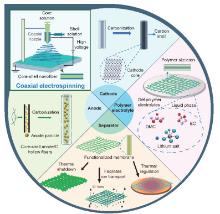
图1
"
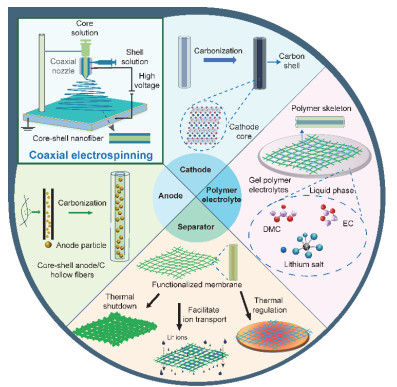
图2
"
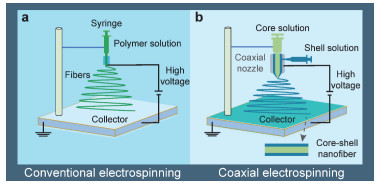
图3
"
图4
"
图5
"

图6
"
图7
"

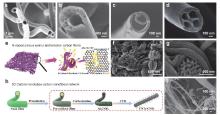
图8
"
图9
"
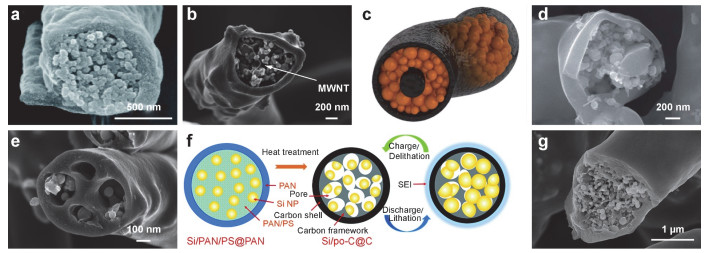
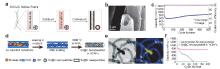
图10
"
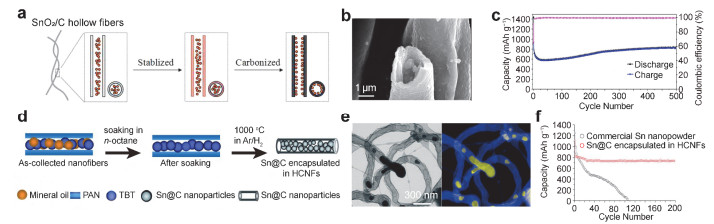
表1
"
| Materials (core/shell) | Solvents (core/shell) | Fiber structures | Advantages | Electrochemical performance | Ref. |
| Core: mineral oil Shell: PAN | Mineral oil/N, N-dimethylformamide (DMF) | Core: covert to soft carbon Shell: covert to hard carbon | Core-shell carbon nanofibers | 520 mAh∙g−1 at 25 mA∙g−1 | |
| Core: mineral oil Shell: PVP, nickel acetate Middle: PAN | Mineral oil/ DMF/DMF | Core: hollow Middle: amorphous carbon nanotubes Shell: hollow graphitic carbon nano-spheres after Ni removal | A novel architecture prepared by a novel triple-coaxial electrospinning technique | 969 mAh∙g−1 at 50 mA∙g−1 volumetric capacity of ~1.4 Ah∙cm−3 | |
| Core: PAN Shell: PAN, PMMA | DMF/DMF | Core: carbon core Shell: porous carbon shell | Improving the mechanical properties of PCNFs with a dense amorphous carbon core | 445.3 mAh∙g−1 at 100 mA∙g−1 after 100 cycles 388.9 mAh∙g−1 at 1 A∙g−1 after 1000 cycles | |
| Core: Si NPs, PMMA Shell: PAN | Acetone, DMF/DMF | Core: Si NPs Shell: carbon shell | The carbon shell as a restriction boundary | 1384 mAh∙g−1 at 0.1C 721 mAh∙g−1 at 12C | |
| Core: SAN Shell: PAN | DMF/DMF | Core: hollow Shell: carbon shell | Investigating the effect of carbonization temperature on electrochemical performance | 390, 334, 273, and 243 mAh∙g−1 at 50 mA∙g−1 (800, 1000, 1200, 1600 ℃) | |
| Core: SAN Shell: SAN, PAN | DMF/DMF | Core: hollow Shell: porous carbon shell | Investigating the effect of pores on electrochemical performance | 620 (pore) vs. 352 (no pore) mAh∙g−1 at 50 mA∙g−1 77% after 10 cycles | |
| Core: SAN, Si NPs Shell: PAN | DMF/DMF | Core: Si NPs Shell: carbon shell | In situ observation of contact-lithiation | 596 mAh∙g−1 at 50 mA∙g−1 92% after 50 cycles at 50 mA∙g−1 | |
| Core: PMMA, Si NPs Shell: PVP | DMF/DMF | Core: Si NPs Shell: carbon shell | Excellent mechanical flexibility without compromising electrochemical performance | Initial reversible capacity of 1162.8 mAh∙g−1 at 0.1 A∙g−1 762.0 mAh∙g−1 after 100 cycles | |
| Core: SAN, Si NPs, MWNT Shell: PAN | DMF/DMF | Core: Si NPs, MWNT Shell: carbon shell | MWNT as additional conductive paths between the Si NPs (excellent electrical conductivity) | 911 mAh∙g−1 at 50 mA∙g−1 | |
| Core: PMMA, Si NPs, MXene Shell: PAN | DMF/DMF | Core: Si NPs, MXene Shell: carbon shell | MXene as a conductive substrate bridge the Si particles and carbon shell to form the conductive network | Initial reversible capacity of 1083 mAh∙g−1 at 0.1 A∙g−1 301 mAh∙g−1 at 2 A∙g−1 | |
| Core: Si NPs, P(AN-co-MHI), PMMA Shell: P(AN-co-MHI), PMMA | DMF/DMF | Core: Si NPs, porous carbon Shell: porous carbon shell | Porous carbon in the core enables fast charge transfer, porous carbon shell shortens Li+ diffusion distance and facilitate ion transport | 842.1 mAh∙g−1 after 500 cycles at 0.5 A∙g−1 1366.6 mAh∙g−1 at 0.5 A∙g−1 | |
| Core: PAN-co-IA, thiourea, PMMA, porous Si NPs Shell: PAN-co-IA, thiourea, PMMA | DMF/DMF | Core: porous Si NPs Shell: sulfur-doped porous carbon shell | The porous structure of Si and carbon shell provides abundant diffusion channels for ion transport | excellent reversible capacity of 1112.7 mAh∙g−1 after 1000 cycles at 2.0 A∙g−1 | |
| Core: PAN Middle: SAN, Si NPs Shell: PAN | DMF/DMF/DMF | Core: carbon shell Middle: Si NPs Shell: carbon shell | The wire-in-tube-structured trilayered nanofibers | 1211 mAh∙g−1 at 50 mA∙g−1 75% after 100 cycles at 50 mA∙g−1 | |
| Core: PMMA, zinc acetate Shell: PAN, graphene oxide (GO) | DMF/DMF | Core: ZnO NPs Shell: reduced GO incorporated glassy carbon | Enhancing battery performance by the incorporation of the reduced GO network into the shell | 815 mAh∙g−1 at 50 mA∙g−1 76% after 100 cycles | |
| Core: PAN, PVP, Iron phytate NPs Shell: PAN, PVP, TiO2 | DMF/DMF | Core: Fe2P NPs Shell: TiO2/carbon shell | Carbon shell facilitates electron transport. TiO2 shell inhibits the volume expansion and pulverization of the Fe2P core. | Initial reversible capacity of 1175.7 mAh∙g−1 716.8 mAh∙g−1 after 100 cycles | |
| Core: PMMA, carboxyethyl germanium hemioxide Shell: PAN | DMF/DMF | Core: P/GeP NPs Shell: carbon shell | N-doped hollow carbon fibers that restrict the crystal growth and solve the volume expansion of P/GeP | Initial reversible capacity of 1340.9 mAh∙g−1 382.9 mAh∙g−1 after 500 cycles at 1 A∙g−1 | |
| Core: mineral oil Shell: phosphomolybdic acid, PAN | Mineral oil/DMF | Core: hollow Shell: Mo2C@C NPs incorporated carbon shell | Manufacturing metal carbide/carbon composites by coaxial electrospinning | 1176 mAh∙g−1 at 100 mA∙g−1 674 mAh∙g−1 after 300 cycles | |
| Core: TEOS/PS Shell: PAN | HCl, DMF/ DMF | Core: SiO2 shell Shell: N-doped carbon shell | Formation of hollow double-shelled PMo12-SiO2@N-C nanofibers | 1641 mAh∙g−1 after 1000 cycles at 2 A∙g−1 | |
| Core: SAN, liquid metal nanoparticles (LMNPs), MWCNTs, GO Shell: PAN+SAN | DMF/DMF | Core: MWCNTs, rGO, self-healing LMNPs Shell: porous carbon shell | The LMNPs with a self-healing property and high theoretical capacity; MWCNTs and rGO as a conductive network | 604 mAh∙g−1 at 1000 mA∙g−1 552 mAh∙g−1 after 1500 cycles 499 mAh∙g−1 at 2000 mA∙g−1 | |
| Core: SAN, Si NPs Shell: polyamic acid (PAA) | DMF/DMF | Core: Si NPs Shell: polyimide (PI)-based carbon shell | Investigating the relationship between electrochemical properties and different Si contents | 621 mAh∙g−1 at 100 mA∙g−1 77.8% after 200 cycles | |
| Core: PAN, Mo(acac)2 Shell: PMMA, TBT | DMF, acetic acid/DMF | MoO3 encapsulated by TiO2 layer incorporated porous carbon matrices | Enhancing the electrode conductivity by the CNFs matrices and the TiO2 layers together | 561 mAh∙g−1 after 300 cycles at 1000 mA∙g−1 | |
| Core: PEO Shell: PAN, PVP | DMF/DMF | N-enriched porous walnut anchored on carbon fibers | Synthesis of new structural N-rich carbon porous materials by coaxial electrospinning | 965 mAh∙g−1 at 200 mA∙g−1 in the first cycle 99% after 30 cycles | |
| Core: cellulose Shell: chitosan | EmimAc/ EmimAc | Bio-N-doped composite carbon nanofibrous mats | Investigating the effects of different electrospinning way | 327 mAh∙g−1 after 300 cycles at 100 mA∙g−1 (single nozzle) | |
| Core: PAN Shell: PVP, Ni(NO3)2 | DMF/DMF | Core: carbon core Shell: Ni NPs | Improving the uniformity of catalyst and the controllability of catalyst content | 546 mAh∙g−1 after 100 cycles at 100 mA∙g−1 307 mAh∙g−1 at 1 A∙g−1 | |
| Core: PS Shell: copper acetate, PAN | DMF/DMF | Core: hollow Shell: conductive copper/carbon shell | Provides a cross-network for rapid electron diffusion and alleviates volume expansion | Initial capacity of 424 mAh∙g−1 at 5 A∙g−1 378 mAh∙g−1 after 1000 cycles | |
| Core: PMMA, carboxyethyl germanium hemioxides Shell: PAN | DMF/DMF | Core: GeP NPs Shell: N-doped carbon shell | Overcoming difficulty in structural design and severe volume expansion of GeP | 612 mAh∙g−1 at the 600th cycle at 1 A∙g−1 |
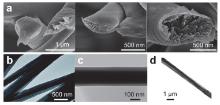
图11
"
图12
"
图13
"
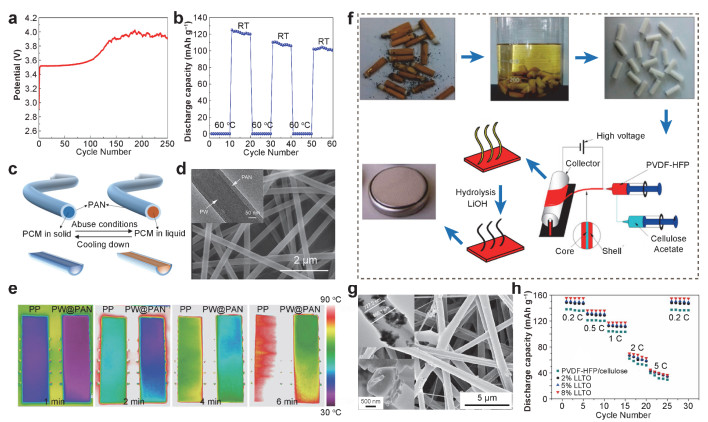
表2
"
| Materials (core/shell) | Solvents (core/shell) | Advantages | Thermal stability (shrinkage) | Ionic conductivity (mS·cm−1) | Ref. |
| PDA, ODA/ | Dimethylacetamide | PI: excellent thermal stability | 0% at 150 ℃ for 1 h | 1.68 (25 ℃) | |
| PVDF-HFP | (DMAc)/DMF | PVDF-HFP: superior affinity with electrolyte | 2.33 (40 ℃) | ||
| 3.44 (90 ℃) | |||||
| Polyamic acid (PAA)/PVDF-HFP | DMAc/DMF | PI: outstanding thermal stability and self-extinguished properties PVDF-HFP: good affinity with liquid electrolyte | 0% at 200 ℃ for 0.5 h | 1.24 | |
| PSA/PVDF-HFP | DMAc/DMAc | PSA: excellent mechanical properties, thermal resistance PVDF-HFP: better anodic stability, good affinity with liquid electrolyte | 0% at 200 ℃ for 0.5 h | 1.97 | |
| Cellulose acetate/ PVDF-HFP | DMAc, acetone/DMAc, acetone | Cellulose core: high thermal stability PVDF-HFP shell: flame retardant | 0% at 200 ℃ for 1 h | 6.16 | |
| Cellulose acetate/PVDF-HFP, superfine LLTO NPs | DMAc, acetone/DMAc, acetone | LLTO NPs: retard the thermal degradation of cellulose | 13.90 (20 ℃) | ||
| PLA/PBS | HFIP, CF, o-chlorobenzaldehyde/HFIP, CF, o-chlorobenzaldehyde | PLA: excellent thermo-dimensional stability, mechanical strength PBS: strong affinity, appropriate shut-down temperature | 0% at 170 ℃ for 15 min | 1.65 | |
| Mineral oil/ PVP, titanium tetraisopropanolate | -/Ethanol, acetic acid | Mineral oil: sacrifice material to form hollow fibers | Slight shrinkage at 500 ℃ for 3 h | 1.41 (25 ℃) | |
| PAN/PVDF-HFP | DMF/DMF | PAN: excellent flame-retardant property and high resistance to the effect of heat PVDF-HFP: an excellent polymer electrolyte material, inert; insoluble, and stable | 0% at 150 ℃ for 30 min | 1.74 | |
| PAN/PVDF-HFP | DMF/DMF | PAN: thermally stable, high mechanical strength PVDF-HFP: excellent electrolyte wettability | almost 0% at 250 ℃ for 10 min | ||
| PPESK/PVDF | N-methyl-2-pyrrolidone (NMP), tetrahydrofuran (THF)/DMAc, acetone | PPESK: novel soluble engineering plastics with a high glass transition temperature of 263–305 ℃ PVDF-HFP: as the thermal shutdown component | 0% at 200 ℃ for 1 h | 1.69 | |
| PMIA/PVDF | DMAc/DMAc, acetone | PMIA: high mechanical strength, excellent thermal stability PVDF: excellent anodic stability, polarity of electrolyte (high polarity C-F chemical bonds) | 0% at 180 ℃ for 2 h | 1.70 | |
| TPP/PVDF | DMF, acetone/acetone | TPP: flame retardant PVDF: encapsulation material, and melts at high temperature to release TPP | 3.90 | ||
| TPP/PVDF | DMF, acetone/acetone | TPP: flame retardant PVDF: encapsulation material, and melts at high temperature to release TPP, thermal shutdown | 0.15–0.44 | ||
| TPP/PVDF, SiO2, GO | DMF, acetone/acetone | TPP: flame retardant PVDF: encapsulation material, and melts at high temperature to release TPP SiO2 and GO: enhance thermal stability | 3.79% at 150 ℃ for 1 h | 0.88 | |
| PMIA/PVDF-HFP | DMAc, LiCl/DMF | PMIA: hard material, higher thermal stability, mechanical strength PVDF-HFP: soft material, higher electrochemical performance | 0% at 180 ℃ for 1 h | 0.68 | |
| PAN/PBS | DMF/HFIP, chloroform | PAN: good mechanical and thermal stability, fast Li+ transportation PBS: lower melting point than PE | 0% at 200 ℃ for 15 min | 2.10 | |
| PAN, HCNFs/ PVDF, UiO-66 | DMAc, acetone/ DMAc, acetone | HCNFs: prevent membranes from serious shrinkage in the direction perpendicular UiO-66 NPs: increase the Li+ transport | 0% at 200 ℃ for 1 h | 1.59 | |
| PW/PAN | Kerosene/DMF | PW: remarkable latent heat (~240 J∙g−1) and suitable phase transition temperature (~45 ℃) PAN: superior thermal stability and high electrolyte wettability | 0% at 200 ℃ | 1.40 | |
| PW/PAN, BNNs | Kerosene/DMF | PW: absorb heat in situ PAN: superior thermal stability and high electrolyte wettability BNNs: promote heat conduction | 0% at 200 ℃ | 0.84 | |
| PI/fluorinated PMIA | DMF/DMAc | PI: high wetting breaking strength suppress lithium dendrite F-PMIA: remarkable gelation degree | 0% at 300 ℃ | 1.30 | |
| CNTs, PAN/ Uio-66-NH2, PVDF-HFP | DMF/DMF, acetone | CNTs: hinder the displacement of PAN polymer chains and strengthen mechanical strength Uio-66-NH2: improve the interfacial compatibility | 15% at 150 ℃ | 3.43 | |
| PAN/PVDF | DMF/DMAc | PAN: excellent mechanical properties PVDF: promote the rapid migration of Li+, high electrode compatibility. | 0% at 170 ℃ for 1 h | 1.62 | |
| PMIA/PAN, PVDF-HFP, TiO2 | DMAc/DMF | PMIA and PAN: high thermal stability PVDF-HFP: high electrolyte affinity TiO2: reinforce mechanical strength | 0% at 220 ℃ for 1 h | 1.36 |
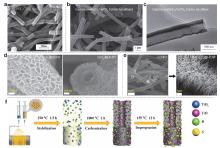
图14
"
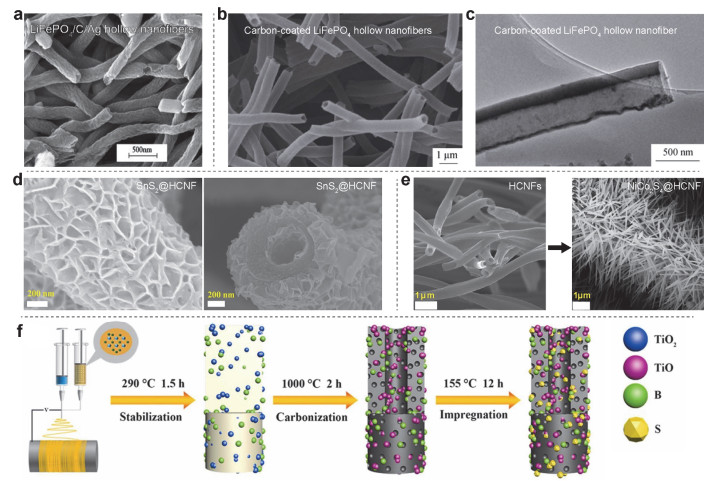
表3
"
| Materials (core/shell) | Solvents (core/shell) | Fiber structures | Advantages | Electrochemical performance | Ref. |
| Core: LiCoO2 sol Shell: MgO sol | Distilled water | Core: partially oriented LiCoO2 NPs Shell: poor crystallinity | Optimizing the influence of passivating surface film formed by MgO | The initial capacity of 192 mAh∙g−1 90% after 40 cycles | |
| Core: LiNi0.8Co0.1Mn0.1O2 sol, PVP Shell: MgO sol | Distilled water | Core: LiNi0.8Co0.1Mn0.1O2 core Shell: MgO shell | A tubular structure composed of core-shell fibers with the addition of PVP | The initial capacity of 195 mAh∙g−1 89.2% after 50 cycles | |
| Core: machine oil Shell: LiNiO2 precursor | Distilled water | Core: hollow Shell: well-crystallized LiNiO2 | Preparing hollow nanofibers of continuous LiNiO2 phase | ||
| Core: PVP Shell: LiFePO4 precursor, AgNO3, PVP | DMF/DMF | Core: hollow Shell: LiFePO4/C/Ag | Contributes to the formation of conductive coating (PVP) and LiFePO4 simultaneously | 138.7 mAh∙g−1 at 0.2C | |
| Core: PMMA, LiFePO4 precursor Shell: PAN | DMF/DMF | Core: hollow Shell: carbon fiber with integrated carbon-coated LiFePO4 NPs. | High specific surface area hollow nanofibers with multiple active sites | 153.2 mAh∙g−1 at 0.2C 135.7 mAh∙g−1 at 2C | |
| Core: PMMA Shell: PAN | DMF/DMF | Core: hollow structure partially filled with S; Shell: microporous carbon fiber with integrated sulfur. | Alleviating the dissolution of soluble polysulfides, facilitating ion transport | Maximum capacity of 815 mAh∙g−1 88% after 70 cycles | |
| Core: PMMA Shell: PAN | DMF/DMF | Core: hollow Shell: SnS2 | Restraining the shuttling effect of lithium polysulfides, facilitating the transport of ions and electrons | The initial capacity of 1138 mAh∙g−1 at 0.2C, 675 mAh∙g−1 after 500 cycles at 1C | |
| Core: PMMA Shell: PAN | DMF/DMF | Core: hollow Shell: NiCo2S4 | Restraining the shuttling effect of lithium polysulfides, facilitating ion/electron transport | The initial capacity of 1213 mAh∙g−1 at 0.2C, 0.06% decay per cycle in 500 cycles at 1C | |
| Core: PEO Shell: PAN | DMF/DMF | Core: hollow Shell: sulfurized PAN | Provides a 3D transmission path for ions and electrons; suppressing the shuttle effect | 1250 mAh∙gsulfur−1 or 515 mAh∙gelectrode−1 at 0.1C | |
| Core: PMMA Shell: P(AN-co-MHI), PMMA, boric acid, TiO2 | DMF/DMF | Core: hollow Shell: TiO, boron-doped hollow multichannel carbon shell | Abundant void to alleviate the volume change of S and promote electrolyte infiltration, alleviating shuttle effect and improving electronic conductivity | 1070 mAh∙g−1 at 0.1 A∙g−1, capacity decay rate of 0.096% per cycle over 300 cycles | |
| Core: PMMA Shell: PAN, methyl methacrylate, PMMA, boric acid, SiO2 | DMF/DMF | Lotus-root-structure porous multichannel carbon nanotubes | Capturing sulfur and restricting its loss, facilitating the diffusion of lithium ions | 778 mAh∙g−1 after 100 cycles at 0.1C |
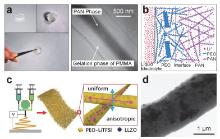
图15
"
| 1 |
doi: 10.1016/j.nanoen.2019.06.023 |
| 2 |
doi: 10.1016/j.jechem.2020.09.043 |
| 3 |
doi: 10.1016/j.jpowsour.2020.228649 |
| 4 |
doi: 10.1002/anie.200702505 |
| 5 |
doi: 10.3866/PKU.WHXB202211057 |
|
鲁航语; 侯瑞林; 褚世勇; 周豪慎; 郭少华. 物理化学学报, 2023, 39(7), 2211057.
doi: 10.3866/PKU.WHXB202211057 |
|
| 6 |
doi: 10.3866/PKU.WHXB202107030 |
|
莫英; 肖逵逵; 吴剑芳; 刘辉; 胡爱平; 高鹏; 刘继磊. 物理化学学报, 2021, 38(6), 2107030.
doi: 10.3866/PKU.WHXB202107030 |
|
| 7 |
doi: 10.1002/inf2.12189 |
| 8 |
doi: 10.1002/inf2.12305 |
| 9 |
doi: 10.3866/PKU.WHXB202210014 |
|
吕浩亮; 王雪杰; 杨宇; 刘涛; 张留洋. 物理化学学报, 2022, 39(3), 2210014.
doi: 10.3866/PKU.WHXB202210014 |
|
| 10 |
doi: 10.1002/adma.202207752 |
| 11 |
doi: 10.1021/am505829v |
| 12 |
doi: 10.1016/j.jpowsour.2015.01.156 |
| 13 |
doi: 10.1149/2.0441803jes |
| 14 |
doi: 10.1016/j.jpowsour.2015.08.012 |
| 15 |
doi: 10.1016/j.jallcom.2021.162550 |
| 16 |
doi: 10.1016/j.cej.2017.07.106 |
| 17 |
doi: 10.1039/b618508h |
| 18 |
doi: 10.1080/15583720802022257 |
| 19 |
doi: 10.1039/c3ta12390a |
| 20 |
doi: 10.1002/adma.201704765 |
| 21 |
doi: 10.1002/cplu.201900281 |
| 22 |
doi: 10.1007/s41918-021-00103-9 |
| 23 |
doi: 10.1016/j.ensm.2021.12.022 |
| 24 |
doi: 10.1016/s0266-3538(03)00178-7 |
| 25 |
doi: 10.1177/155892501200702S10 |
| 26 |
doi: 10.1016/j.xinn.2023.100381 |
| 27 |
doi: 10.1007/s40820-022-00986-3 |
| 28 |
doi: 10.1016/j.biotechadv.2010.01.004 |
| 29 |
doi: 10.1126/science.1067595 |
| 30 |
doi: 10.1002/adma.200305136 |
| 31 |
doi: 10.1021/jp808468x |
| 32 |
doi: 10.1002/adma.200400606 |
| 33 |
doi: 10.1021/nl049590f |
| 34 |
doi: 10.3389/fmats.2019.00114 |
| 35 |
doi: 10.1016/j.polymer.2005.03.011 |
| 36 |
doi: 10.1016/j.polymer.2005.04.021 |
| 37 |
doi: 10.1007/s13233-010-0607-9 |
| 38 |
doi: 10.1002/polb.20222 |
| 39 |
doi: 10.1021/cm049580f |
| 40 |
doi: 10.1002/polb.20253 |
| 41 |
doi: 10.1038/pj.2017.8 |
| 42 |
doi: 10.1002/wnan.1391 |
| 43 |
doi: 10.1039/c7nj02805a |
| 44 |
doi: 10.1021/jp107871v |
| 45 |
doi: 10.3390/pharmaceutics11070305 |
| 46 |
doi: 10.1002/adma.200306644 |
| 47 |
doi: 10.1039/c0cc03521a |
| 48 |
doi: 10.1021/la100748g |
| 49 |
doi: 10.1002/smll.200400056 |
| 50 |
doi: 10.3390/polym12010103 |
| 51 |
doi: 10.1021/ma100423x |
| 52 |
doi: 10.1016/j.electacta.2014.01.004 |
| 53 |
doi: 10.1002/app.28994 |
| 54 |
doi: 10.1016/S1369-7021(06)71389-X |
| 55 |
doi: 10.1016/j.progpolymsci.2013.02.001 |
| 56 |
doi: 10.1039/c0jm00484g |
| 57 |
doi: 10.1177/1528083715627165 |
| 58 |
doi: 10.1038/srep06758 |
| 59 |
doi: 10.1177/1528083716676816 |
| 60 |
doi: 10.1186/s11671-016-1416-7 |
| 61 |
doi: 10.1021/acssuschemeng.5b00032 |
| 62 |
doi: 10.1038/s41560-023-01208-9 |
| 63 |
doi: 10.1002/aenm.202203841 |
| 64 |
doi: 10.3390/molecules28052108 |
| 65 |
doi: 10.1002/adma.202210734 |
| 66 |
doi: 10.1002/tcr.1024 |
| 67 |
doi: 10.3866/PKU.WHXB202103052 |
|
朱思颖; 李辉阳; 胡忠利; 张桥保; 赵金保; 张力. 物理化学学报, 2022, 38(6), 2103052.
doi: 10.3866/PKU.WHXB202103052 |
|
| 68 |
doi: 10.34133/energymatadv.0010 |
| 69 |
doi: 10.1016/j.est.2023.106716 |
| 70 |
doi: 10.1016/j.ceramint.2022.04.340 |
| 71 |
doi: 10.1016/j.jmrt.2021.01.009 |
| 72 |
doi: 10.1016/j.elecom.2011.03.009 |
| 73 |
doi: 10.1016/j.jpowsour.2012.01.120 |
| 74 |
doi: 10.1002/anie.200901723 |
| 75 |
doi: 10.1039/c3ta14646d |
| 76 |
doi: 10.1039/c3nr01128c |
| 77 |
doi: 10.26599/nre.2022.9120037 |
| 78 |
doi: 10.1016/j.jpowsour.2011.10.030 |
| 79 |
doi: 10.1021/am301873d |
| 80 |
doi: 10.1088/0957-4484/25/46/465602 |
| 81 |
doi: 10.1039/c2ee22085g |
| 82 |
doi: 10.1007/s12598-023-02372-3 |
| 83 |
doi: 10.1039/c4ra10031j |
| 84 |
doi: 10.1016/j.jcis.2020.10.100 |
| 85 |
doi: 10.1016/j.jallcom.2020.158481 |
| 86 |
doi: 10.1007/s10853-021-06532-7 |
| 87 |
doi: 10.1021/nl203817r |
| 88 |
doi: 10.1039/c3nr00322a |
| 89 |
doi: 10.1016/j.eurpolymj.2015.07.041 |
| 90 |
doi: 10.3390/nano11123454 |
| 91 |
doi: 10.1016/j.carbon.2015.11.048 |
| 92 |
doi: 10.1515/epoly-2020-0023 |
| 93 |
doi: 10.1039/c3nr00982c |
| 94 |
doi: 10.1039/c4nr00318g |
| 95 |
doi: 10.1039/d1qm00823d |
| 96 |
doi: 10.1016/j.colsurfa.2022.129721 |
| 97 |
doi: 10.1021/acsaem.2c01898 |
| 98 |
doi: 10.1016/j.ssi.2014.02.003 |
| 99 |
doi: 10.1039/c4ta06044j |
| 100 |
doi: 10.1039/c5nr00224a |
| 101 |
doi: 10.1016/j.materresbull.2018.09.023 |
| 102 |
doi: 10.1016/j.elecom.2012.05.034 |
| 103 |
doi: 10.1002/slct.202000288 |
| 104 |
doi: 10.1039/c5ta05400a |
| 105 |
doi: 10.1016/j.electacta.2015.09.120 |
| 106 |
doi: 10.1039/c4ta07220k |
| 107 |
doi: 10.1016/j.apsusc.2018.12.098 |
| 108 |
doi: 10.1016/j.colsurfa.2022.129953 |
| 109 |
doi: 10.1016/j.jallcom.2023.170851 |
| 110 |
doi: 10.1021/acsami.1c07387 |
| 111 |
doi: 10.1002/chem.202101638 |
| 112 |
doi: 10.1021/acsami.5b06512 |
| 113 |
doi: 10.1038/nmat1368 |
| 114 |
doi: 10.1039/c0ee00170h |
| 115 |
doi: 10.1039/c1jm11483b |
| 116 |
doi: 10.1007/s41918-022-00131-z |
| 117 |
doi: 10.1002/cssc.202201464 |
| 118 |
doi: 10.1039/d2ta09266b |
| 119 |
doi: 10.1016/j.jpowsour.2023.232853 |
| 120 |
doi: 10.1038/s41560-018-0295-9 |
| 121 |
doi: 10.1021/cr020738u |
| 122 |
doi: 10.1016/j.mtphys.2023.101256 |
| 123 |
doi: 10.1039/d3qm00709j |
| 124 |
doi: 10.1016/j.ensm.2022.02.020 |
| 125 |
doi: 10.1149/2.003309jes |
| 126 |
doi: 10.1016/j.jpowsour.2012.10.027 |
| 127 |
doi: 10.1016/j.memsci.2019.04.005 |
| 128 |
doi: 10.1002/ente.201801072 |
| 129 |
doi: 10.1016/j.jpowsour.2015.11.106 |
| 130 |
doi: 10.1016/j.electacta.2017.03.205 |
| 131 |
doi: 10.1016/j.memsci.2017.12.015 |
| 132 |
doi: 10.1016/j.cej.2019.123312 |
| 133 |
doi: 10.1016/j.cej.2020.124571 |
| 134 |
doi: 10.1016/j.jpowsour.2020.227759 |
| 135 |
doi: 10.1016/j.electacta.2004.07.014 |
| 136 |
doi: 10.1002/adma.200304617 |
| 137 |
doi: 10.1002/mame.201200158 |
| 138 |
doi: 10.1016/j.cej.2020.124258 |
| 139 |
doi: 10.1126/sciadv.1601978 |
| 140 |
doi: 10.1016/j.apmt.2020.100675 |
| 141 |
doi: 10.1016/j.matchemphys.2022.125975 |
| 142 |
doi: 10.3390/en12173391 |
| 143 |
doi: 10.1039/c8ra02035c |
| 144 |
doi: 10.1016/j.electacta.2019.01.115 |
| 145 |
doi: 10.1016/j.jcis.2023.01.033 |
| 146 |
doi: 10.1016/j.ssi.2020.115253 |
| 147 |
doi: 10.1016/j.matlet.2019.02.009 |
| 148 |
doi: 10.1016/j.cej.2020.126542 |
| 149 |
doi: 10.1016/j.cclet.2023.108350 |
| 150 |
doi: 10.1039/c7ta08063h |
| 151 |
doi: 10.1021/acsapm.0c00164 |
| 152 |
Shao, F.; Kang, G.; Chen, H.; Wang, X.; Shao, Z.; Li, W.; Zheng, G. Preparation of Flame-retardant Lithium-ion Battery Separator by Coaxial Electrospinning. In IEEE 16th International Conference on Nano/Micro Engineered and Molecular Systems (NEMS), Xiamen, China; 2021. doi: 10.1109/nems51815.2021.9451445
|
| 153 |
doi: 10.1016/j.matchemphys.2023.127647 |
| 154 |
doi: 10.1021/acsami.3c08757 |
| 155 |
doi: 10.1002/eem2.12129 |
| 156 |
doi: 10.1177/0954008318814154 |
| 157 |
doi: 10.1002/mame.201700241 |
| 158 |
doi: 10.1039/c4ta02151g |
| 159 |
doi: 10.1016/j.memsci.2018.08.008 |
| 160 |
doi: 10.1002/adma.202008088 |
| 161 |
doi: 10.1007/s12274-023-6179-8 |
| 162 |
doi: 10.20964/2017.06.69 |
| 163 |
doi: 10.1016/j.memsci.2019.02.003 |
| 164 |
doi: 10.1021/acsami.8b17521 |
| 165 |
doi: 10.1016/j.cej.2020.128075 |
| 166 |
doi: 10.3390/ma9020075 |
| 167 |
doi: 10.1002/tcr.202200142 |
| 168 |
doi: 10.1002/smll.202207547 |
| 169 |
doi: 10.1016/j.micromeso.2020.110724 |
| 170 |
doi: 10.1002/adma.201808338 |
| 171 |
doi: 10.1016/j.mtchem.2023.101552 |
| 172 |
doi: 10.1002/ente.202201200 |
| 173 |
doi: 10.3390/electronics12051152 |
| 174 |
doi: 10.1007/s10008-023-05387-z |
| 175 |
doi: 10.1039/c3ra45414b |
| 176 |
doi: 10.1039/c3cc43874k |
| 177 |
doi: 10.1080/01932690701781469 |
| 178 |
doi: 10.1039/b614205b |
| 179 |
doi: 10.1007/s10854-013-1465-y |
| 180 |
doi: 10.1007/s12613-016-1258-4 |
| 181 |
doi: 10.3866/PKU.WHXB202301019 |
|
屈卓研; 张笑银; 肖茹; 孙振华; 李峰. 物理化学学报, 2023, 39(8), 2301019.
doi: 10.3866/PKU.WHXB202301019 |
|
| 182 |
doi: 10.3866/PKU.WHXB202212005 |
|
王晶晶; 曹贵强; 段瑞贤; 李向阳; 李喜飞. 物理化学学报, 2023, 39(5), 2212005.
doi: 10.3866/PKU.WHXB202212005 |
|
| 183 |
doi: 10.1039/d1ta10444f |
| 184 |
doi: 10.1016/j.mtcomm.2021.102666 |
| 185 |
doi: 10.1016/j.carbon.2021.08.004 |
| 186 |
doi: 10.1016/j.colsurfa.2022.129179 |
| 187 |
doi: 10.1016/j.electacta.2019.135493 |
| 188 |
doi: 10.1016/j.jallcom.2022.167056 |
| 189 |
doi: 10.1016/j.jelechem.2020.114564 |
| 190 |
doi: 10.1016/j.jallcom.2014.04.073 |
| 191 |
doi: 10.1016/j.jechem.2020.02.033 |
| 192 |
doi: 10.1021/acsami.0c02291 |
| 193 |
doi: 10.1016/j.mtener.2021.100694 |
| 194 |
doi: 10.1002/advs.202201718 |
| 195 |
doi: 10.1002/cjoc.202200588 |
| 196 |
doi: 10.1002/anie.202302586 |
| 197 |
doi: 10.1016/j.jechem.2018.12.013 |
| 198 |
doi: 10.1016/j.ensm.2020.10.018 |
| 199 |
doi: 10.1016/j.jpowsour.2014.03.140 |
| 200 |
doi: 10.1016/j.ensm.2019.11.005 |
| 201 |
doi: 10.1016/j.jpowsour.2014.05.030 |
| 202 |
doi: 10.1016/j.memsci.2015.05.040 |
| 203 |
doi: 10.1016/j.jcis.2020.08.046 |
| 204 |
doi: 10.1016/j.ssi.2020.115266 |
| 205 |
doi: 10.3389/fchem.2019.00421 |
| 206 |
doi: 10.1016/j.electacta.2016.09.147 |
| 207 |
doi: 10.1016/j.jpowsour.2018.07.039 |
| 208 |
doi: 10.1016/j.electacta.2018.12.168 |
| 209 |
doi: 10.1021/acsami.0c20854 |
| 210 |
doi: 10.1038/s41565-019-0465-3 |
| 211 |
doi: 10.1021/acsaem.9b00295 |
| 212 |
doi: 10.1002/adem.201900055 |
| 213 |
doi: 10.1002/advs.202100899 |
| 214 |
doi: 10.1002/jbm.a.32543 |
| 215 |
doi: 10.3390/pharmaceutics11010005 |
| 216 |
doi: 10.1016/j.jddst.2018.09.005 |
| 217 |
doi: 10.1002/pat.3794 |
| 218 |
doi: 10.1016/j.electacta.2016.11.083 |
| 219 |
doi: 10.1016/j.jpowsour.2017.07.004 |
| 220 |
doi: 10.1016/j.est.2020.102079 |
| 221 |
doi: 10.1016/j.jcis.2021.08.171 |
| 222 |
doi: 10.1002/chem.201200378 |
| 223 |
doi: 10.1021/acsanm.0c01120 |
| 224 |
doi: 10.1016/j.xcrp.2020.100078 |
| 225 |
doi: 10.1002/mame.201700002 |
| [1] | 祝鑫彤, 曹斌, 闫崇, 唐城, 陈爱兵, 张强. 锂离子电池石墨负极包覆研究进展[J]. 物理化学学报, 2025, 41(9): 100096 - . |
| [2] | 宋亮亮, 梁颢严, 李顺清, 邱报, 刘兆平. 超高比能电池高锰富锂层状氧化物正极材料面临的挑战与解决策略[J]. 物理化学学报, 2025, 41(8): 100085 - . |
| [3] | 王禹尧, 曹志涛, 杜泽宇, 曹鑫鑫, 梁叔全. 钠离子电池铁基聚阴离子正极材料研究进展[J]. 物理化学学报, 2025, 41(4): 100035 - . |
| [4] | 黄奥羽, 许君, 黄玉, 储圭, 王卯, 王黎丽, 孙永奇, 蒋臻, 朱晓波. 通过简单的浆料添加剂调整电极-电解液界面以实现稳定的高电压锂离子电池[J]. 物理化学学报, 2025, 41(4): 100037 - . |
| [5] | 林学宇, 王瑞琦, 董武杰, 黄富强. 高性能双金属氧化物负极的理性设计及储锂特性[J]. 物理化学学报, 2025, 41(3): 100021 - . |
| [6] | 王卓, 白雪, 张可新, 王鸿志, 董家宝, 高源, 赵斌. MOF模板法合成氮掺杂碳材料用于增强电化学钠离子储存和去除[J]. 物理化学学报, 2025, 41(3): 100026 - . |
| [7] | 严鹏程, 王鹏, 黄婧, 莫曌, 徐丽, 陈芸, 张瑜, 齐志冲, 许晖, 李赫楠. 多策略提升卤化氧铋活性材料的光电性能及其在光电化学领域的应用进展[J]. 物理化学学报, 2025, 41(2): 100014 - . |
| [8] | 黄辰悦, 郑鸿飞, 秦宁, 王灿沛, 王利光, 陆俊. 单晶高镍三元正极材料:挑战与策略[J]. 物理化学学报, 2024, 40(9): 2308051 - . |
| [9] | 张景硕, 翟越, 赵子云, 何家兴, 魏伟, 肖菁, 吴士超, 杨全红. 锂离子电池硅基负极用功能粘结剂的研究进展[J]. 物理化学学报, 2024, 40(6): 2306006 - . |
| [10] | 李莹, 赵钰燊, 陈凯, 刘旭, 伊廷锋, 陈立锋. 高性能锂离子电池用N掺杂C-Sn交联纳米纤维自支撑电极的理性设计[J]. 物理化学学报, 2024, 40(3): 2305007 - . |
| [11] | 胡雪晨, 夏求应, 岳钒, 何欣怡, 梅正浩, 王金石, 夏晖, 黄晓东. LiNbO3负极薄膜电化学性能及全固态薄膜锂离子电池应用[J]. 物理化学学报, 2024, 40(2): 2309046 - . |
| [12] | 张思宇, 谷昆泓, 鲁兵安, 韩俊伟, 周江. 退役锂离子电池正极的湿法冶金回收工艺:可持续技术的进展与应用[J]. 物理化学学报, 2024, 40(10): 2309028 - . |
| [13] | 陈帅, 余创, 罗启悦, 魏超超, 李莉萍, 李广社, 程时杰, 谢佳. 卤化物固态电解质研究进展[J]. 物理化学学报, 2023, 39(8): 2210032 -0 . |
| [14] | 彭林峰, 余创, 魏超超, 廖聪, 陈帅, 张隆, 程时杰, 谢佳. 锂硫银锗矿固态电解质研究进展[J]. 物理化学学报, 2023, 39(7): 2211034 -0 . |
| [15] | 鲁航语, 侯瑞林, 褚世勇, 周豪慎, 郭少华. 高比能锂离子电池层状富锂正极材料改性策略研究进展[J]. 物理化学学报, 2023, 39(7): 2211057 -0 . |
|
||