物理化学学报 >> 2024, Vol. 40 >> Issue (12): 2405016.doi: 10.3866/PKU.WHXB202405016
所属专题: 太阳燃料制备
铋基光催化剂在太阳能转换中的合理设计
崔元映1,2,†, 张金锋2,†, 褚海亮1,*( ), 孙立贤1,*(), 代凯2,*()
- 1 桂林电子科技大学材料科学与工程学院, 广西电子信息材料构效关系重点实验室, 广西新能源材料结构与性能协同创新中心, 广西 桂林 541004
2 淮北师范大学物理与电子信息学院, 安徽省污染物敏感材料与环境修复重点实验室, 安徽 淮北 235000
-
收稿日期:2024-05-20修回日期:2024-07-07录用日期:2024-07-08发布日期:2024-11-09 -
通讯作者:Email: daikai940@chnu.edu.cn (代凯)sunlx@guet.edu.cn (孙立贤)chuhailiang@guet.edu.cn (褚海亮) -
作者简介:† These authors contributed equally to this work.
-
基金资助:国家自然科学基金(22278169, 51973078), 安徽省高校优秀科研创新团队(2022AH010028), 安徽省教育厅重大项目(2022AH040068)和安徽省质量工程项目(2022sx134), 桂林市创新平台与人才项目(20210102-4), 桂林漓江学者和广西八桂学者
Rational Design of Bismuth Based Photocatalysts for Solar Energy Conversion
Yuanyin Cui1,2, Jinfeng Zhang2, Hailiang Chu1,*(), Lixian Sun1,*(), Kai Dai2,*()
- 1 Guangxi Key Laboratory of Information Materials, Guangxi Collaborative Innovation Centre of Structure and Property for New Energy Materials, School of Materials Science and Engineering, Guilin University of Electronic Technology, Guilin 541004, Guangxi Zhuang Autonomous Region, China
2 Laboratory of Green and Precise Synthetic Chemistry and Applications, Ministry of Education, College of Physics and Electronic Information, Huaibei Normal University, Huaibei 235000, Anhui Province, China
-
Received:2024-05-20Revised:2024-07-07Accepted:2024-07-08Published:2024-11-09 -
Contact:Email: daikai940@chnu.edu.cn (Kai Dai)sunlx@guet.edu.cn (Lixian Sun)chuhailiang@guet.edu.cn (Hailiang Chu) -
Supported by:This work was supported by the National Natural Science Foundation of China (22278169, 51973078, 22179026), the Excellent Scientific Research and Innovation Team of Education Department of Anhui Province (2022AH010028), the Major Projects of Education Department of Anhui Province (2022AH040068), and Anhui Provincial Quality Engineering Project (2022sx134), the Innovation Platform and Talent Program Project of Guilin (20210102-4), the Guilin Lijiang Scholar Foundation and the Guangxi Bagui Scholar Foundation

摘要:
作为一种清洁的太阳能转换技术,半导体光催化为应对世界能源危机和环境污染治理提供了重要技术途径。而在不同类型的光催化剂中,铋基材料凭借其特有的晶体结构、可调的能带宽度、多样的化学组成,以及在光催化领域所具有的广泛前景而备受关注。尽管如此,当前关于铋基光催化剂的开发还不够完善,仍需要大量研究和讨论。为了提高铋基材料的催化性能,并克服目前低光利用效率、选择性差和成本高的挑战,对其结构、合成和结构调控方法的全面理解必不可少。因此本文系统论述了在太阳能应用领域,铋基光催化剂的合理设计与最新进展。这篇文章首先概述了多种铋基光催化剂的近期科研动态,包括层状铋化合物、铋元素、BiVO4、Bi2S2和Bi2O3等材料。其次,归纳了铋基光催化剂的主要合成方案,并介绍了提高催化活性的结构调控方法。接着,强调了铋基材料在CO2还原、光解水、N2固定、NOX去除、H2O2生产以及选择性有机反应等多种领域潜力巨大。此外,文章还深入探讨了用于铋基光催化剂的先进原位分析手段。最后,本综述明确了现存的发展障碍,并预测了铋基光催化剂的未来发展前景。本综述有望为深入理解和合理设计高性能铋基材料提供全面指导,推动环境与能源领域的创新应用,助力实现双碳目标和可持续发展。
引用本文
崔元映, 张金锋, 褚海亮, 孙立贤, 代凯. 铋基光催化剂在太阳能转换中的合理设计[J]. 物理化学学报, 2024, 40(12), 2405016. doi: 10.3866/PKU.WHXB202405016
Yuanyin Cui, Jinfeng Zhang, Hailiang Chu, Lixian Sun, Kai Dai. Rational Design of Bismuth Based Photocatalysts for Solar Energy Conversion[J]. Acta Phys. -Chim. Sin. 2024, 40(12), 2405016. doi: 10.3866/PKU.WHXB202405016
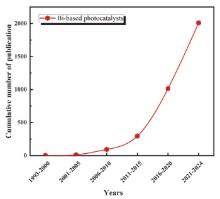
图1
"
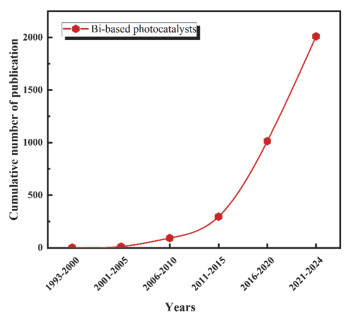
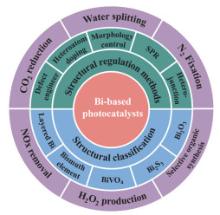
图2
"
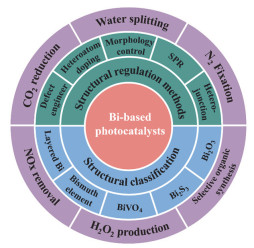
图3
"
图4
"
图5
"
图6
"
图7
"
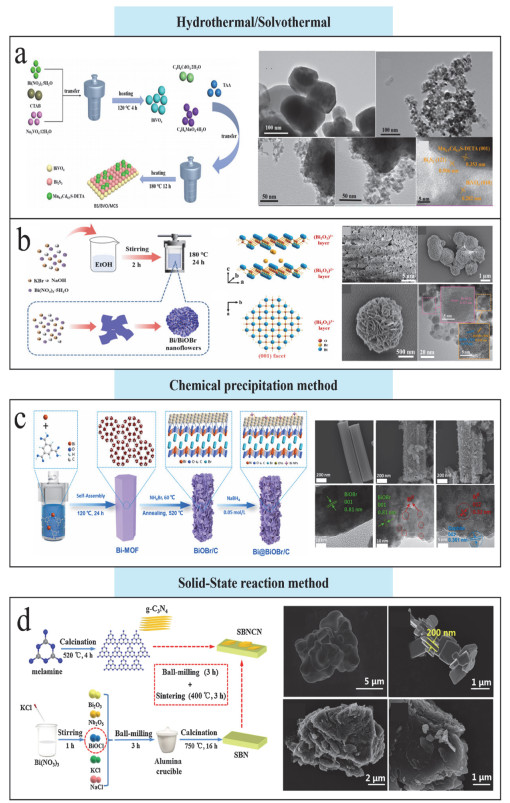
图8
"
图9
"
图10
"
图11
"
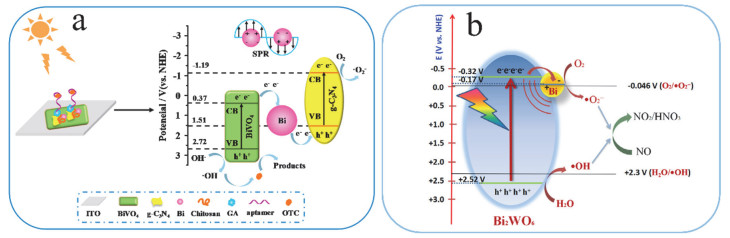
图12
"
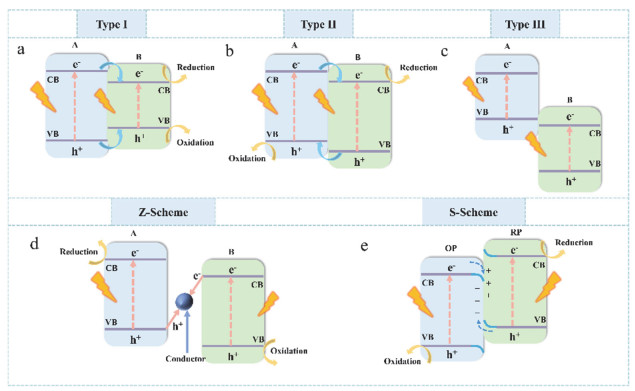
图13
"
图14
"
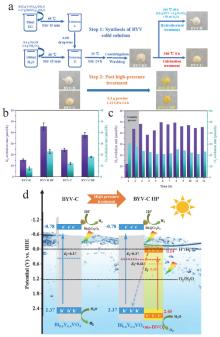
图15
"
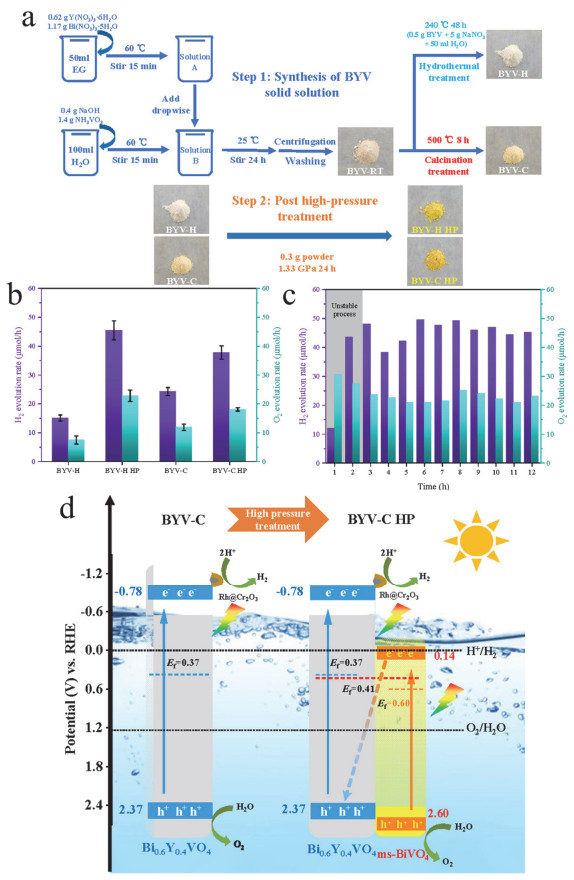
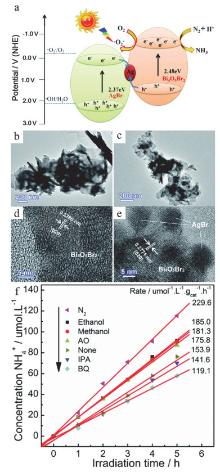
图16
"
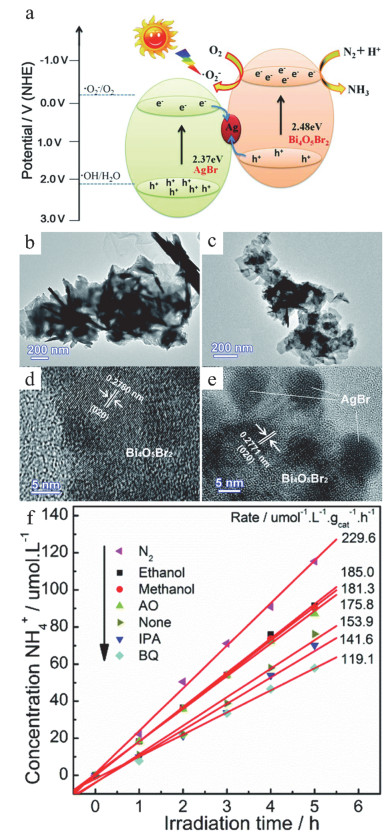
图17
"
图18
"
图19
"
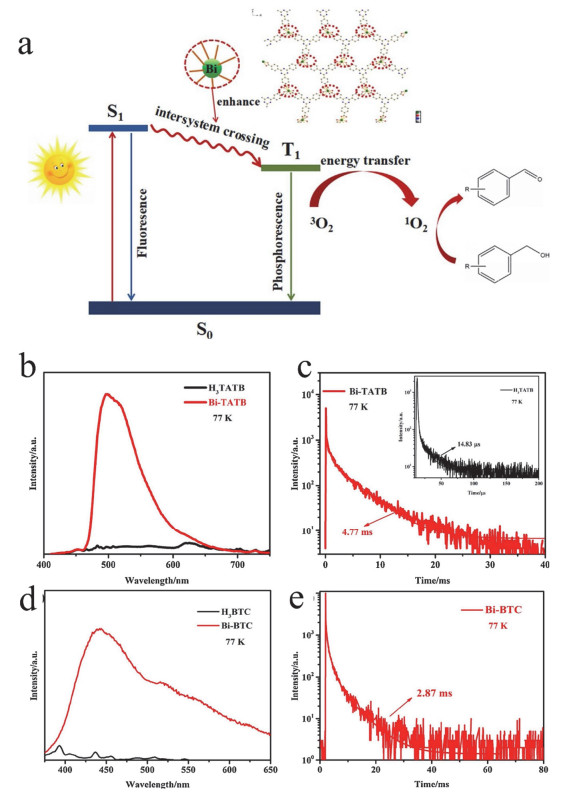
图20
"
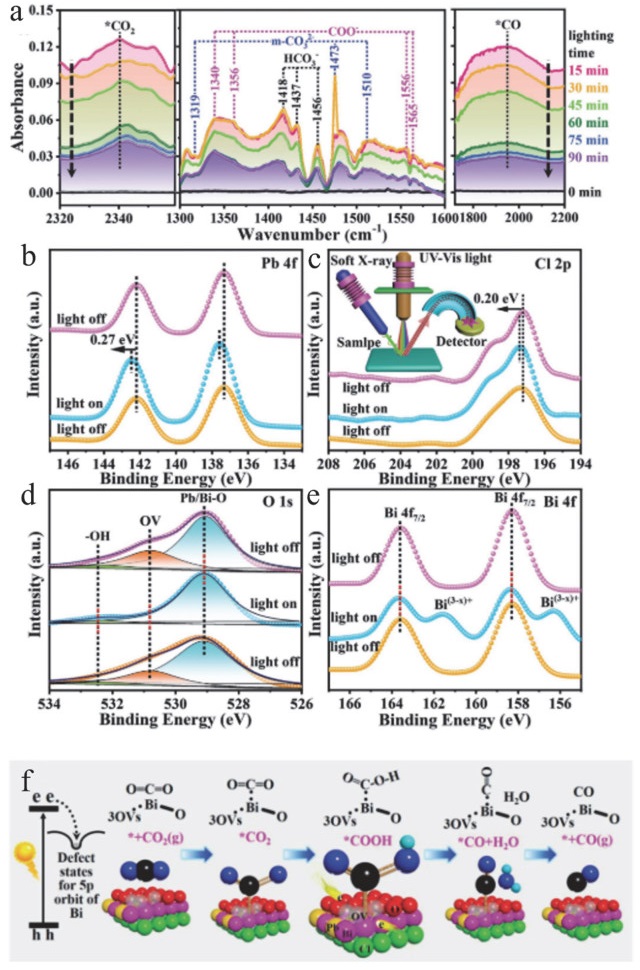
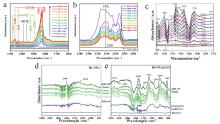
图21
"
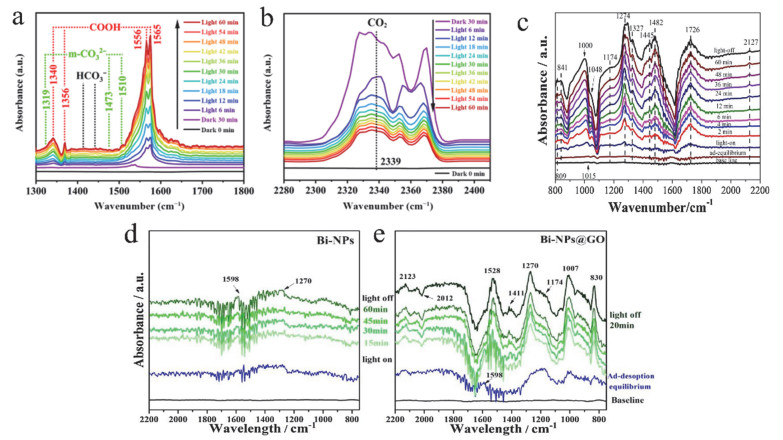
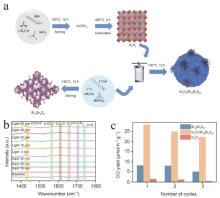
图22
"
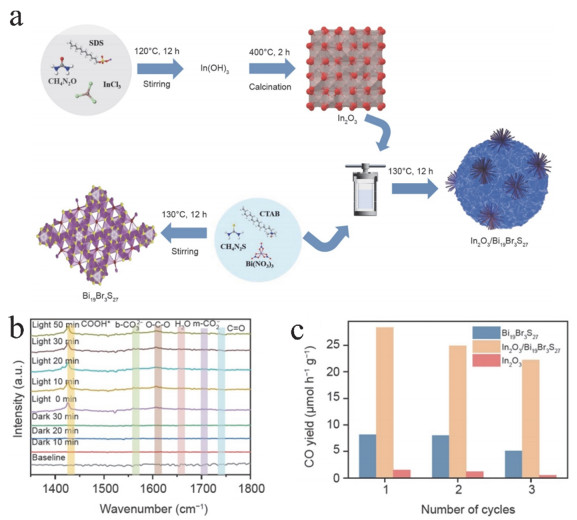
图23
"
图24
"
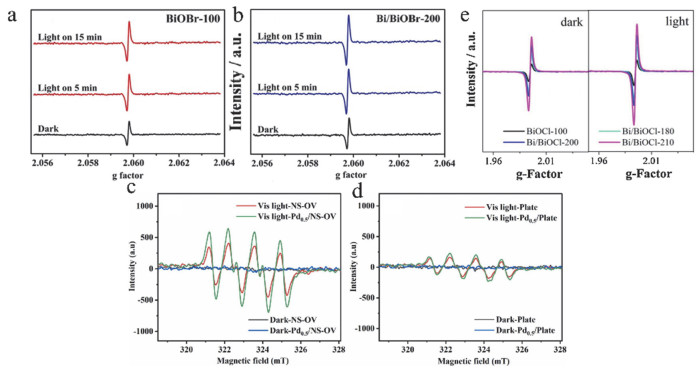
图25
"
| 1 |
doi: 10.1038/238037a0 |
| 2 |
doi: 10.1016/S1872-2067(22)64096-8 |
| 3 |
doi: 10.3866/PKU.WHXB202209037 |
| 4 |
doi: 10.1016/S1872-2067(23)64438-9 |
| 5 |
doi: 10.1002/solr.202100788 |
| 6 |
doi: 10.1016/S1872-2067(21)63866-4 |
| 7 |
doi: 10.3866/PKU.WHXB202211051 |
| 8 |
doi: 10.1016/j.apcatb.2020.119789 |
| 9 |
doi: 10.1002/adfm.202400065 |
| 10 |
doi: 10.14102/j.cnki.0254-5861.2022-0042 |
| 11 |
doi: 10.3866/PKU.WHXB202307016 |
| 12 |
doi: 10.1016/S1872-2067(21)63832-9 |
| 13 |
doi: 10.3866/PKU.WHXB202212010 |
| 14 |
doi: 10.1021/acssuschemeng.8b02064 |
| 15 |
doi: 10.1016/S1872-2067(21)63830-5 |
| 16 |
doi: 10.1002/adma.201807660 |
| 17 |
doi: 10.1016/S1872-2067(23)64502-4 |
| 18 |
doi: 10.1038/s41467-021-25007-6 |
| 19 |
doi: 10.1038/s41467-024-49004-7 |
| 20 |
doi: 10.1002/aenm.202301158 |
| 21 |
doi: 10.1016/S1872-2067(23)64491-2 |
| 22 |
doi: 10.1016/j.mtphys.2023.101315 |
| 23 |
doi: 10.14102/j.cnki.0254-5861.2022-0068 |
| 24 |
doi: 10.1016/S1872-2067(21)63872-X |
| 25 |
doi: 10.1007/s40843-023-2770-8 |
| 26 |
doi: 10.1016/S1872-2067(23)64466-3 |
| 27 |
doi: 10.1016/j.jmst.2023.02.044 |
| 28 |
doi: 10.1016/S1872-2067(21)63883-4 |
| 29 |
doi: 10.1002/adfm.202214470 |
| 30 |
doi: 10.1016/j.apcatb.2020.118844 |
| 31 |
doi: 10.1016/S1872-2067(21)64024-X |
| 32 |
doi: 10.14102/j.cnki.0254-5861.2022-0096 |
| 33 |
doi: 10.1016/j.jcis.2021.10.034 |
| 34 |
doi: 10.1002/anie.202304559 |
| 35 |
doi: 10.1016/j.jhazmat.2020.122050 |
| 36 |
doi: 10.1002/aenm.201903802 |
| 37 |
doi: 10.1002/adma.202207752 |
| 38 |
doi: 10.1016/j.apcatb.2022.121788 |
| 39 |
doi: 10.1039/D0CS01487G |
| 40 |
doi: 10.1016/S1872-2067(20)63784-6 |
| 41 |
doi: 10.1016/S1872-2067(21)63910-4 |
| 42 |
doi: 10.1016/j.jmst.2022.02.014 |
| 43 |
doi: 10.1016/j.apcatb.2020.119832 |
| 44 |
doi: 10.1016/j.cej.2020.124402 |
| 45 |
doi: 10.1016/S1872-2067(19)63481-9 |
| 46 |
doi: 10.1016/j.ccr.2023.215246 |
| 47 |
doi: 10.1002/anie.202407736 |
| 48 |
doi: 10.1016/j.ccr.2022.214515 |
| 49 |
doi: 10.1016/j.cej.2023.144658 |
| 50 |
doi: 10.1016/j.ccr.2021.214033 |
| 51 |
doi: 10.1016/j.ccr.2022.214541 |
| 52 |
doi: 10.3866/PKU.WHXB202209016 |
| 53 |
doi: 10.3866/PKU.WHXB202212026 |
| 54 |
doi: 10.1016/j.jmst.2023.03.003 |
| 55 |
doi: 10.1016/j.jhazmat.2021.126207 |
| 56 |
doi: 10.1016/j.apsusc.2021.151921 |
| 57 |
doi: 10.1016/s1872-2067(20)63612-9 |
| 58 |
doi: 10.1016/j.jmst.2023.07.076 |
| 59 |
doi: 10.1016/j.ccr.2022.215010 |
| 60 |
doi: 10.7536/PC220934 |
| 61 |
doi: 10.3866/PKU.WHXB202309031 |
| 62 |
doi: 10.1016/j.jcis.2021.07.064 |
| 63 |
doi: 10.1002/adma.202300643 |
| 64 |
doi: 10.1016/j.apcatb.2021.120957 |
| 65 |
doi: 10.1021/acsami.1c01470 |
| 66 |
doi: 10.1016/j.apcatb.2024.124209 |
| 67 |
doi: 10.1002/adfm.202206811 |
| 68 |
doi: 10.1016/j.cej.2024.150209 |
| 69 |
doi: 10.1016/j.scib.2020.01.007 |
| 70 |
doi: 10.1016/j.jmst.2023.05.037 |
| 71 |
doi: 10.1016/j.jhazmat.2020.124394 |
| 72 |
doi: 10.1016/j.apcatb.2017.05.009 |
| 73 |
doi: 10.1016/j.matlet.2019.126740 |
| 74 |
doi: 10.1016/j.apcatb.2018.05.069 |
| 75 |
doi: 10.1016/j.jmst.2021.11.046 |
| 76 |
doi: 10.1016/j.apcatb.2022.122238 |
| 77 |
doi: 10.1016/j.apcatb.2023.123238 |
| 78 |
doi: 10.1016/j.jhazmat.2019.121159 |
| 79 |
doi: 10.1016/j.cej.2023.145473 |
| 80 |
doi: 10.1016/j.cej.2023.145282 |
| 81 |
doi: 10.1016/j.jmst.2022.02.012 |
| 82 |
doi: 10.1016/j.jcis.2023.04.097 |
| 83 |
doi: 10.1016/j.seppur.2023.124509 |
| 84 |
doi: 10.1016/S1872-2067(22)64104-4 |
| 85 |
doi: 10.1016/j.jcis.2022.09.031 |
| 86 |
doi: 10.1016/j.apcatb.2023.123057 |
| 87 |
doi: 10.1016/j.cej.2021.131599 |
| 88 |
doi: 10.1002/adma.202301307 |
| 89 |
doi: 10.1021/acs.chemrev.1c00473 |
| 90 |
doi: 10.1021/acssuschemeng.7b03032 |
| 91 |
doi: 10.1016/j.bios.2020.112453 |
| 92 |
doi: 10.1016/S1872-2067(19)63320-6 |
| 93 |
doi: 10.1016/j.jcis.2022.02.026 |
| 94 |
doi: 10.1007/s40843-024-2779-5 |
| 95 |
doi: 10.1016/S1872-2067(23)64444-4 |
| 96 |
doi: 10.14102/j.cnki.0254-5861.2022-0150 |
| 97 |
doi: 10.1016/j.jmst.2023.08.038 |
| 98 |
doi: 10.1039/d2nr05341a |
| 99 |
doi: 10.3866/PKU.WHXB202311016 |
| 100 |
doi: 10.1016/j.jmst.2023.03.067 |
| 101 |
doi: 10.3866/PKU.WHXB202307022 |
| 102 |
doi: 10.1016/j.ccr.2022.214596 |
| 103 |
doi: 10.1016/j.trechm.2022.08.008 |
| 104 |
doi: 10.1016/S1872-2067(21)63911-6 |
| 105 |
doi: 10.3866/PKU.WHXB202209012 |
| 106 |
doi: 10.1002/aenm.202201449 |
| 107 |
doi: 10.1002/adma.202203225 |
| 108 |
doi: 10.1002/adma.202400288 |
| 109 |
doi: 10.1002/adma.202107668 |
| 110 |
doi: 10.1002/adma.202310600 |
| 111 |
doi: 10.1002/anie.202218688 |
| 112 |
doi: 10.1002/anie.202313172 |
| 113 |
doi: 10.1002/adfm.202315426 |
| 114 |
doi: 10.1016/S1872-2067(20)63560-4 |
| 115 |
doi: 10.1016/j.apcatb.2022.121893 |
| 116 |
doi: 10.1016/j.cej.2021.132519 |
| 117 |
doi: 10.1016/j.apcatb.2020.119251 |
| 118 |
doi: 10.1016/j.cej.2021.129530 |
| 119 |
doi: 10.1016/j.jmst.2023.03.037 |
| 120 |
doi: 10.1002/chem.202202669 |
| 121 |
doi: 10.1002/adma.202303902 |
| 122 |
doi: 10.1021/acs.chemrev.8b00400 |
| 123 |
doi: 10.1016/S1872-2067(23)64477-8 |
| 124 |
doi: 10.1002/adma.202303030 |
| 125 |
doi: 10.1002/anie.202209703 |
| 126 |
doi: 10.1016/j.apcatb.2022.121503 |
| 127 |
doi: 10.1002/adma.202108475 |
| 128 |
doi: 10.1016/j.jmst.2023.02.020 |
| 129 |
doi: 10.1002/adma.202309199 |
| 130 |
doi: 10.1016/j.chempr.2022.04.013 |
| 131 |
doi: 10.1016/s1872-2067(21)63846-9 |
| 132 |
doi: 10.1039/C9QI00782B |
| 133 |
doi: 10.1016/j.cjsc.2023.100202 |
| 134 |
doi: 10.1002/anie.202208438 |
| 135 |
doi: 10.1002/anie.202406310 |
| 136 |
doi: 10.1016/j.enchem.2023.100116 |
| 137 |
doi: 10.1016/j.cej.2023.144088 |
| 138 |
doi: 10.1016/j.apcatb.2019.05.024 |
| 139 |
doi: 10.1002/adfm.202202885 |
| 140 |
doi: 10.1016/j.apcatb.2020.119351 |
| 141 |
doi: 10.1007/s12274-023-5828-2 |
| 142 |
doi: 10.1016/j.apcatb.2017.11.079 |
| 143 |
doi: 10.1021/acsami.7b04026 |
| 144 |
doi: 10.1016/j.apcatb.2017.09.046 |
| 145 |
doi: 10.1007/s40843-023-2725-y |
| 146 |
doi: 10.1016/j.apcatb.2018.10.067 |
| 147 |
doi: 10.1016/j.apcatb.2016.08.049 |
| 148 |
doi: 10.3866/PKU.WHXB202011022 |
| 149 |
doi: 10.1016/j.cej.2023.146192 |
| 150 |
doi: 10.1016/j.jcat.2017.10.004 |
| 151 |
doi: 10.1016/j.apcatb.2021.121032 |
| 152 |
doi: 10.34133/research.0244 |
| [1] | 吕宪伟, 丁信元, 龚家兴, 闫旭焕, 黄大勇, 耿建新, 袁忠勇. 轨道杂化在光催化与电催化中的研究进展[J]. 物理化学学报, 2026, 42(2): 100151 - . |
| [2] | 樊凡, 修浩, 王宇婷, 崔永朋, 王雅君. NH2-MIL-125/Na掺杂g-C3N4复合S型异质结的构建及其光催化产过氧化氢性能[J]. 物理化学学报, 2026, 42(2): 100143 - . |
| [3] | 刘宇, 李鹏飞, 刘翼泽, 孙再成. 碳点作为单一光催化剂的最新进展[J]. 物理化学学报, 2026, 42(2): 100167 - . |
| [4] | 彭国强, 李秀艳, 李敏, 苏志博, 胡发露, 周国伟. 高效金属-有机框架的工程设计用于光催化CO2还原[J]. 物理化学学报, 2026, 42(2): 100164 - . |
| [5] | 张宇航, 李意, 曹玥晗, 帅英杰, 周宇, 周莹. Ir调控中间体生成类型抑制光催化甲烷转化中产物过氧化[J]. 物理化学学报, 2026, 42(2): 100173 - . |
| [6] | 陈芸, 邓代洁, 徐丽, 朱兴旺, 李赫楠, 孙成明. 共价键调控电荷转移以实现自供能电化学传感平台对重金属离子的灵敏分析[J]. 物理化学学报, 2026, 42(1): 100144 - . |
| [7] | 赵呈孝, 李昭霖, 吴东方, 杨小飞. SBA-15模板化共价三嗪框架增强光催化产氢[J]. 物理化学学报, 2026, 42(1): 100149 - . |
| [8] | 葛成艳, 胡佳伟, 刘星雨, 宋玉玺, 刘超, 邹志刚. 自集成黑色NiO团簇与ZnIn2S4微球实现S型电子转移机制下光热辅助制氢[J]. 物理化学学报, 2026, 42(1): 100154 - . |
| [9] | 黄火帅, 韦之栋, 严嘉玮, 池家晟, 苏千翔, 陈铭夏, 江治, 孙洋洲, 上官文峰. 揭示ZnxCd1−xS固溶体光催化析氢中的直接-间接带隙跃迁机制[J]. 物理化学学报, 2026, 42(1): 100141 - . |
| [10] | 陈轼逸, 付家龙, 裘建平, 常国菊, 郝仕油. 废弃医用口罩衍生的碳量子点增强BiOBr/g-C3N4 S型异质结光催化降解聚对苯二甲酸乙二醇酯(PET)[J]. 物理化学学报, 2026, 42(1): 100135 - . |
| [11] | 韦梦兰, 欧晓霞, 王艺濛, 张梦圆, 滕飞, 王凯旋. S型异质结g-C3N4/Bi2WO6高效降解左氧氟沙星:性能、机理及降解路径[J]. 物理化学学报, 2025, 41(9): 100105 - . |
| [12] | 李静萍, 严素定, 吴佳曦, 程强, 王楷. LiFePO4改善无机/有机S型光催化剂的过氧化氢光合作用[J]. 物理化学学报, 2025, 41(9): 100104 - . |
| [13] | 吴琦, 王长华, 李莹莹, 张昕彤. 增强g-C3N4@BN范德华异质结界面上的三重态电子转移增强光催化合成H2O2[J]. 物理化学学报, 2025, 41(9): 100107 - . |
| [14] | 张凤英, 梅杨林, 蒋毓蔓, 郑申申, 郑凯波, 周莹. 瞬态吸收光谱在太阳能转化利用中的研究进展[J]. 物理化学学报, 2025, 41(9): 100118 - . |
| [15] | 王文龙, 郝文韬, 何浪, 乔佳, 李宁, 陈朝秋, 覃勇. 碳量子点/TiO2 S型异质结的能带和吸附工程促进光催化CO2甲烷化[J]. 物理化学学报, 2025, 41(9): 100116 - . |
|
||