物理化学学报 >> 2025, Vol. 41 >> Issue (4): 100035.doi: 10.3866/PKU.WHXB202406014
钠离子电池铁基聚阴离子正极材料研究进展
王禹尧1,†, 曹志涛1,†, 杜泽宇1, 曹鑫鑫1,2,*( ), 梁叔全1,2,*()
- 1 中南大学材料科学与工程学院, 长沙 410083
2 中南大学电子封装及先进功能材料湖南省重点实验室, 长沙 410083
-
收稿日期:2024-06-13修回日期:2024-07-09录用日期:2024-07-09发布日期:2024-12-28 -
通讯作者:Email: caoxinxin@csu.edu.cn (曹鑫鑫)lsq@csu.edu.cn (梁叔全) -
作者简介:†These authors contributed equally to this work.
-
基金资助:国家自然科学基金(51932011); 湖南省自然科学基金(2023JJ10060); 湖南省青年科技人才(荷尖)项目(2022RC1078)
Research Progress of Iron-based Polyanionic Cathode Materials for Sodium-Ion Batteries
Yuyao Wang1, Zhitao Cao1, Zeyu Du1, Xinxin Cao1,2,*(), Shuquan Liang1,2,*()
- 1 School of Materials Science and Engineering, Central South University, Changsha 410083, China
2 Key Laboratory of Electronic Packaging and Advanced Functional Materials of Hunan Province, Central South University, Changsha 410083, China
-
Received:2024-06-13Revised:2024-07-09Accepted:2024-07-09Published:2024-12-28 -
Contact:Email: caoxinxin@csu.edu.cn (Xinxin Cao)lsq@csu.edu.cn (Shuquan Liang) -
Supported by:the National Natural Science Foundation of China(51932011); the Natural Science Foundation of Hunan Province(2023JJ10060); the Science and Technology Innovation Program of Hunan Province(2022RC1078)

摘要:
钠离子电池由于资源储量丰富、原料成本低廉、低温和快充性能优异等特点,在电网储能和低速交通领域可与锂离子电池形成互补,具有十分可观的应用前景。正极材料是影响电池整体性能的核心,它既是钠离子电池比能量提高的瓶颈,也是决定电池成本的最重要因素。低成本铁基聚阴离子正极材料由于结构稳定性好、安全性高、随充放电体积应变小等优势,从基础研究到成果产业化方面均受到广泛关注。本文综述了钠离子电池铁基聚阴离子正极材料的最新进展,包括铁基磷酸盐、铁基氟磷酸盐、铁基焦磷酸盐、铁基硫酸盐、铁基混合聚阴离子化合物等。系统分析讨论了各类铁基聚阴离子材料的晶体结构、制备方法、储钠机理和改性策略等,揭示铁基聚阴离子材料化学组成、结构调控与性能提升的构效关系。展望了铁基聚阴离子正极材料从实验室基础研究走向大规模产业应用过程中面临的挑战和对策建议。为新型低成本、高比能正极材料的探索开发和钠离子电池的产业化推进提供理论和技术指导。
引用本文
王禹尧, 曹志涛, 杜泽宇, 曹鑫鑫, 梁叔全. 钠离子电池铁基聚阴离子正极材料研究进展[J]. 物理化学学报, 2025, 41(4), 100035. doi: 10.3866/PKU.WHXB202406014
Yuyao Wang, Zhitao Cao, Zeyu Du, Xinxin Cao, Shuquan Liang. Research Progress of Iron-based Polyanionic Cathode Materials for Sodium-Ion Batteries[J]. Acta Phys. -Chim. Sin. 2025, 41(4), 100035. doi: 10.3866/PKU.WHXB202406014
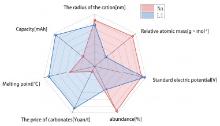
图1
"
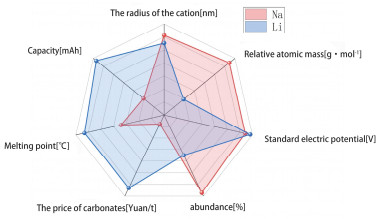
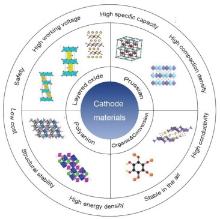
图2
"
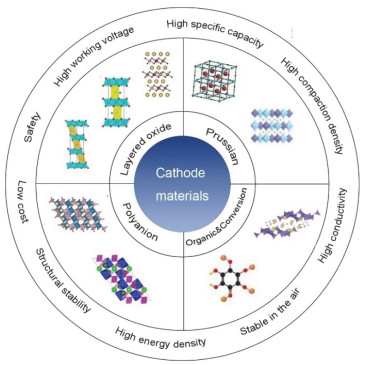
表1
"
| Type | Compound | Crystal system | Space group | Ref. |
| Olivine | NaFePO4 | Orthorhombic | Pnma | |
| Olivine | NaMnPO4 | Orthorhombic | Pnma | |
| Maricite | NaFePO4 | Orthorhombic | Pnma | |
| Maricite | NaMnPO4 | Orthorhombic | Pnma | |
| Maricite | α-NaCoPO4 | Orthorhombic | Pnma | |
| NASICON | Na3V2(PO4)3 | Rhombohedral | R${\rm{\bar 3}}$c | |
| NASICON | NaFe2(PO4)(SO4)2 | Rhombohedral | R${\rm{\bar 3}}$c | |
| NASICON | γ-Na3Fe2(PO4)3 | Rhombohedral | R${\rm{\bar 3}}$c | |
| NASICON | Na4Fe3(PO4)2P2O7 | Orthorhombic | Pn21a | |
| NASICON | Na4MnV(PO4)3 | Trigonal | R${\rm{\bar 3}}$c | |
| NASICON | Na3FeV(PO4)3 | Monoclinic | C2/c | |
| Triplite | NaFeSO4F | Monoclinic | C2/c | |
| Alluaudite | Na2Fe2(SO4)3 | Monoclinic | P21/c |
图3
"
图4
"
图5
"
图6
"
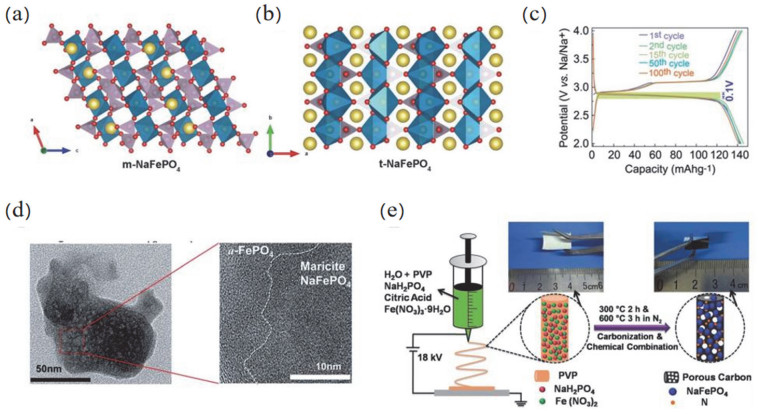
图7
"
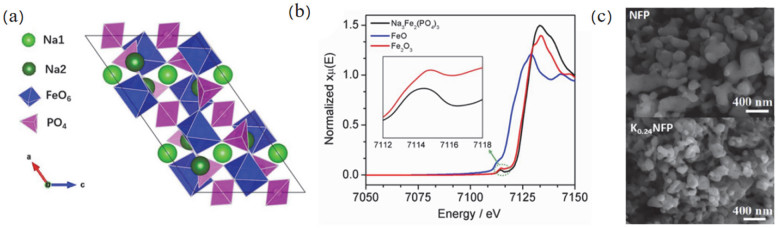
图8
"
图9
"
图10
"
图11
"
图12
"
图13
"
图14
"
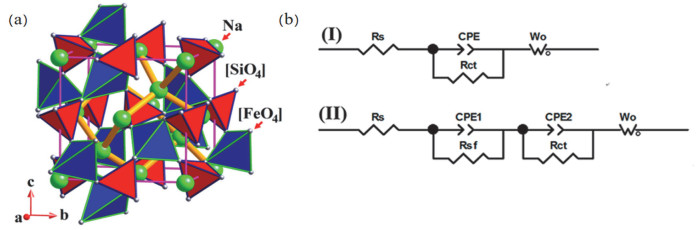
图15
"
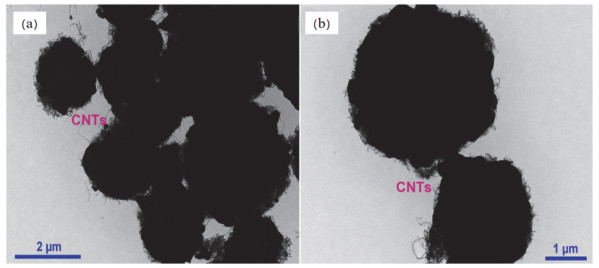
图16
"
图17
"
图18
"
表2
"
| Type | Phosphates | Fluoropho-sphates | Pyrophosph-ates | Sulfates | Silicates | Mixed compounds |
| Example | NaFePO4 | Na2FePO4F | Na2FeP2O7 | Na2Fe2(SO4)3 | Na2FeSiO4 | Na4Fe3(PO4)2P2O7 |
| Space Group | Pnma | Pbcn | P1 | c2/c | Pn | Pn21a |
| Crystal system | orthogonal | orthogonal | monoclinic | monoclinic | triclinic | orthogonal |
| Theoretical capacity (mAh∙g−1) | 155 | 124 | 97 | 120 | 276 | 129 |
| Price (CNY) | 6815/t | – | – | 35250/t | – | 50700/t |
| Voltage platform (Ⅴ) | 3.0 Ⅴ | 3.0 Ⅴ | 3.0 Ⅴ | 3.8 Ⅴ | 1.9 Ⅴ | 3.2 Ⅴ |
| Energy density (Wh∙Kg−1) | 413 | 342 | 243 | 387 | 343 | 320 |
| 1 |
|
|
陈鲜红; 阮鹏超; 吴贤文; 梁叔全; 周江. 物理化学学报, 2021, 38, 2111003.
doi: 10.3866/PKU.WHXB202111003 |
|
| 2 |
Liang, S. C. Y.; Fang, G.; Cao, X.; Shen, W.; Zhong, J.; Pan, A; Zhou, J. Chin. J. Nonferrous Met 2019, 29, 2064.
|
|
梁叔全, 程一兵, 方国赵, 曹鑫, 沈文剑, 钟杰, 潘安强, 周江. 中国有色金属学报, 2019, 29, 2064. doi: 10.19476/j.ysxb.1004.0609.2019.09.13
|
|
| 3 |
doi: 10.1002/aesr.202300102 |
| 4 |
|
|
曹鑫鑫; 周江; 潘安强; 梁叔全. 物理化学学报, 2020, 36, 1905018.
doi: 10.3866/PKU.WHXB201905018 |
|
| 5 |
doi: 10.1002/adfm.202000473 |
| 6 |
doi: 10.1016/j.elecom.2012.06.014 |
| 7 |
doi: 10.1016/j.jpowsour.2019.227016 |
| 8 |
doi: 10.1039/c4ee03215b |
| 9 |
doi: 10.1007/s11051-019-4733-9 |
| 10 |
doi: 10.1016/j.elecom.2011.11.009 |
| 11 |
doi: 10.1016/j.jpowsour.2018.02.021 |
| 12 |
doi: 10.1021/cm991138n |
| 13 |
doi: 10.1038/s41467-019-09170-5 |
| 14 |
doi: 10.1021/acs.nanolett.6b04044 |
| 15 |
doi: 10.1021/acssuschemeng.1c03355 |
| 16 |
doi: 10.1038/ncomms5358 |
| 17 |
doi: 10.1021/acsomega.9b04213 |
| 18 |
|
|
黄俊达; 朱宇辉; 冯煜; 韩叶虎; 谷振一; 刘日鑫; 杨冬月; 陈凯; 张相禹; 孙威; 等. 物理化学学报, 2022, 38, 2208008.
doi: 10.3866/PKU.WHXB202208008 |
|
| 19 |
doi: 10.1002/smtd.201800253 |
| 20 |
|
|
胡紫霖; 牛耀申; 容晓晖; 胡勇胜. 物理化学学报, 2023, 40, 2306005.
doi: 10.3866/PKU.WHXB202306005 |
|
| 21 |
doi: 10.1021/ic400870x |
| 22 |
doi: 10.1002/er.4078 |
| 23 |
doi: 10.1038/s41598-022-20329-x |
| 24 |
doi: 10.1039/c2nr32758a |
| 25 |
doi: 10.1039/c6ta01111j |
| 26 |
doi: 10.1016/j.cej.2019.01.173 |
| 27 |
doi: 10.1002/adfm.201801917 |
| 28 |
doi: 10.1021/acs.energyfuels.1c02779 |
| 29 |
doi: 10.1021/acsami.6b04014 |
| 30 |
doi: 10.1021/am5033605 |
| 31 |
|
| 32 |
doi: 10.1021/acssuschemeng.9b05098 |
| 33 |
doi: 10.1039/c5ra18404e |
| 34 |
doi: 10.1002/adma.202304428 |
| 35 |
doi: 10.1016/j.nanoen.2019.103941 |
| 36 |
doi: 10.1021/acssuschemeng.6b01536 |
| 37 |
doi: 10.3390/ma12081348 |
| 38 |
doi: 10.1016/j.jallcom.2019.01.125 |
| 39 |
doi: 10.1016/j.desal.2021.115341 |
| 40 |
doi: 10.1002/celc.201801314 |
| 41 |
|
|
周煌; 胡晓萍; 任稳; 曹鑫鑫. 无机盐工业, 2024, 56, 30.
doi: 10.19964/j.issn.1006-4990.2023-0239 |
|
| 42 |
doi: 10.1021/cm902023h |
| 43 |
doi: 10.1021/acs.inorgchem.0c01961 |
| 44 |
doi: 10.1002/anie.201805555 |
| 45 |
doi: 10.1039/c7ta05680j |
| 46 |
doi: 10.1039/c3ta14472k |
| 47 |
doi: 10.1002/adfm.202305109 |
| 48 |
doi: 10.1016/j.jpowsour.2015.09.123 |
| 49 |
doi: 10.1021/acsami.7b03933 |
| 50 |
doi: 10.1007/s11581-017-2376-3 |
| 51 |
doi: 10.1016/j.ceramint.2012.12.044 |
| 52 |
doi: 10.1021/acsaem.0c00323 |
| 53 |
doi: 10.1002/advs.201900649 |
| 54 |
doi: 10.1016/j.jelechem.2020.114187 |
| 55 |
doi: 10.1007/s10853-017-1738-6 |
| 56 |
doi: 10.1016/j.inoche.2018.07.011 |
| 57 |
doi: 10.1016/j.jpowsour.2019.05.066 |
| 58 |
doi: 10.1007/s11771-019-4108-5 |
| 59 |
doi: 10.1016/j.ensm.2021.12.034 |
| 60 |
doi: 10.1016/j.elecom.2015.04.009 |
| 61 |
doi: 10.1016/j.jpowsour.2013.08.027 |
| 62 |
doi: 10.1039/c4ta02383h |
| 63 |
doi: 10.1016/j.apsusc.2020.148893 |
| 64 |
doi: 10.1021/acs.jpclett.0c00149 |
| 65 |
doi: 10.1016/j.elecom.2012.08.028 |
| 66 |
doi: 10.1002/aenm.201100772 |
| 67 |
doi: 10.1039/c5ta03127c |
| 68 |
doi: 10.1016/j.jpowsour.2015.10.033 |
| 69 |
doi: 10.1016/j.jpowsour.2017.04.075 |
| 70 |
doi: 10.1021/acsami.2c00821 |
| 71 |
doi: 10.1016/j.ssi.2014.03.011 |
| 72 |
doi: 10.1039/c5cp06836c |
| 73 |
doi: 10.1016/j.jpowsour.2016.09.099 |
| 74 |
doi: 10.1002/aenm.201200825 |
| 75 |
doi: 10.1002/adma.201605535 |
| 76 |
doi: 10.1016/j.cej.2019.01.177 |
| 77 |
doi: 10.1016/j.nanoen.2020.105417 |
| 78 |
doi: 10.1016/j.ceramint.2022.06.312 |
| 79 |
doi: 10.1039/c5ta09403h |
| 80 |
doi: 10.1039/c7cc01812f |
| 81 |
doi: 10.1002/cey2.449 |
| 82 |
doi: 10.1039/d0qm00847h |
| 83 |
doi: 10.1016/j.scib.2023.07.034 |
| 84 |
doi: 10.1002/smll.202306595 |
| 85 |
Pan, W. L. Preparation of Transition Metal Sulfate Cathode Materials and Their Sodium Storage Properties. M. S. Dissertation, Zhejiang University, Hangzhou, 2020.
|
|
潘雯丽. 过渡金属硫酸盐正极材料的制备及其储钠性能研究[硕士学位论文]. 杭州: 浙江大学, 2020.
|
|
| 86 |
doi: 10.1002/anie.201003743 |
| 87 |
doi: 10.1021/acs.chemmater.8b02354 |
| 88 |
doi: 10.1039/c9ta03089a |
| 89 |
doi: 10.1002/celc.201500535 |
| 90 |
doi: 10.1039/c3cc47557c |
| 91 |
doi: 10.1039/c5cp00380f |
| 92 |
doi: 10.1021/cm4033226 |
| 93 |
doi: 10.1016/j.esci.2023.100186 |
| 94 |
doi: 10.1021/cm1010482 |
| 95 |
doi: 10.1016/j.jpowsour.2017.09.087 |
| 96 |
doi: 10.1002/celc.201500036 |
| 97 |
doi: 10.1021/acsami.5b11302 |
| 98 |
doi: 10.1039/c5ta07696j |
| 99 |
doi: 10.1002/aenm.201800944 |
| 100 |
doi: 10.1038/s41467-023-39384-7 |
| 101 |
doi: 10.1016/j.jechem.2020.06.020 |
| 102 |
doi: 10.1002/celc.201500455 |
| 103 |
doi: 10.1021/acs.chemmater.6b01091 |
| 104 |
doi: 10.1039/c7ta11110j |
| 105 |
doi: 10.1016/j.mtnano.2020.100098 |
| 106 |
doi: 10.1039/c0ee00699h |
| 107 |
doi: 10.1016/j.ssi.2022.116084 |
| 108 |
doi: 10.1016/j.matchemphys.2016.01.033 |
| 109 |
doi: 10.1021/acsami.6b03969 |
| 110 |
doi: 10.1039/c6cp05135a |
| 111 |
doi: 10.1021/acsami.9b10029 |
| 112 |
doi: 10.1016/j.ssi.2021.115737 |
| 113 |
doi: 10.1002/wene.48 |
| 114 |
doi: 10.1002/ente.202200619 |
| 115 |
doi: 10.1039/d0qi00864h |
| 116 |
doi: 10.1016/j.electacta.2019.134959 |
| 117 |
doi: 10.1021/acsami.0c07894 |
| 118 |
doi: 10.1016/j.ceramint.2018.08.186 |
| 119 |
doi: 10.1016/j.electacta.2018.07.034 |
| 120 |
doi: 10.1016/j.scib.2024.01.026 |
| 121 |
doi: 10.3390/batteries5020039 |
| 122 |
doi: 10.1016/j.ensm.2021.02.011 |
| 123 |
doi: 10.1021/cm4013816 |
| 124 |
doi: 10.1021/ja3038646 |
| 125 |
doi: 10.1016/j.jpowsour.2016.07.061 |
| 126 |
doi: 10.1016/j.nanoen.2021.106680 |
| 127 |
doi: 10.1016/j.cej.2023.141385 |
| 128 |
doi: 10.1016/j.ces.2022.117951 |
| 129 |
doi: 10.1002/adma.202202624 |
| 130 |
doi: 10.1016/j.ensm.2022.11.018 |
| 131 |
doi: 10.1016/j.ensm.2019.02.017 |
| 132 |
doi: 10.1002/smll.202302609 |
| 133 |
doi: 10.1021/acsaem.1c01269 |
| 134 |
doi: 10.1002/adfm.202211257 |
| 135 |
doi: 10.1016/j.jpowsour.2021.230922 |
| 136 |
doi: 10.1002/adfm.202309701 |
| 137 |
doi: 10.1016/j.nanoen.2018.11.011 |
| 138 |
doi: 10.1021/acs.jpcc.5b04648 |
| 139 |
doi: 10.1021/acsenergylett.2c02693 |
| 140 |
doi: 10.1021/acsenergylett.0c01902 |
| 141 |
doi: 10.1002/smtd.202100372 |
| 142 |
doi: 10.1002/adfm.202209482 |
| 143 |
doi: 10.1016/j.jallcom.2021.159382 |
| 144 |
doi: 10.1021/ja3040834 |
| 145 |
doi: 10.1038/s41598-020-60183-3 |
| 146 |
doi: 10.1016/j.mseb.2016.07.007 |
| [1] | Débora Ferreira dos Santos Morais, José Luis Tirado, Carlos Pérez-Vicente, Fabiana Villela da Motta, Pedro Lavela, Mauricio Bomio, Sergio Lavela. 通过Nb2O5包覆提升Na3V2(PO4)3正极的储钠性能[J]. 物理化学学报, 2026, 42(2): 100180 - . |
| [2] | 赵珊, 刘旭, 郭昊天, 柳宗琳, 王鹏飞, 舒杰, 伊廷锋. 高熵P2/O3双相正极的协同设计助力高性能钠离子电池[J]. 物理化学学报, 2026, 42(1): 100129 - . |
| [3] | 宋亮亮, 梁颢严, 李顺清, 邱报, 刘兆平. 超高比能电池高锰富锂层状氧化物正极材料面临的挑战与解决策略[J]. 物理化学学报, 2025, 41(8): 100085 - . |
| [4] | 邱领邦, 蒋江民, 王李波, 白浪, 周飞, 周羔宇, 庄全超, 崔艳华. 原位电化学阻抗谱监测长寿命热电池Nb12WO33正极材料的高温双放电机制[J]. 物理化学学报, 2025, 41(5): 100040 - . |
| [5] | 王卓, 白雪, 张可新, 王鸿志, 董家宝, 高源, 赵斌. MOF模板法合成氮掺杂碳材料用于增强电化学钠离子储存和去除[J]. 物理化学学报, 2025, 41(3): 100026 - . |
| [6] | 郭宇, 黄志伟, 胡雨青, 李俊哲, 徐杰. 钠离子电池中铁基异质结构负极材料的最新研究进展[J]. 物理化学学报, 2025, 41(3): 100022 - . |
| [7] | 严鹏程, 王鹏, 黄婧, 莫曌, 徐丽, 陈芸, 张瑜, 齐志冲, 许晖, 李赫楠. 多策略提升卤化氧铋活性材料的光电性能及其在光电化学领域的应用进展[J]. 物理化学学报, 2025, 41(2): 100014 - . |
| [8] | 李文慧, 唐亚昆, 周玉生, 张月, 张文海, 马庆涛, 刘浪, 董森, 曹余良. 通过分子内氧化提升沥青衍生硬碳的储钠性能以用于高性能钠离子电池[J]. 物理化学学报, 2025, 41(10): 100119 - . |
| [9] | 黄辰悦, 郑鸿飞, 秦宁, 王灿沛, 王利光, 陆俊. 单晶高镍三元正极材料:挑战与策略[J]. 物理化学学报, 2024, 40(9): 2308051 - . |
| [10] | 肖雪, 李佳纯, 孟祥桐, 邱介山. 硫掺杂碳包覆Fe0.95S1.05纳米球复合材料的储钠性能[J]. 物理化学学报, 2024, 40(6): 2307006 - . |
| [11] | 胡紫霖, 牛耀申, 容晓晖, 胡勇胜. Ni3+抑制具有阴离子氧化还原活性钠离子电池正极材料的电压衰减[J]. 物理化学学报, 2024, 40(6): 2306005 - . |
| [12] | 薛晴, 李圣驿, 赵亚楠, 盛鹏, 徐丽, 李正曦, 张波, 李慧, 王博, 杨立滨, 曹余良, 陈重学. 基于活性炭||Na0.44MnO2的低成本、高倍率和长寿命碱性钠离子电池电容器[J]. 物理化学学报, 2024, 40(2): 2303041 - . |
| [13] | 梅建宝, 李贝, 张舒, 肖东东, 胡朴, 张更. 高性能三元NASICON型Na3.5−xMn0.5V1.5−xZrx(PO4)3/C钠离子电池正极材料[J]. 物理化学学报, 2024, 40(12): 2407023 - . |
| [14] | 李琪, 黎平安, 刘泽通, 张佳辉, 张浩, 余维来, 胡先罗. 同轴静电纺丝构筑微/纳米结构隔膜与电极材料用于锂离子电池:从原理到应用[J]. 物理化学学报, 2024, 40(10): 2311030 - . |
| [15] | 陈帅, 余创, 罗启悦, 魏超超, 李莉萍, 李广社, 程时杰, 谢佳. 卤化物固态电解质研究进展[J]. 物理化学学报, 2023, 39(8): 2210032 -0 . |
|
||