

物理化学学报 >> 2025, Vol. 41 >> Issue (1): 100004.doi: 10.3866/PKU.WHXB202309019
所属专题: 电化学前沿
门明阳1,2, 吴敬华1,2, 刘高瞻1,2, 张婧1,2, 张妮妮1,2, 姚霞银1,2,*( )
)
收稿日期:2023-09-12
修回日期:2023-10-11
录用日期:2023-10-30
发布日期:2023-12-20
通讯作者:
Email: yaoxy@nimte.ac.cn; Tel.: +86-574-8632-4359 (姚霞银)
基金资助:
Mingyang Men1,2, Jinghua Wu1,2, Gaozhan Liu1,2, Jing Zhang1,2, Nini Zhang1,2, Xiayin Yao1,2,*()
Received:2023-09-12
Revised:2023-10-11
Accepted:2023-10-30
Published:2023-12-20
Contact:
Email: yaoxy@nimte.ac.cn; Tel.: +86-574-8632-4359 (Xiayin Yao)
Supported by:摘要:
硫化物固体电解质具有接近甚至超过液态有机电解质的高室温离子电导率和较好的机械延展性,是一种极具应用潜力的固体电解质。其制备方式主要分为固相烧结法、高能球磨法和液相法三类。其中,固相烧结法和高能球磨法耗时长,能耗高,且合成的电解质颗粒尺寸较大。相比之下,液相法以有机溶剂为介质,可以合成颗粒较小的硫化物固体电解质,工艺简单省时,更适用于规模化生产。有鉴于此,本文总结了近年来液相法制备硫化物固体电解质的研究进展,基于原料在溶剂中的溶解状态,分析了悬浮型、溶液型和混合型三种反应类型的反应机理,并进一步探讨了溶剂对电解质纯度、形貌及结晶性的影响。同时,概述了液相法制备的硫化物固体电解质在全固态锂电池中的应用。最后,对硫化物固体电解质液相法合成的优势与局限性进行了全面的分析,以期为该领域的研究提供方向。
门明阳, 吴敬华, 刘高瞻, 张婧, 张妮妮, 姚霞银. 液相法制备硫化物固体电解质及其在全固态锂电池中的应用[J]. 物理化学学报, 2025, 41(1), 100004. doi: 10.3866/PKU.WHXB202309019
Mingyang Men, Jinghua Wu, Gaozhan Liu, Jing Zhang, Nini Zhang, Xiayin Yao. Sulfide Solid Electrolyte Synthesized by Liquid Phase Approach and Application in All-Solid-State Lithium Batteries[J]. Acta Phys. -Chim. Sin. 2025, 41(1), 100004. doi: 10.3866/PKU.WHXB202309019
图1
"
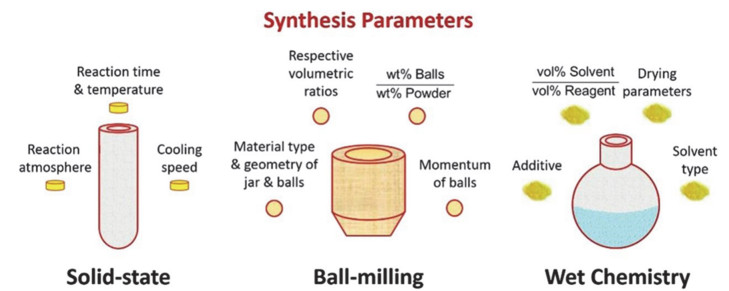
图2
"
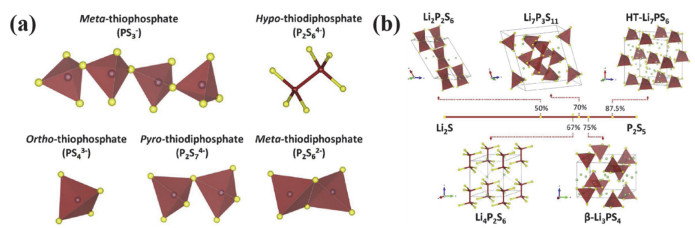
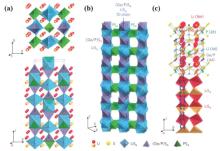
图3
"
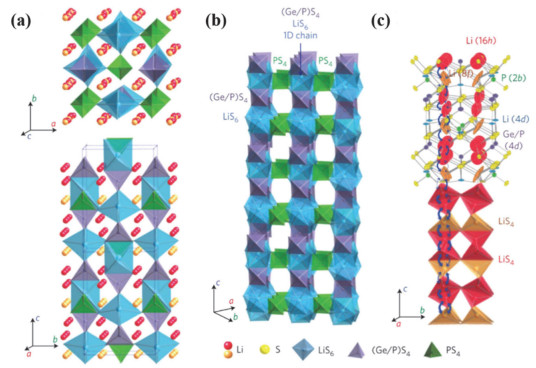
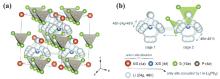
图4
"
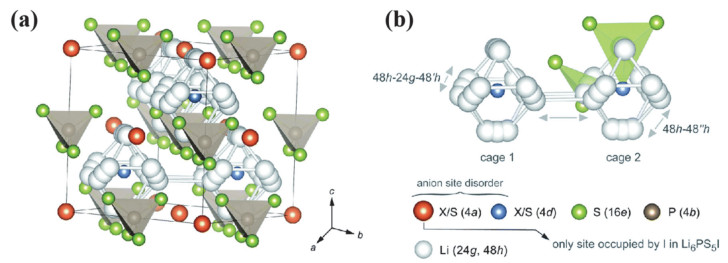
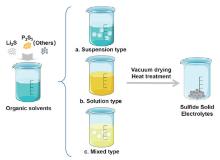
图5
"
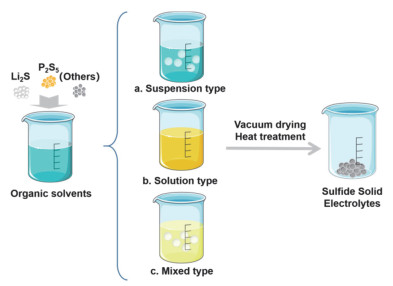
表1
"
| Sulfide solid electrolyte | Ionic conductivity (S∙cm−1) | Temperature (℃) | Solvent | Synthesis type | Reference |
| Li3PS4 | 1.6 × 10⁻⁴ | 25 | THF | Suspension type | |
| Li3PS4 | 3.3 × 10⁻⁴ | 25 | EA | Suspension type | |
| Li3PS4 | 1.2 × 10⁻⁴ | 30 | ACN | Suspension type | |
| Li3PS4 | 6.4 × 10⁻⁶ | 20 | DMC | Suspension type | |
| Li3PS4 | 2.3 × 10⁻⁶ | 25 | NMF | Suspension type | |
| Li3PS4 | 5.0 × 10⁻⁵ | 25 | EDA | Solution type | |
| Li3PS4 | 2.0 × 10⁻⁴ | 30 | THF-O-xylene | Solution type | |
| Li7PS6 | 1.1 × 10⁻⁴ | 30 | EtOH | Solution type | |
| Li7P3S11 | 1.0 × 10⁻³ | – | ACN | Suspension type | |
| Li7P3S11 | 1.05 × 10⁻³ | – | EA | Suspension type | |
| Li7P3S11 | 2.7 × 10⁻⁴ | 25 | DME | Solution type | |
| Li4PS4I | 1.0 × 10⁻³ | 25 | EP | Suspension type | |
| Li4PS4I | 1.2 × 10⁻⁴ | 25 | DME | Mixed type | |
| Li3.2P0.8Sn0.2S4 | 1.9 × 10⁻⁴ | 30 | EDA-EDT-THF | Suspension type | |
| Li3.25Ge0.25P0.75S4 | 1.82 × 10⁻⁴ | 30 | Hydrazine | Dissolution-precipitation type | |
| 80Li2S∙20P2S5 | 2.6 × 10⁻⁶ | – | NMF | Dissolution-precipitation type | |
| Li10GeP2S12 | 1.6 × 10⁻³ | – | DME-THF | Suspension type | |
| Li10GeP2S12 | 1.2 × 10⁻³ | 30 | EDA-ET | Solution type | |
| Li10GeP2S12 | 1.8 × 10⁻³ | 25 | EtOH-THF | Mixed type | |
| Li5.5PS4.5Cl1.5 | 2.87 × 10⁻³ | 25 | EDA | Mixed type | |
| Li6PS5Cl | 1.3 × 10⁻³ | 30 | EDA-EDT | Solution type | |
| Li6PS5Cl | 2.1 × 10⁻⁴ | 30 | EtOH | Solution type | |
| Li6PS5Cl | 1.1 × 10⁻³ | 30 | EA | Mixed type | |
| Li6PS5Cl | 2.79 × 10⁻³ | 25 | ACN | Mixed type | |
| Li6PS5Cl | 1.4 × 10⁻⁵ | – | EtOH | Dissolution-precipitation type | |
| Li6PS5Br | 3.1 × 10⁻³ | 25 | THF-EtOH | Solution type | |
| Li6PS5Br | 1.9 × 10⁻⁴ | 25 | EtOH | Dissolution-precipitation type |
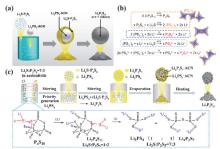
图6
"
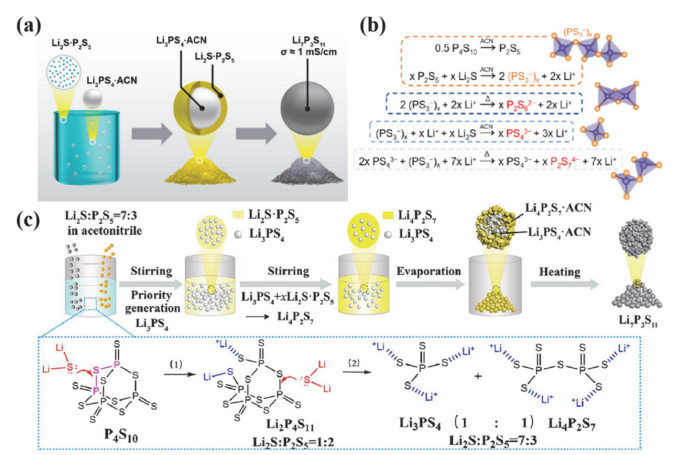
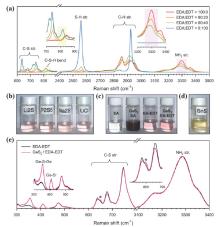
图7
"
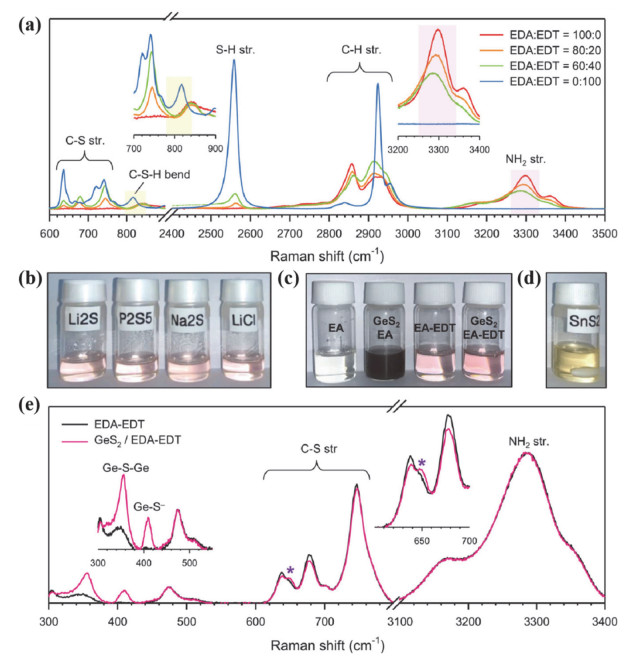
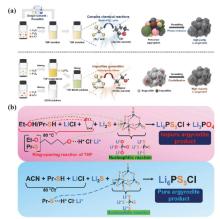
图8
"
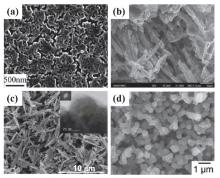
图9
"
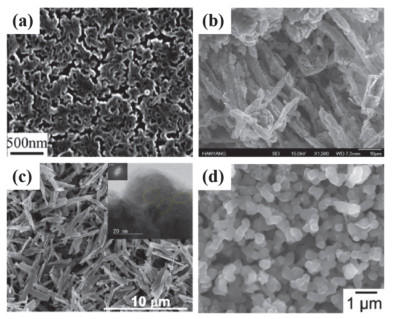
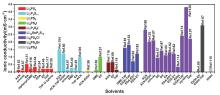
图10
"
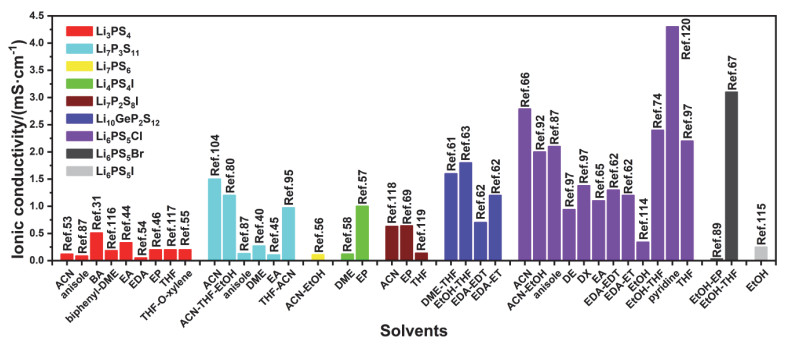
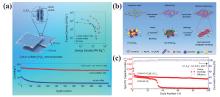
图11
"
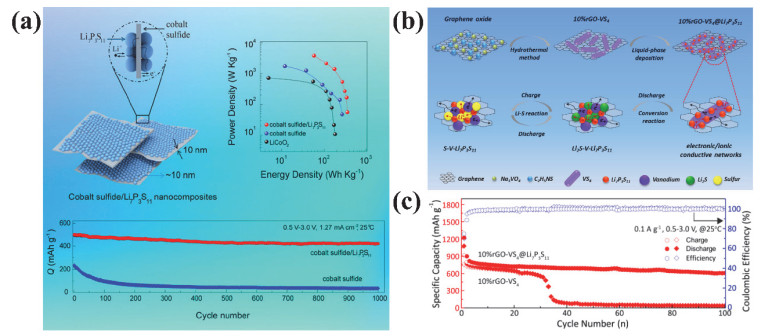
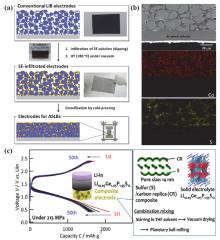
图12
"
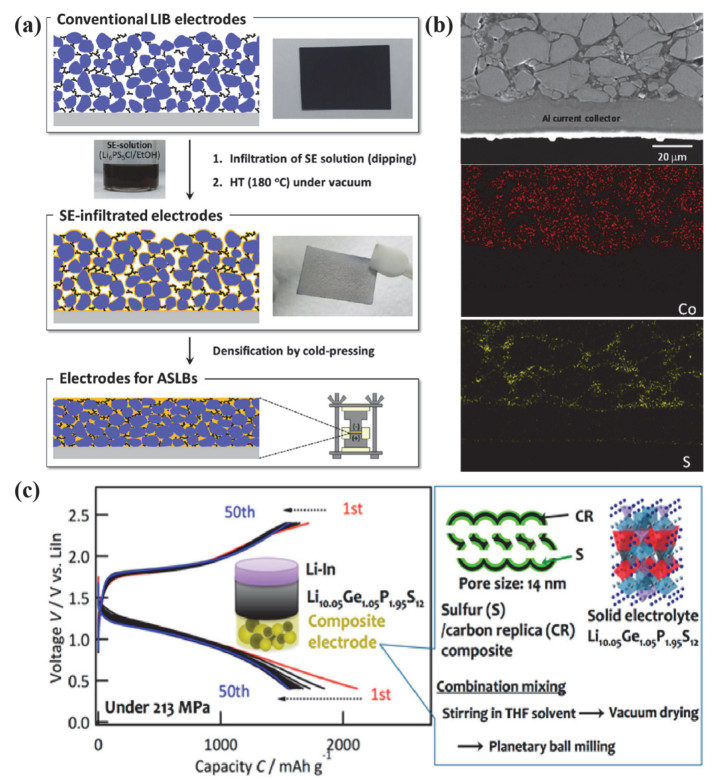
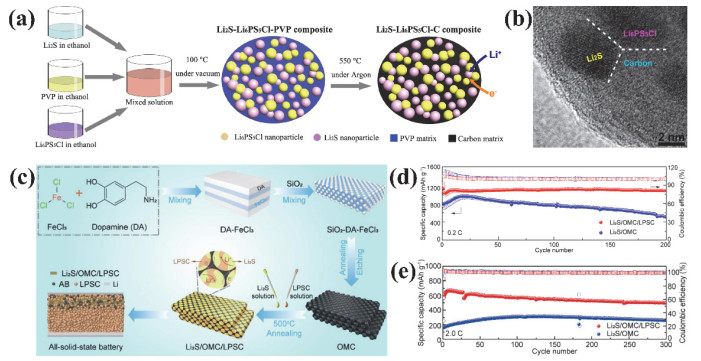
图13
"
| 1 |
doi: 10.1038/natrevmats.2016.13 |
| 2 |
doi: 10.1038/s41570-019-0078-2 |
| 3 |
doi: 10.1039/d1ee00551k |
| 4 |
|
|
吴敬华; 杨菁; 刘高瞻; 王脂胭; 张秩华; 俞海龙; 姚霞银; 黄学杰. 储能科学与技术, 2022, 11, 2173.
doi: 10.19799/j.cnki.2095-4239.2022.0309 |
|
| 5 |
|
|
彭林峰; 余创; 魏超超; 廖聪; 陈帅; 张隆; 程时杰; 谢佳. 物理化学学报, 2023, 39, 2211034.
doi: 10.3866/PKU.WHXB202211034 |
|
| 6 |
|
|
吴敬华; 姚霞银. 储能科学与技术, 2020, 9, 501.
doi: 10.19799/j.cnki.2095-4239.2020 |
|
| 7 |
|
|
张舒; 王少飞; 凌仕刚; 高健; 吴娇杨; 肖睿娟; 李泓; 陈立泉. 储能科学与技术, 2014, 3, 376.
doi: 10.3969/j.issn.2095-4239.2014.04.012 |
|
| 8 |
doi: 10.1016/j.ensm.2019.08.029 |
| 9 |
|
|
冯吴亮; 王飞; 周星; 吉晓; 韩福东; 王春生. 物理学报, 2020, 69, 228206.
doi: 10.7498/aps.69.20201554 |
|
| 10 |
|
|
刘晋; 徐俊毅; 林月; 李劼; 赖延清; 袁长福; 张锦; 朱凯. 化学学报, 2013, 71, 869.
doi: 10.6023/a13020170 |
|
| 11 |
doi: 10.1007/s41918-018-0011-2 |
| 12 |
doi: 10.1002/batt.202200502 |
| 13 |
|
|
费慧芳; 刘永鹏; 魏传亮; 张煜婵; 冯金奎; 陈传忠; 于慧君. 物理化学学报, 2020, 36, 1905015.
doi: 10.3866/PKU.WHXB201905015 |
|
| 14 |
doi: 10.1021/jacs.6b05341 |
| 15 |
doi: 10.1007/s42864-021-00102-9 |
| 16 |
doi: 10.1021/acs.nanolett.7b00221 |
| 17 |
|
|
黄祯; 杨菁; 陈晓添; 陶益成; 刘登; 高超; 龙鹏; 许晓雄. 储能科学与技术, 2015, 4, 1.
doi: 10.3969/j.issn.2095-4239.2015.01.001 |
|
| 18 |
doi: 10.1016/j.jpowsour.2018.10.037 |
| 19 |
|
|
刘元凯; 余涛; 郭少华; 周豪慎.. 物理化学学报, 2023, 39, 2301027.
doi: 10.3866/PKU.WHXB202301027 |
|
| 20 |
|
|
陈帅; 余创; 罗启悦; 魏超超; 李莉萍; 李广社; 程时杰; 谢佳. 物理化学学报, 2023, 39, 2210032.
doi: 10.3866/PKU.WHXB202210032 |
|
| 21 |
doi: 10.1111/ijag.12084 |
| 22 |
doi: 10.1016/0167-2738(81)90341-6 |
| 23 |
doi: 10.1149/1.1379028 |
| 24 |
doi: 10.1039/c3ee41655k |
| 25 |
doi: 10.1016/j.cej.2022.137041 |
| 26 |
doi: 10.1021/acsami.6b00833 |
| 27 |
doi: 10.1016/j.ssi.2007.05.020 |
| 28 |
doi: 10.1143/jpsjs.79sa.90 |
| 29 |
doi: 10.1016/j.ssi.2010.10.001 |
| 30 |
doi: 10.1063/1.5011401 |
| 31 |
doi: 10.1021/acsaem.0c02771 |
| 32 |
doi: 10.1016/s0167-2738(02)00492-7 |
| 33 |
doi: 10.1006/jssc.2002.9701 |
| 34 |
doi: 10.1021/ja407393y |
| 35 |
doi: 10.1016/j.ssi.2012.03.003 |
| 36 |
doi: 10.1038/nmat3066 |
| 37 |
doi: 10.1016/j.nanoen.2021.105858 |
| 38 |
doi: 10.1002/anie.200703900 |
| 39 |
doi: 10.1039/c9cp00664h |
| 40 |
doi: 10.1016/j.jpowsour.2014.08.024 |
| 41 |
doi: 10.1021/acs.inorgchem.1c00294 |
| 42 |
doi: 10.1021/ja3110895 |
| 43 |
doi: 10.1016/j.electacta.2018.11.035 |
| 44 |
doi: 10.1016/j.ssi.2015.11.032 |
| 45 |
doi: 10.1016/j.cej.2021.132334 |
| 46 |
doi: 10.1007/s11581-017-2035-8 |
| 47 |
doi: 10.1016/j.ssi.2015.11.019 |
| 48 |
doi: 10.1007/s10971-022-05824-x |
| 49 |
doi: 10.1246/cl.130726 |
| 50 |
doi: 10.1039/c3ta15090a |
| 51 |
doi: 10.1016/j.jpowsour.2015.05.093 |
| 52 |
doi: 10.1016/j.jallcom.2019.152103 |
| 53 |
doi: 10.1039/c6ta02294d |
| 54 |
doi: 10.1007/s10971-021-05524-y |
| 55 |
doi: 10.1002/cssc.201901850 |
| 56 |
doi: 10.1021/acsami.8b19181 |
| 57 |
doi: 10.1016/j.ssi.2020.115403 |
| 58 |
doi: 10.1021/acs.chemmater.7b00013 |
| 59 |
doi: 10.1002/aenm.202203292 |
| 60 |
doi: 10.1016/j.jpowsour.2012.09.097 |
| 61 |
doi: 10.1039/d3cc01018j |
| 62 |
doi: 10.1002/adma.202200083 |
| 63 |
doi: 10.2497/jjspm.69.117 |
| 64 |
doi: 10.1016/j.scriptamat.2021.114129 |
| 65 |
doi: 10.1149/2.0301903jes |
| 66 |
doi: 10.1002/advs.202301707 |
| 67 |
doi: 10.1039/c8ta09477b |
| 68 |
doi: 10.1021/acsaem.8b00280 |
| 69 |
doi: 10.1007/s10971-021-05625-8 |
| 70 |
doi: 10.1021/acsomega.3c00603 |
| 71 |
doi: 10.1021/acs.chemmater.7b04842 |
| 72 |
doi: 10.1016/j.cej.2020.124706 |
| 73 |
doi: 10.1021/acs.chemmater.0c03198 |
| 74 |
doi: 10.1021/acsenergylett.8b01997 |
| 75 |
doi: 10.1039/c8ta08070d |
| 76 |
doi: 10.1002/adma.201505008 |
| 77 |
doi: 10.1002/er.8324 |
| 78 |
doi: 10.1039/c8ta01800f |
| 79 |
doi: 10.1039/c9ta04772g |
| 80 |
doi: 10.1002/aesr.202200019 |
| 81 |
doi: 10.1002/smtd.202100793 |
| 82 |
doi: 10.3390/batteries9070355 |
| 83 |
doi: 10.1016/j.jpowsour.2017.08.065 |
| 84 |
doi: 10.1002/ente.202000023 |
| 85 |
doi: 10.2497/jjspm.63.976 |
| 86 |
doi: 10.1021/acsami.2c06075 |
| 87 |
doi: 10.1039/d0ta08658d |
| 88 |
doi: 10.1039/c7ra09081a |
| 89 |
doi: 10.1016/j.ceramint.2017.09.241 |
| 90 |
doi: 10.2109/jcersj2.121.946 |
| 91 |
doi: 10.1039/d3ta01955a |
| 92 |
doi: 10.1021/acs.chemmater.2c03818 |
| 93 |
doi: 10.1002/aenm.201800014 |
| 94 |
doi: 10.1016/j.jpowsour.2018.06.011 |
| 95 |
doi: 10.1016/j.electacta.2016.09.155 |
| 96 |
doi: 10.1002/pssb.202000106 |
| 97 |
doi: 10.1016/j.jiec.2023.01.012 |
| 98 |
doi: 10.1038/s41598-021-00662-3 |
| 99 |
doi: 10.1021/acs.nanolett.6b03448 |
| 100 |
doi: 10.1016/j.jpowsour.2020.228158 |
| 101 |
doi: 10.1021/acsami.1c24468 |
| 102 |
doi: 10.1088/1674-1056/ac7459 |
| 103 |
doi: 10.1039/c7ta06873e |
| 104 |
doi: 10.1021/ja508723m |
| 105 |
doi: 10.1002/er.5775 |
| 106 |
doi: 10.1021/acsaem.2c01157 |
| 107 |
doi: 10.1149/1.3376620 |
| 108 |
doi: 10.1016/j.jpowsour.2010.10.103 |
| 109 |
doi: 10.2109/jcersj2.122.341 |
| 110 |
doi: 10.1007/s10971-021-05634-7 |
| 111 |
doi: 10.1007/s10971-018-4775-y |
| 112 |
doi: 10.1016/j.ssi.2021.115789 |
| 113 |
doi: 10.1016/j.nanoen.2019.01.004 |
| 114 |
doi: 10.1021/acs.nanolett.7b00330 |
| 115 |
doi: 10.1016/j.jpowsour.2019.04.028 |
| 116 |
doi: 10.1021/acsaem.8b00227 |
| 117 |
doi: 10.1021/acs.nanolett.6b01754 |
| 118 |
doi: 10.1016/j.cej.2022.137712 |
| 119 |
doi: 10.1021/acs.energyfuels.2c00288 |
| 120 |
doi: 10.1021/acsomega.2c00546 |
| 121 |
doi: 10.1021/acs.jpcc.3c00962 |
| 122 |
doi: 10.1038/s41560-018-0108-1 |
| 123 |
doi: 10.1038/s41560-020-0565-1 |
| 124 |
doi: 10.1002/adma.202105505 |
| 125 |
doi: 10.1149/2.1341709jes |
| [1] | 刘泽宇, 黄文泽, 肖阳, 张俊东, 孔伟进, 武鹏, 赵辰孜, 陈爱兵, 张强. 全固态无负极锂金属电池纳米化复合集流体构筑[J]. 物理化学学报, 2024, 40(3): 2305040 - . |
| [2] | 徐涵煜, 宋雪旦, 张青, 于畅, 邱介山. 理论研究Cu@C2N催化剂表面上水分子对电催化CO2还原反应机理的影响[J]. 物理化学学报, 2024, 40(1): 2303040 - . |
| [3] | 高凤雨, 刘恒恒, 姚小龙, Sani Zaharaddeen, 唐晓龙, 罗宁, 易红宏, 赵顺征, 于庆君, 周远松. 球形表面富锰MnxCo3−xO4−ƞ尖晶石型催化剂选择性催化还原NOx研究[J]. 物理化学学报, 2023, 39(9): 2212003 -0 . |
| [4] | 刘元凯, 余涛, 郭少华, 周豪慎. 高性能硫化物基全固态锂电池设计:从实验室到实用化[J]. 物理化学学报, 2023, 39(8): 2301027 -0 . |
| [5] | 彭林峰, 余创, 魏超超, 廖聪, 陈帅, 张隆, 程时杰, 谢佳. 锂硫银锗矿固态电解质研究进展[J]. 物理化学学报, 2023, 39(7): 2211034 -0 . |
| [6] | 李莹, 来雪琦, 曲津朋, 赖勤志, 伊廷锋. 钠离子电池用高性能锑基负极材料的调控策略研究进展[J]. 物理化学学报, 2022, 38(11): 2204049 - . |
| [7] | 陈鹏, 周莹, 董帆. 二维光催化材料电子结构和性能调控策略研究进展[J]. 物理化学学报, 2021, 37(8): 2010010 - . |
| [8] | 刘东, 陈圣韬, 李仁杰, 彭天右. 用于光催化能量转换的Z-型异质结的研究进展[J]. 物理化学学报, 2021, 37(6): 2010017 - . |
| [9] | 王晗, 安汉文, 单红梅, 赵雷, 王家钧. 全固态电池界面的研究进展[J]. 物理化学学报, 2021, 37(11): 2007070 - . |
| [10] | 费慧芳,刘永鹏,魏传亮,张煜婵,冯金奎,陈传忠,于慧君. 基于聚碳酸丙烯酯基聚合物电解质和有机正极的全固态钠电池[J]. 物理化学学报, 2020, 36(5): 1905015 - . |
| [11] | 胡媛媛,王从洋. 双金属促进的均相碳氢键活化反应[J]. 物理化学学报, 2019, 35(9): 913 -922 . |
| [12] | 单春晖,白若鹏,蓝宇. 过渡金属参与C―H键切断模式的理论研究进展[J]. 物理化学学报, 2019, 35(9): 940 -953 . |
| [13] | 赵越,崔佳桐,胡继闯,马嘉璧. VO1-4+阳离子与n-CmH2m+2 (m = 3, 5, 7)烷烃的反应性研究:氧含量和碳链长度的影响[J]. 物理化学学报, 2019, 35(5): 531 -538 . |
| [14] | 郑东,熊鹏飞,钟北京. NOFBX新型绿色推进剂燃烧化学反应动力学模型[J]. 物理化学学报, 2019, 35(11): 1241 -1247 . |
| [15] | 陈必华,ELAGEED Elnazeer H. M.,张永亚,高国华. 离子液体BmmimOAc催化2-芳氨基乙醇与二硫化碳一步缩合合成3-芳基-2-噻唑硫酮[J]. 物理化学学报, 2018, 34(8): 952 -958 . |
|
||
