物理化学学报 >> 2024, Vol. 40 >> Issue (11): 2311011.doi: 10.3866/PKU.WHXB202311011
卤化物钙钛矿的单双向离子迁移
李睿1,2,†, 刘欢1,2,†, 焦忆楠2,†, 秦胜建2, 孟婕1,2, 宋佳钰1,2, 闫融融1,2, 苏航1,2, 陈恒彬1,2, 尚子璇1, 赵晋津1,*( )
)
- 1 河北省能量转换材料与器件技术创新中心, 河北省无机纳米材料重点实验室, 薄膜太阳能电池材料与器件河北省工程研究中心, 河北师范大学化学与材料科学学院, 石家庄 050024
2 石家庄铁道大学材料科学与工程学院, 石家庄 050043
-
收稿日期:2023-11-08修回日期:2023-12-17录用日期:2024-01-08发布日期:2024-01-12 -
通讯作者:Email: jinjinzhao2012@163.com; jinjinzhao2023@hebtu.edu.cn (赵晋津) -
作者简介:†These authors contribute equally to this work.
-
基金资助:国家自然科学基金(U2130128); 河北省自然科学基金-燕赵青年科学家专项(B2023205040); 京津冀基础研究合作专项(H2022205047); 京津冀基础研究合作专项(22JCZXJC00060); 京津冀基础研究合作专项(E3B33911DF); 中央引导地方科技发展资金(216Z4302G); 河北省市场监管局科技计划(2023ZC03); 河北省创新能力提升计划(22567604H); 河北师范大学博士科研启动基金(L2023B18)
Emerging Irreversible and Reversible Ion Migrations in Perovskites
Rui Li1,2, Huan Liu1,2, Yinan Jiao2, Shengjian Qin2, Jie Meng1,2, Jiayu Song1,2, Rongrong Yan1,2, Hang Su1,2, Hengbin Chen1,2, Zixuan Shang1, Jinjin Zhao1,*()
- 1 Hebei Technology Innovation Center for Energy Conversion Materials and Devices, Hebei Key Laboratory of Inorganic Nanomaterials, Engineering Research Center of Thin Film Solar Cell Materials and Devices, Hebei Province, College of Chemistry and Materials Science, Hebei Normal University, Shijiazhuang 050024, China
2 School of Materials Science and Engineering, Shijiazhuang Tiedao University, Shijiazhuang 050043, China
-
Received:2023-11-08Revised:2023-12-17Accepted:2024-01-08Published:2024-01-12 -
Contact:Email: jinjinzhao2012@163.com; jinjinzhao2023@hebtu.edu.cn (Jinjin Zhao) -
Supported by:the National Natural Science Foundation of China(U2130128); Yanzhao Young Scientist Project from Natural Science Foundation of Hebei Province(B2023205040); Basic Research Cooperation Special Foundation of Beijing-Tianjin-Hebei Region(H2022205047); Basic Research Cooperation Special Foundation of Beijing-Tianjin-Hebei Region(22JCZXJC00060); Basic Research Cooperation Special Foundation of Beijing-Tianjin-Hebei Region(E3B33911DF); Central Government Guiding Local Science and Technology Development Project(216Z4302G); Hebei Administration for Market Supervision Science and Technology Project List(2023ZC03); Innovation Capability Improvement Plan Project of Hebei Province(22567604H); Ph.D Scientific Research Start-up Fund of Hebei Normal University(L2023B18)

摘要:
卤化物钙钛矿材料以其卓越的可见光吸收、光电转换特性、可调的能级结构以及低能耗等特点,在薄膜太阳能电池、发光显示和生物医药领域具有广泛应用的潜力。然而,钙钛矿中复杂的离子迁移过程是导致器件能量转换效率低和稳定性差的关键因素,从而限制了其商业化进程。近年来,科学家们对钙钛矿中离子迁移条件和抑制离子迁移的方法进行了大量研究。本文从能量势垒角度创新性地探讨离子迁移问题,全面综述了钙钛矿材料中不可逆的单向离子迁移和可逆的双向离子迁移的基本概念和形成机制。随后,分析了不可逆的单向离子迁移导致钙钛矿降解的机理。进一步解析了在外加力、电场、光场和热场等外场作用下的双向可逆离子迁移现象,并探讨了调控离子迁移的策略。最后,从能级的角度揭示了钙钛矿中离子迁移作用,通过有效调控离子迁移提升钙钛矿器件的光电转换性能,为促进钙钛矿光电器件的商业化应用提供参考。促进其商业化应用。
引用本文
李睿, 刘欢, 焦忆楠, 秦胜建, 孟婕, 宋佳钰, 闫融融, 苏航, 陈恒彬, 尚子璇, 赵晋津. 卤化物钙钛矿的单双向离子迁移[J]. 物理化学学报, 2024, 40(11), 2311011. doi: 10.3866/PKU.WHXB202311011
Rui Li, Huan Liu, Yinan Jiao, Shengjian Qin, Jie Meng, Jiayu Song, Rongrong Yan, Hang Su, Hengbin Chen, Zixuan Shang, Jinjin Zhao. Emerging Irreversible and Reversible Ion Migrations in Perovskites[J]. Acta Phys. -Chim. Sin. 2024, 40(11), 2311011. doi: 10.3866/PKU.WHXB202311011
图1
"
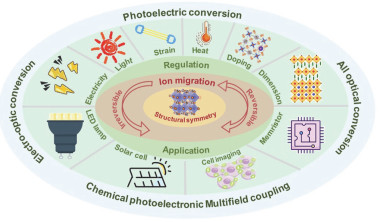
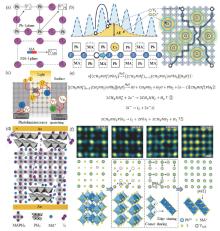
图2
"
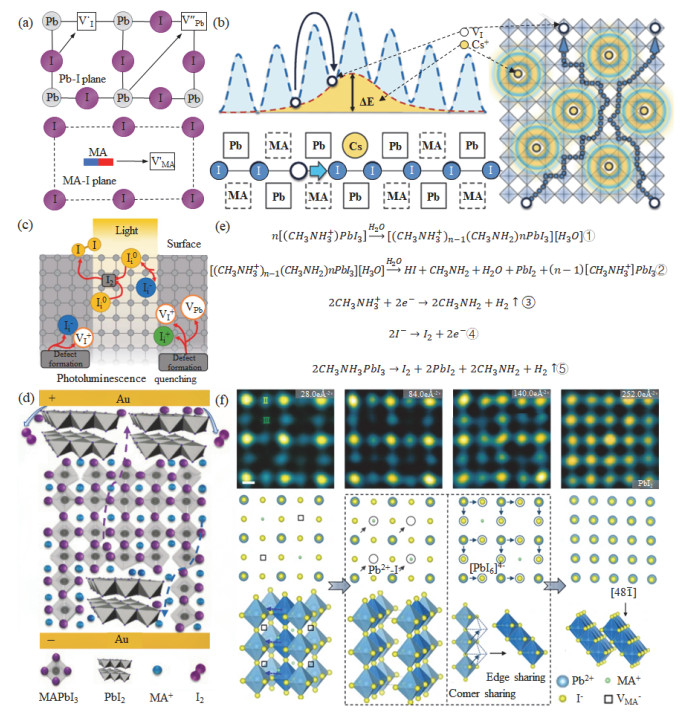
表1
"
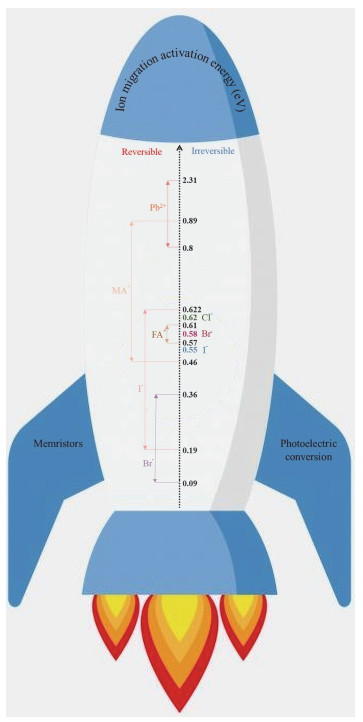
| Materials | Mobile ion | Crystal structure | Activation energy (eV) | Reversibility | Characterization Methods | Ref. | |
| MAPbI3 | MA+ | Tetragonal | 0.46 | Reversible | First-Principles | ||
| Tetragonal | 0.735 | DFT | |||||
| Tetragonal<110> | 0.57 | First-Principles | |||||
| Tetragonal<001> | 0.89 | ||||||
| Tetragonal (a neighboring vacant A-site cage) | 0.84 | ||||||
| Tetragonal | 0.9 ± 0.45 | Arrhenius equation | |||||
| Cubic | 0.39 ± 0.24 | ||||||
| Pb2+ | Tetragonal | 0.8 | First-Principles | ||||
| Tetragonal<110> | 2.31 | ||||||
| I− | Tetragonal | 0.08 | |||||
| Tetragonal | 0.342 | DFT | |||||
| Pseudo-cubic | 0.55 | Irreversible | First-Principles | ||||
| Tetragonal<100> | 0.32 | Reversible | |||||
| Tetragonal<111> | 0.44 | ||||||
| Tetragonal (octahedron edge) | 0.58 | ||||||
| Tetragonal | 0.433 | Nernst-Einstein relation | |||||
| Tetragonal | 0.19 | Dark | Nernst-Einstein relation | ||||
| 0.03 | 25 mW∙cm−2 | ||||||
| Tetragonal | 0.622 | 0.1 mW∙cm−2 | Nernst-Einstein relation (T>250 K) | ||||
| 0.144 | 5 mW∙cm−2 | ||||||
| 0.07 | 25 mW∙cm−2 | ||||||
| Cubic | 0.43 | Arrhenius equation | |||||
| Tetragonal | 0.58 | Arrhenius equation (T<320) | |||||
| Cubic | 0.229 | Arrhenius equation (T>320) | |||||
| Tetragonal | 0.322 | Arrhenius equation | |||||
| 0.416 | Arrhenius equation (PbSO4) | ||||||
| Tetragonal | 0.29±0.06 | Arrhenius equation | |||||
| Tetragonal (1μm grain size) | 0.14 | Nernst-Einstein relation(25mW∙cm−2) | |||||
| Tetragonal (0.3μm grain size) | 0.08 | ||||||
| Tetragonal (Single crystal) | 0.47 | ||||||
| Tetragonal (1μm grain size) | 0.5 | Dark; Nernst-Einstein relation | |||||
| Tetragonal (0.3μm grain size) | 0.27 | ||||||
| Tetragonal (Single crystal) | 1.05 | ||||||
| Tetragonal | 0.37 | Arrhenius equation | |||||
| Cubic | 0.52 | ||||||
| Tetragonal | 0.824 | 0.05 mW∙cm−2 | Nernst-Einstein relation (Illumination; T>250 K) | ||||
| 0.851 | 1 mW∙cm−2 | ||||||
| 0.334 | 5 mW∙cm−2 | ||||||
| 0.144 | 20 mW∙cm−2 | ||||||
表2
"
| Materials | Mobile ion | Crystal Structure | Activation energy (eV) | Reversibility | Characterization Methods | Ref. | |
| MAPbBr3 | MA+ | Tetragonal | 0.56 | Reversible | First-Principles | ||
| Br− | Tetragonal | 0.09 | |||||
| Pseudo-cubic | 0.58 | Irreversible | |||||
| Cubic | 0.11 | Reversible | Nernst-Einstein relation (resonance frequency<50Hz) | ||||
| 0.28 | Nernst-Einstein relation (resonance frequency>50Hz) | ||||||
| 0.36 | Nernst-Einstein relation (PbSO4 passivation) | ||||||
| MAPbBrxI3−x | MA+ | Cubic | 0.801 | DFT | |||
| Br− | 0.326 | ||||||
| I1− (Pb-I = 0.319 nm) | 0.456 | ||||||
| I2− (Pb-I = 0.327 nm) | 0.49 | ||||||
| I3− (Pb-I = 0.325 nm) | 0.522 | ||||||
| FAPbI3 | FA | Trigonal<110> | 0.57 | First-Principles | |||
| FA+ | 0.61 | ||||||
| FA | Trigonal<001> | 0.59 | |||||
| FA+ | 0.61 | ||||||
| I | Trigonal<111> | 0.42 | |||||
| I− | 0.48 | ||||||
| I | Trigonal<100> | 0.5 | |||||
| I− | 0.55 | ||||||
| I− | Trigonal | 0.79 | Arrhenius equation | ||||
| 0.218 | |||||||
| AceMAPbI3 | Cubic | 0.542 | Nernst-Einstein relation | ||||
| (GUAMA)PbI3 | 0.36 | Arrhenius equation | |||||
| CsPbI2Br | 0.454 | 0.1 mW∙cm−2 | Nernst-Einstein relation (T> 250 K) | ||||
| 0.456 | 5 mW∙cm−2 | ||||||
| 0.43 | 25 mW∙cm−2 | ||||||
| CsPbBr3 | Cs+ | Orthogonal | 0.7 | First-Principles | |||
| Pb2+ | 0.94 | ||||||
| Br− | 0.27 | ||||||
| 0.19 | Arrhenius equation | ||||||
| 0.25 | |||||||
| CsPbI3 | Cs+ | Tetragonal | 0.61 | DFT | |||
| Pb2+ | 1.4 | ||||||
| I− | 0.21 | ||||||
| MAxFA1−xPbI3 | Trigonal | 0.643 | Arrhenius equation | ||||
| Cs0.05MA0.05FA0.9PbI3 | Cubic | 0.43 | Arrhenius equation | ||||
| Cs0.05MA0.05FA0.9PbI3/BAI | 0.50 | ||||||
| Cs0.05MA0.05FA0.9PbI3/BABr | 0.52 | ||||||
| FAPbI3/GuCl | Cl− | Trigonal | 0.59 | First-Principles | |||
| FAPbI3/GuBr | Br− | 0.62 | |||||
| FAPbI3/GuI | I− | 0.73 | |||||
| MAPbCl3 | Cl− | Pseudo-cubic | 0.62 | Irreversible | |||
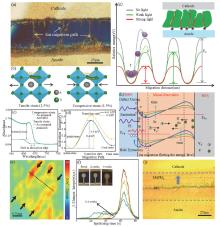
图3
"
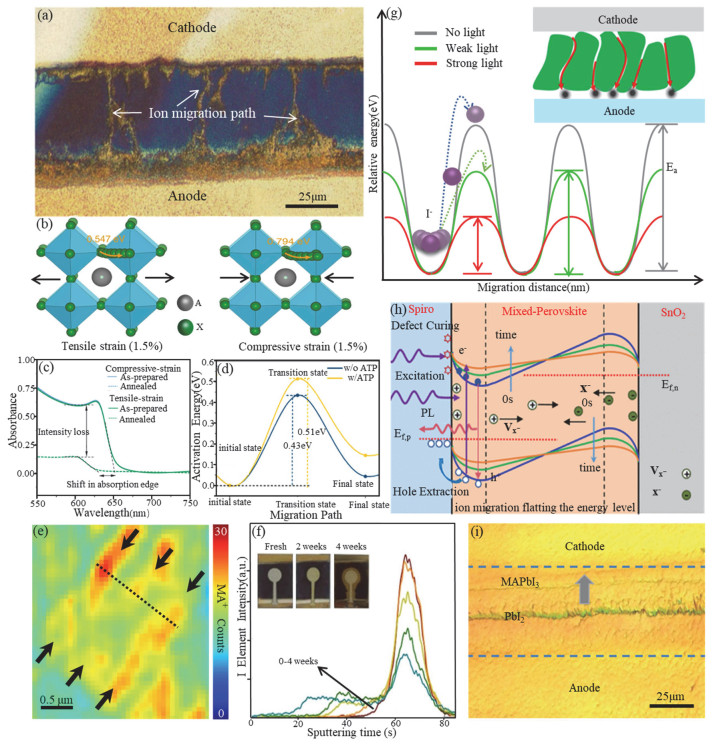
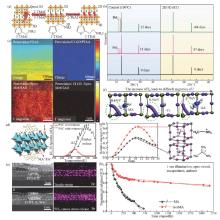
图4
"
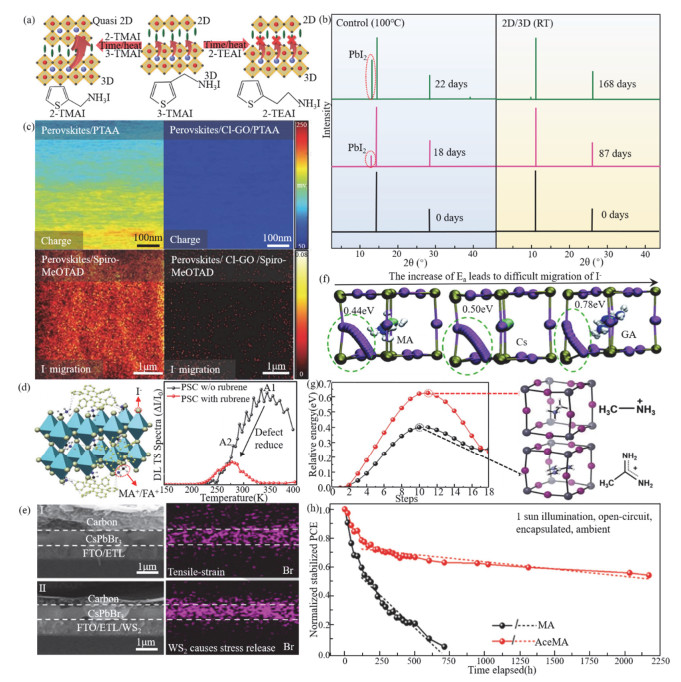
图5
"
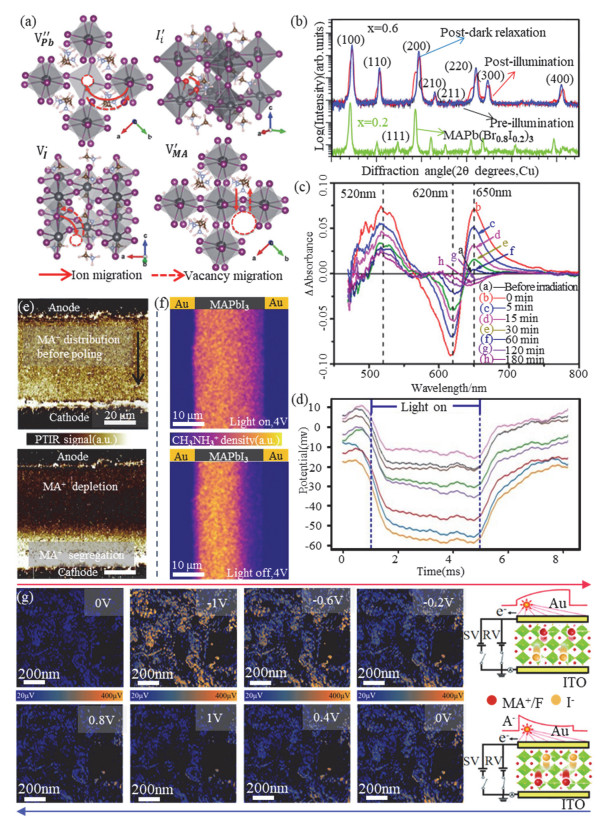
图6
"
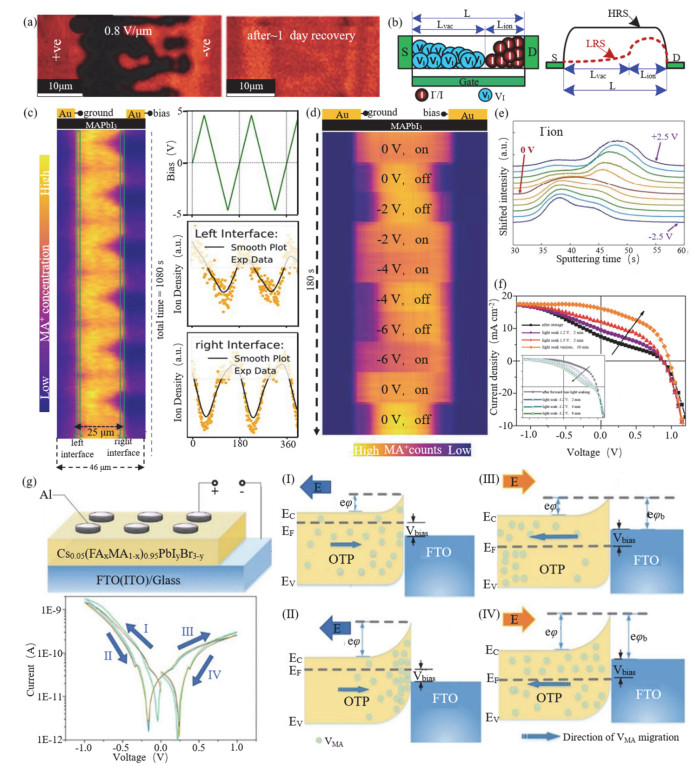
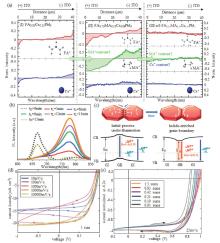
图7
"
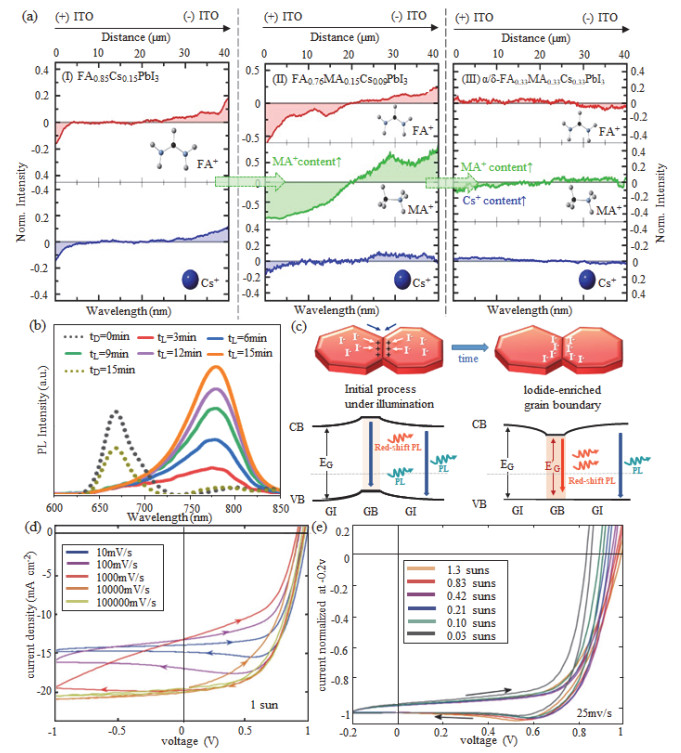
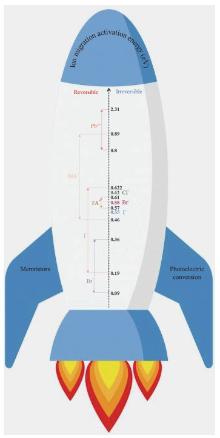
图8
"
| 1 |
https://www.nrel.gov/pv/cell-efficiency.html (accessed on Nov 7, 2023).
|
| 2 |
doi: 10.1007/s12598-019-01341-z |
| 3 |
doi: 10.1016/j.scib.2017.08.022 |
| 4 |
doi: 10.1039/C8TA05282D |
| 5 |
doi: 10.1007/s12598-021-01800-6 |
| 6 |
doi: 10.1038/nature12340 |
| 7 |
doi: 10.1038/nenergy.2017.38 |
| 8 |
doi: 10.1038/nphoton.2014.134 |
| 9 |
doi: 10.1126/science.1243982 |
| 10 |
doi: 10.1126/science.aaa5760 |
| 11 |
doi: 10.1126/science.aaa2725 |
| 12 |
doi: 10.1002/adma.201305172 |
| 13 |
doi: 10.1007/s12598-020-01691-z |
| 14 |
doi: 10.1039/D2CS00218C |
| 15 |
doi: 10.15541/jim20190342 |
| 16 |
doi: 10.15541/jim20190394 |
| 17 |
doi: 10.3866/PKU.WHXB202111009 |
|
WagehS.; Al-GhamdiAhmed A.; 赵丽. 物理化学学报, 2022, 38(7), 2111009.
doi: 10.3866/PKU.WHXB202111009 |
|
| 18 |
doi: 10.1002/aisy.202000122 |
| 19 |
doi: 10.1002/adfm.202202951 |
| 20 |
doi: 10.1007/s12598-022-02222-8 |
| 21 |
doi: 10.1002/aelm.202101204 |
| 22 |
doi: 10.1039/C8CS00853A |
| 23 |
doi: 10.1016/j.trechm.2021.04.004 |
| 24 |
doi: 10.1038/s41467-021-25832-9 |
| 25 |
doi: 10.1038/natrevmats.2017.42 |
| 26 |
doi: 10.1126/science.abj1186 |
| 27 |
doi: 10.1016/j.matt.2021.06.028 |
| 28 |
doi: 10.1038/s41563-021-01097-x |
| 29 |
doi: 10.1002/adfm.202100293 |
| 30 |
doi: 10.1038/ncomms8497 |
| 31 |
doi: 10.1021/jacs.5b03615 |
| 32 |
doi: 10.1021/acs.accounts.5b00420 |
| 33 |
doi: 10.1038/s41560-023-01288-7 |
| 34 |
doi: 10.1002/ange.202216634 |
| 35 |
doi: 10.1038/natrevmats.2017.42 |
| 36 |
doi: 10.1002/aenm.202102730 |
| 37 |
doi: 10.1038/nenergy.2015.12 |
| 38 |
doi: 10.1038/ncomms11683 |
| 39 |
doi: 10.1021/acs.jpclett.6b01176 |
| 40 |
doi: 10.1038/s41467-019-09167-0 |
| 41 |
doi: 10.1016/j.joule.2020.09.010 |
| 42 |
doi: 10.1016/j.nanoen.2022.108074 |
| 43 |
doi: 10.3866/PKU.WHXB202211025 |
|
杨帅; 徐瑜歆; 郝子坤; 秦胜建; 张润鹏; 韩钰; 杜利伟; 朱紫洢; 杜安宁; 陈欣; 等. 物理化学学报, 2023, 39(5), 2211025.
doi: 10.3866/PKU.WHXB202211025 |
|
| 44 |
doi: 10.1021/jacs.9b09182 |
| 45 |
doi: 10.1021/acsenergylett.1c00227 |
| 46 |
doi: 10.1021/acsnano.6b02795 |
| 47 |
doi: 10.1021/acs.nanolett.7b01665 |
| 48 |
doi: 10.1038/s41467-019-09047-7 |
| 49 |
doi: 10.1039/C8CS00656C |
| 50 |
doi: 10.1021/jz500370k |
| 51 |
doi: 10.1063/1.4864778 |
| 52 |
doi: 10.1021/jacs.7b10430 |
| 53 |
doi: 10.1039/C5EE01265A |
| 54 |
doi: 10.1038/s41566-019-0435-1 |
| 55 |
doi: 10.1039/C8EE00124C |
| 56 |
doi: 10.1039/C6EE01729K |
| 57 |
doi: 10.1039/C6TA03599J |
| 58 |
doi: 10.1038/s41567-022-01512-3 |
| 59 |
doi: 10.1126/science.aad3000 |
| 60 |
doi: 10.1021/acsenergylett.9b00247 |
| 61 |
doi: 10.1039/C6EE00413J |
| 62 |
doi: 10.1016/j.nanoen.2016.05.052 |
| 63 |
doi: 10.1039/C9MH00445A |
| 64 |
doi: 10.1039/C7TA09112E |
| 65 |
doi: 10.1002/adma.201906995 |
| 66 |
doi: 10.1021/acsenergylett.7b00442 |
| 67 |
doi: 10.1021/acs.jpclett.7b01851 |
| 68 |
doi: 10.1002/ange.201500014 |
| 69 |
doi: 10.1021/jacs.5b08535 |
| 70 |
doi: 10.1016/j.jsamd.2021.07.006 |
| 71 |
doi: 10.1039/C6CP06496E |
| 72 |
doi: 10.1002/aenm.202002552 |
| 73 |
doi: 10.1039/D0CP01119C |
| 74 |
doi: 10.1038/lsa.2016.243 |
| 75 |
doi: 10.1039/D1NR02511B |
| 76 |
doi: 10.1063/1.5120270 |
| 77 |
doi: 10.1016/0167-2738(83)90025-5 |
| 78 |
doi: 10.1016/j.nanoen.2017.06.024 |
| 79 |
doi: 10.1002/adma.202108102 |
| 80 |
|
| 81 |
doi: 10.1063/1.4934633 |
| 82 |
doi: 10.1021/acsenergylett.8b00764 |
| 83 |
doi: 10.1021/nl500390f |
| 84 |
doi: 10.1021/acs.jpclett.9b03161 |
| 85 |
doi: 10.1038/s41467-021-22864-z |
| 86 |
doi: 10.1002/adfm.202304201 |
| 87 |
doi: 10.1038/s41467-018-07177-y |
| 88 |
doi: 10.1002/adma.202001107 |
| 89 |
doi: 10.1021/acsaem.2c02875 |
| 90 |
doi: 10.1038/s41467-020-15338-1 |
| 91 |
doi: 10.1002/adma.202201315 |
| 92 |
doi: 10.1016/j.scriptamat.2018.02.022 |
| 93 |
doi: 10.1038/s41563-018-0152-z |
| 94 |
doi: 10.1002/ejic.202100654 |
| 95 |
doi: 10.3866/PKU.WHXB202007088 |
|
卢岳; 葛杨; 隋曼龄. 物理化学学报, 2022, 38(5), 2007088.
doi: 10.3866/PKU.WHXB202007088 |
|
| 96 |
doi: 10.1021/acsami.8b13932 |
| 97 |
doi: 10.1063/5.0005369 |
| 98 |
doi: 10.1038/s41563-022-01390-3 |
| 99 |
doi: 10.1021/acs.chemmater.1c01175 |
| 100 |
doi: 10.1002/adma.202302071 |
| 101 |
doi: 10.1002/aenm.202201105 |
| 102 |
doi: 10.1039/C9EE00476A |
| 103 |
doi: 10.1021/acsenergylett.8b00047 |
| 104 |
doi: 10.1039/C9TA12489F |
| 105 |
doi: 10.1002/adma.201901242 |
| 106 |
doi: 10.1016/j.nanoen.2021.106521 |
| 107 |
doi: 10.1126/science.aax8018 |
| 108 |
doi: 10.1002/adma.201707583 |
| 109 |
doi: 10.1002/ange.202010252 |
| 110 |
doi: 10.1021/acsenergylett.1c02545 |
| 111 |
doi: 10.1002/anie.201502544 |
| 112 |
doi: 10.1021/acsnano.6b02613 |
| 113 |
doi: 10.1039/C7EE00358G |
| 114 |
doi: 10.1002/aenm.201701981 |
| 115 |
doi: 10.3866/PKU.WHXB202301033 |
|
任书霞; 杨铮; 安帅领; 孟婕; 刘晓敏; 赵晋津. 物理化学学报, 2023, 39(12), 2301033.
doi: 10.3866/PKU.WHXB202301033 |
|
| 116 |
doi: 10.1021/acs.accounts.0c00749 |
| 117 |
doi: 10.1039/C4SC03141E |
| 118 |
doi: 10.1021/acs.jpclett.0c01844 |
| 119 |
doi: 10.1021/acsenergylett.7b00589 |
| 120 |
doi: 10.1021/acsnano.8b08390 |
| 121 |
doi: 10.1002/aenm.201500615 |
| 122 |
doi: 10.1017/S1431927620020267 |
| 123 |
doi: 10.1002/adfm.202008777 |
| 124 |
doi: 10.1039/C4EE03664F |
| 125 |
doi: 10.1039/C6TC03206K |
| 126 |
doi: 10.1002/aenm.201500962 |
| 127 |
doi: 10.1021/acs.jpcc.5b11973 |
| 128 |
doi: 10.35848/1347-4065/aba5e1 |
| 129 |
doi: 10.1002/adma.201700527 |
| 130 |
doi: 10.1002/inf2.12066 |
| 131 |
doi: 10.1021/acsami.1c13561 |
| 132 |
doi: 10.1021/acsnano.1c02097 |
| 133 |
doi: 10.1021/acsenergylett.7b00150 |
| 134 |
doi: 10.1039/C4EE02465F |
| 135 |
doi: 10.1002/aelm.202100014 |
| 136 |
doi: 10.1021/acsenergylett.0c01207 |
| 137 |
doi: 10.1021/acsaem.2c03438 |
| [1] | 王震寰, 韦炜斐, 马睿杰, 罗豆, 陈展翔, 张君, 于立扬, 李刚, 罗正辉. 苯并[a]苯嗪受体的核心氰基化实现高效(19.04%)绿色溶剂加工的二元有机太阳能[J]. 物理化学学报, 2026, 42(2): 100182 - . |
| [2] | 刘彬彬, 陈杨, 贾天赐, 陈辰, 吴章豪, 刘毓辉, 翟宇航, 马天舒, 王长擂. 羟基功能化分子工程消除二维相壁垒实现高效宽带隙及全钙钛矿叠层太阳能电池[J]. 物理化学学报, 2026, 42(1): 100128 - . |
| [3] | 张凤英, 梅杨林, 蒋毓蔓, 郑申申, 郑凯波, 周莹. 瞬态吸收光谱在太阳能转化利用中的研究进展[J]. 物理化学学报, 2025, 41(9): 100118 - . |
| [4] | 王毅锴, 蒋晓林, 宋浩鸣, 魏楠, 王逸凡, 徐新军, 李翠红, 路皓, 刘亚辉, 薄志山. 氰基修饰的苝二酰亚胺衍生物作为膜厚不敏感型阴极界面材料用于高效有机太阳能电池[J]. 物理化学学报, 2025, 41(3): 100027 - . |
| [5] | 董鹏宇, 姜月, 杨正池, 刘立城, 李固, 文鑫洋, 王祯, 施信波, 周国富, 刘俊明, 高进伟. NbSe2纳米片优化钙钛矿太阳能电池的埋底界面[J]. 物理化学学报, 2025, 41(3): 100029 - . |
| [6] | 李尚华, 李玛琳, 迟茜文, 尹心, 罗招娣, 于吉红. 基于高离子迁移动力学的取向ZnQ分子筛保护层实现高稳定水系锌金属负极的构筑[J]. 物理化学学报, 2025, 41(1): 100003 - . |
| [7] | 李若男, 梁世洁, 许韵华, 张翠芬, 唐正, 刘柏侨, 李韦伟. 氯取代近红外双缆共轭高分子材料与低能量损失单组分有机太阳能电池[J]. 物理化学学报, 2024, 40(8): 2307037 - . |
| [8] | AhmedYameen, 封想想, 高远基, 丁洋, 龙操玉, HaiderMustafa, 李恒月, 李专, 黄誓成, SaidaminovMakhsud I., 阳军亮. 离子液体界面修饰的高效稳定FAPbI3钙钛矿太阳能电池[J]. 物理化学学报, 2024, 40(6): 2303057 - . |
| [9] | 郭雅雯, 李大伟, 高杨, 李翠红. 非富勒烯受体有机太阳能电池稳定性研究进展[J]. 物理化学学报, 2024, 40(6): 2306050 - . |
| [10] | 梁秋菊, 常银霞, 梁朝伟, 祝浩雷, 郭子宾, 刘剑刚. 结晶动力学策略在非富勒烯体系太阳能电池形貌调控领域的应用[J]. 物理化学学报, 2023, 39(7): 2212006 -0 . |
| [11] | 杨帅, 徐瑜歆, 郝子坤, 秦胜建, 张润鹏, 韩钰, 杜利伟, 朱紫洢, 杜安宁, 陈欣, 吴昊, 乔冰冰, 李坚, 王艺, 孙昺晨, 闫融融, 赵晋津. 高效医学传感钙钛矿材料研究进展[J]. 物理化学学报, 2023, 39(5): 2211025 -0 . |
| [12] | 文永涛, 李静, 高晓峰, 田聪聪, 朱昊, 余国木, 张晓俐, Park Hyesung, 黄福志. 控制碘化铅形貌两步连续刮涂法大面积制备甲脒基钙钛矿薄膜[J]. 物理化学学报, 2023, 39(2): 2203048 -0 . |
| [13] | 任书霞, 杨铮, 安帅领, 孟婕, 刘晓敏, 赵晋津. 高效光电调控钙钛矿量子点阻变存储性能[J]. 物理化学学报, 2023, 39(12): 2301033 - . |
| [14] | 卢岳, 葛杨, 隋曼龄. 紫外光辐照下CH3NH3PbI3基钙钛矿太阳能电池失效机制[J]. 物理化学学报, 2022, 38(5): 2007088 - . |
| [15] | 林飞宇, 杨英, 朱从潭, 陈甜, 马书鹏, 罗媛, 朱刘, 郭学益. 湿空气下制备稳定的CsPbI2Br钙钛矿太阳电池[J]. 物理化学学报, 2022, 38(4): 2005007 - . |
|
||