物理化学学报 >> 2024, Vol. 40 >> Issue (12): 2408005.doi: 10.3866/PKU.WHXB202408005
利用改性g-C3N4光催化还原CO2
王雪娇1, 董隋颖1, 戚克振1,*( ), PopkovVadim2,*(), 项祥林3,*()
- 1 大理大学, 药学院, 云南 大理 671000
2 Hydrogen Energy Laboratory, Ioffe Institute, Saint Petersburg 194021, Russia
3 昆明理工大学, 材料科学与工程学院, 昆明 650093
-
收稿日期:2024-08-04修回日期:2024-09-12录用日期:2024-09-12发布日期:2024-11-09 -
通讯作者:Email: qkzh2003@aliyun.com (戚克振)vadim.i.popkov@gmail.com (Vadim Popkov)xiangxianglin@kust.edu.cn (项祥林) -
基金资助:国家自然科学基金(22268003); 国家自然科学基金(52272287); 兴滇英才支持计划项目(XDYC-QNRC-2022-0525); 云南省科技厅项目(202305AF150116); 云南省科技厅项目(202301AT070027)
Photocatalytic CO2 Reduction by Modified g-C3N4
Xuejiao Wang1, Suiying Dong1, Kezhen Qi1,*(), Vadim Popkov2,*(), Xianglin Xiang3,*()
- 1 College of Pharmacy, Dali University, Dali 671000, Yunnan Province, China
2 Hydrogen Energy Laboratory, Ioffe Institute, Saint Petersburg 194021, Russia
3 Faculty of Materials Science and Engineering, Kunming University of Science and Technology, Kunming 650093, China
-
Received:2024-08-04Revised:2024-09-12Accepted:2024-09-12Published:2024-11-09 -
Contact:Email: qkzh2003@aliyun.com (Kezhen Qi)vadim.i.popkov@gmail.com (Vadim Popkov )xiangxianglin@kust.edu.cn (Xianglin Xiang) -
Supported by:the National Natural Science Foundation of China(22268003); the National Natural Science Foundation of China(52272287); Xingdian Talent Support Program of Yunnan Province(XDYC-QNRC-2022-0525); Projects from Yunnan Province(202305AF150116); Projects from Yunnan Province(202301AT070027)

摘要:
化石燃料的燃烧导致CO2排放量显著增大,对环境构成严重威胁。光催化CO2还原是减少全球变暖的重要手段,本文探讨了石墨相氮化碳(g-C3N4)在此领域中的潜在应用。然而,光生载流子的复合较快、可见光吸收能力差以及缺乏活性位点等关键因素限制了g-C3N4的光催化CO2还原活性。为了解决这些问题,人们采用了多种改性策略,包括调整g-C3N4的形貌(如量子点、纳米棒、纳米管、纳米片、空心球等),掺杂不同类型原子,以及与其他半导体复合形成异质结。g-C3N4作为光催化剂已展现出光催化还原CO2的潜力,但仍需进一步研究和创新,本文重点讨论了S型异质结在提高g-C3N4光催化CO2还原性能方面的作用,以克服其当前催化剂开发及应用的局限性。
引用本文
王雪娇, 董隋颖, 戚克振, PopkovVadim, 项祥林. 利用改性g-C3N4光催化还原CO2[J]. 物理化学学报, 2024, 40(12), 2408005. doi: 10.3866/PKU.WHXB202408005
Xuejiao Wang, Suiying Dong, Kezhen Qi, Vadim Popkov, Xianglin Xiang. Photocatalytic CO2 Reduction by Modified g-C3N4[J]. Acta Phys. -Chim. Sin. 2024, 40(12), 2408005. doi: 10.3866/PKU.WHXB202408005
图1
"
图2
"
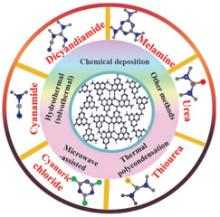
图3
"
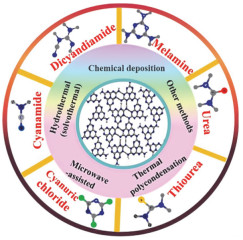
表1
"
| Precursor | Methods | Reaction condition | BET surface area (m2·g−1) | Eg/(eV) | Morphology | Ref. a |
| Melamine | Thermal polymerization | 8 ℃∙min−1, 550 ℃ (4 h) | 3.4 | 2.80 | Bulky | |
| Ammonium thiocyanate | Thermal polymerization | 6 K∙min−1, 600 ℃ (2 h) | 16 | 2.71 | Lamellar | |
| Cyanamide | Thermal polymerization | 2.3 ℃∙min−1,550 ℃ (4 h) | 9.8 | 2.79 | Mesoporous | |
| Guanidine Hydrochloride | Thermal polymerization | 2 ℃ min−1,550 ℃ (2 h) | 41.5 | 2.77 | Nanosheets | |
| Dicyandiamid, melamine, urea, thiourea | Thermal polymerization | 5 ℃ min−1, 450 ℃ (3 h) | 18.3; 5.4; 98.3; 6.8 | b N/A | Bulky | |
| Melamine, urea | Thermal polymerization | 5 ℃ min−1, 550 ℃ (4 h) | N/A | 2.65 | Bulky | |
| Guanidine, hydrochloride, dicyandiamide | Solvothermal | 180 ℃ (48 h) | 19.0 | 2.45 | Belt-like | |
| Melamine | Ultrasound-assisted | 80 ℃ (1 h) | 43.5 | 1.96 | Ribbon | |
| Dicyandiamide | Sol-gel method | CTAB c, TEOS d, 5 ℃ min−1, 550 ℃ (2 h) | 12.09 | 2.11 | Multilayered sheets | |
| Melamine, cyanuric chloride | Solvothermal | 4 ℃ min−1, 150 ℃ (3 h) | N/A | N/A | Nanosheets | |
| Urea | Solid-state thermal condensation | 200 ℃ (2 h) | N/A | 2.90 | Nanodots |
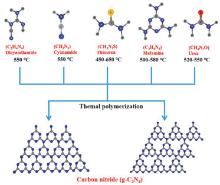
图4
"
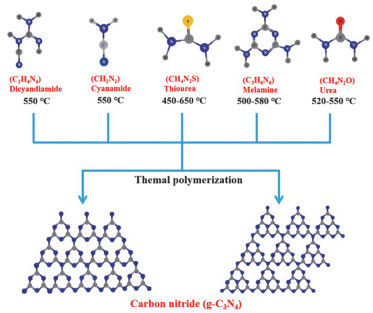
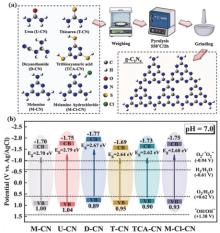
图5
"
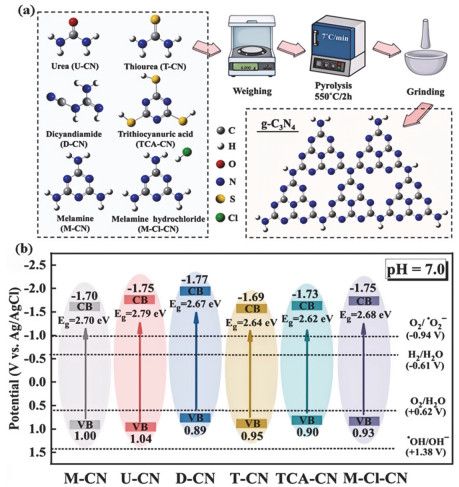
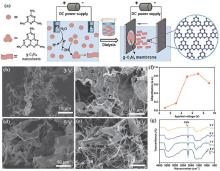
图6
"
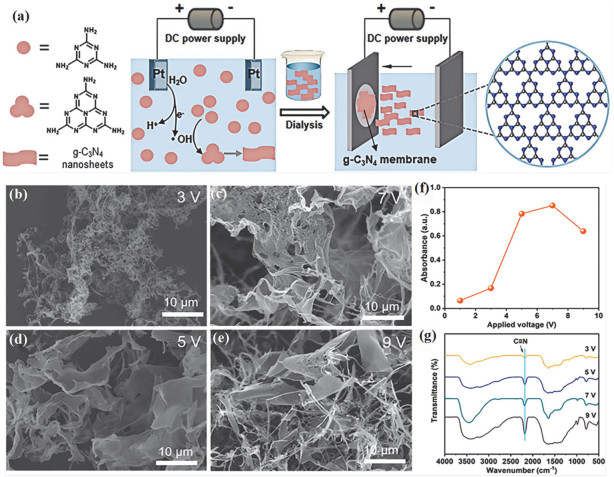
图7
"
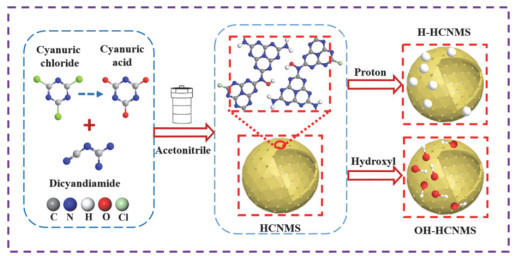
表2
"
| Catalyst | Modification method | Catalyst mass (mg) | Light source | Activity/ (µmol·g−1·h−1) | Selectivity | Ref. |
| UV60-CN | O doping | 5 | Xe lamp (300 W) | CH4: 37.3 | CH4: 77% | |
| P-g-C3N4 | P doping | 50 | Xe lamp (300 W) | CO: 2.4 CH4: 1.8 | CH4: 3.3% | |
| PCCN | P, C co-doping | 25 | Xe lamp (300 W) | CH4: 41.85 | N/A | |
| PFCN | P, F co-doping | 100 | LED (34W) | CH3OH: 119.56 | N/A | |
| MCN | Cu, Co, Ti, Fe doping | 3 | Xe lamp (300 W) | 3CuCN: 246 10CoCN: 326 30TiCN: 45425 25FeCN: 490 | CO: 87% | |
| PtCu‐crCN | dual‐single‐atoms | 25 | Xe lamp (300 W) | CH4: 2.8 | CH4: 9.4% | |
| TCN-1 | N-vacancy | 50 | Xe lamp (300 W) | CO: 7.1 | CO: 100% | |
| g-CN-650 g-CN-750 | N-vacancy N-vacancy | 10 | Xe lamp (300 W) | CO: 5.3 CH4: 34.4 CH4: 52.8 | CH4: 6.6% CH4: 6.4% | |
| NVs-PCN | N-vacancy | 20 | LED (50 W) | CO: 55.95 | CO: 85% | |
| GCN510 | C-vacancy | 20 | Xe lamp (300 W) | CO: 4.18 | N/A | |
| CCN | Functionalized crystallization | 5 | Visible light (λ > 400 nm) | CO: 25.7 | CO: 93.8% | |
| Ni5-CN | Ni monoatomic | 20 | Xe lamp (300 W) | CO: 8.6 | CO: 81.1% | |
| PN-g-C3N4 | Porous nanobelts | 10 | Xe lamp (300 W) | CO: 29.8 | CO: 100% | |
| Cu-CNTs/pCN | CNTs modification | 50 | Hg lamp (200 W) | CO: 560 | N/A | |
| 30AgBr/pCN | Type Ⅱ heterojunction | 100 | Xe lamp (500 W) | CH4: 10.92 | N/A | |
| 30AgCl/pCN | Type Ⅰ heterojunction | 100 | Xe lamp (500 W) | CH4: 8.51 | N/A | |
| BCN-NaK | Type Ⅱ heterojunction | 10 | Xe lamp (300 W) | CO: 22.8 | CO: 62.3% | |
| ZnTP/CN | S–scheme heterojunction | 20 | Xe lamp (300 W) | CO: 19.4 | CO: 95.8% | |
| CN/CFT | COF | 5 | Xe lamp (300 W) | CO: 151.1 | CO: 99.9% | |
| Co-MOL/CN (400) | Co-MOF | 2 | Xe lamp (300 W) | CO: 539 | CO: 79.8 | |
| Co-MOF/g-C3N4 | Co-MOF | 20 | Xe lamp (300 W) | CO: 6.75 CH4: 5.47 | CH4: 4.8% | |
| VCQDs/C3N4 | CQDs (with carbon vacancy) modification | 50 | Xe lamp (300 W) | CO: 56 | N/A |
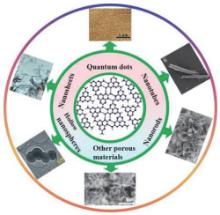
图8
"
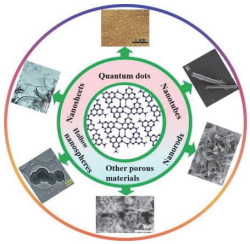
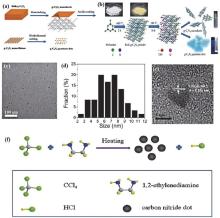
图9
"
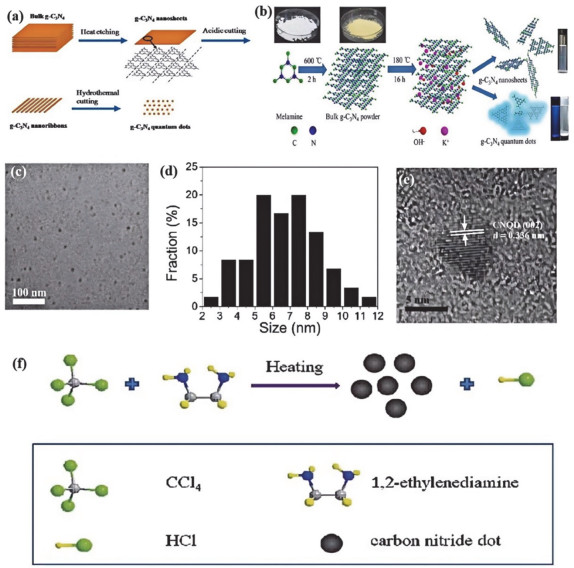
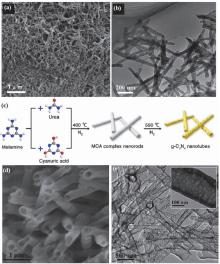
图10
"
图11
"
图12
"
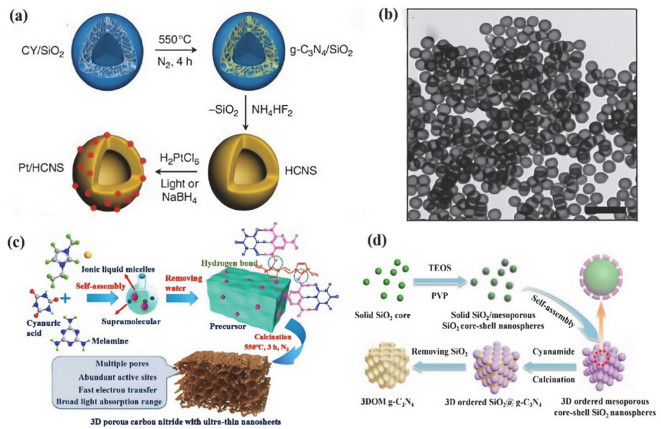
图13
"
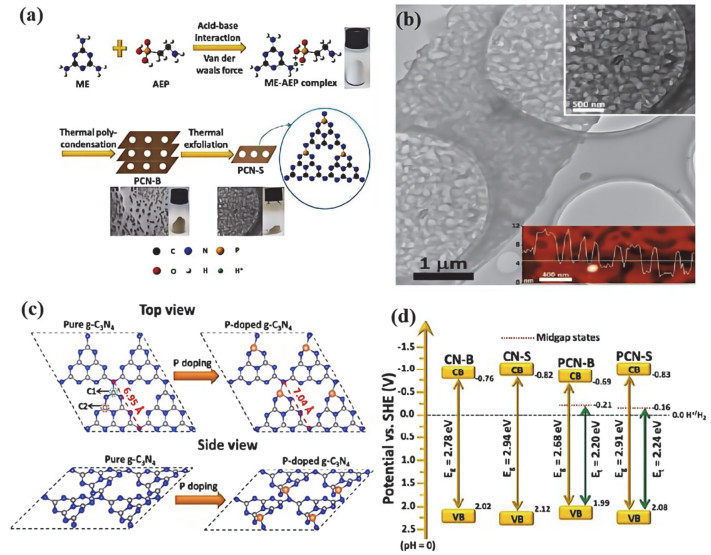
图14
"
图15
"
图16
"
图17
"
图18
"
图19
"
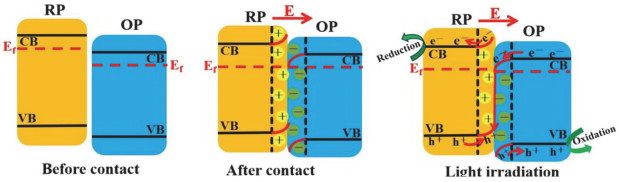
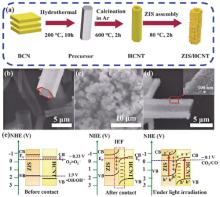
图20
"
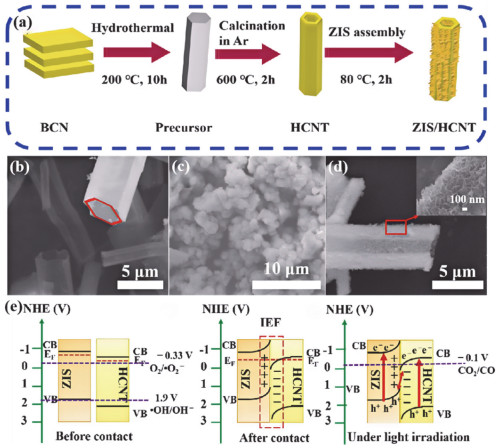
表3
"
| Catalysts | BET surface area/(m2∙g−1) | Activity/(µmol∙g−1∙h−1) | Light source | Catalysts Mass (mg) | Ref. |
| BiOBr/TCN | 27.90 | CO: 10.89 | 300 W Xe lamp; λ ≥ 400 nm | 10 | |
| BWO/CN-3 | 70.50 | CO: 5.44 CH4: 0.91 | 300 W Xe lamp; λ ≥ 400 nm | 10 | |
| CIS/PCN | 54.54 | CO: 105.89 | 300 W Xe lamp | 10 | |
| PDI/CN | N/A | CO: 139.60 | 300 W Xe lamp; full-spectrum | 25 | |
| g-C3N4/CDs/WO3 | N/A | CO: 31.04 | 300 W Xe lamp, λ ≥ 420 nm | 20 | |
| 30%-Sv-MS@GCN | 99.65 | CO: 68.3 | 10 W V-light lamp (790 mW∙cm−2) | 10 | |
| NT@CN5 | 17.62 | CO: 33.35 | 300 W Xe lamp | 50 | |
| α-Fe2O3/In–CN | N/A | CO: 24.3 | 300 W Xe lamp | 10 | |
| g-C3N4/Cu2O@Cu-4 | 66.00 | CO: 10.8 CH4: 3.1 | 500 W Xe lamp, λ ≥ 400 nm | 100 | |
| CN/AP/AW-2 | 33.843 | CH4: 18.49 | 300 W Xe lamp | 50 | |
| 2% CTO/CN | 18.25 | CO: 236.2 | 300 W Xe lamp | 30 | |
| 40 OCNNb | 169.54 | CO: 253.34 CH4: 68.11 | 300 W Xe lamp, λ ≥ 420 nm | 100 | |
| BI/CN-50% | 51.10 | CO: 3.1125 | 300 W Xe lamp, λ ≥ 420 nm | 10 | |
| CN-ZnBVO-3 | 25.64 | CH3OH: 609.10 | 300 W Xe lamp | 20 | |
| g-C3N4/Bi/BiVO4 | 50.00 | CO: 0.63 | 300 W Xe lamp, λ ≥ 420 nm | 100 | |
| CuWO4@g-C3N4 | 50.00 | CO: 4.15 CH4: 0.12 | 300 W Xe lamp, λ ≥ 420 nm | 50 | |
| ZnIn2S4/g-C3N4 | 48.91 | CO: 25.96 CH4: 3.70 | 300 W Xe lamp; λ ≥ 420 nm | 50 | |
| g-C3N4/Cu2O-Pd | N/A | CO: 14.68 | 500 W Xe lamp; λ ≥ 400 nm | 20 |
图21
"
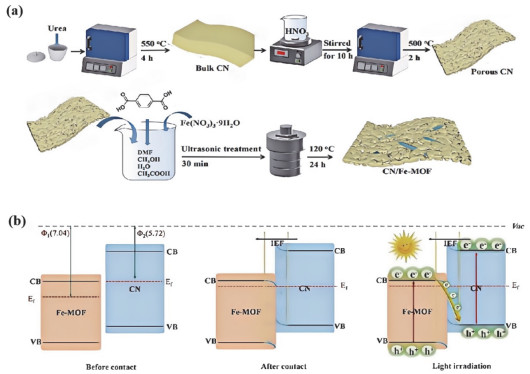
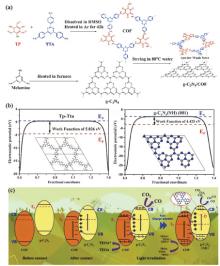
图22
"
| 1 |
doi: 10.1038/275115a0 |
| 2 |
doi: 10.1038/277637a0 |
| 3 |
doi: 10.1016/j.matchemphys.2020.123322 |
| 4 |
doi: 10.1021/ja903923s |
| 5 |
doi: 10.1039/C1JM14312C |
| 6 |
doi: 10.1016/j.ijhydene.2012.04.138 |
| 7 |
doi: 10.1016/j.chemosphere.2022.135717 |
| 8 |
doi: 10.1002/solr.201900440 |
| 9 |
doi: 10.1002/cnma.201500060 |
| 10 |
doi: 10.1039/C5SC02992A |
| 11 |
doi: 10.1021/acs.chemrev.6b00075 |
| 12 |
doi: 10.1016/j.mattod.2019.06.009 |
| 13 |
doi: 10.1021/ja0103849 |
| 14 |
doi: 10.1016/j.carbon.2005.01.005 |
| 15 |
doi: 10.1016/j.diamond.2022.108873 |
| 16 |
doi: 10.1021/la900923z |
| 17 |
doi: 10.1021/jp809119m |
| 18 |
doi: 10.1016/j.cattod.2013.11.038 |
| 19 |
doi: 10.1021/acsaelm.3c00404 |
| 20 |
doi: 10.1016/j.jmst.2021.05.019 |
| 21 |
doi: 10.1021/jp4009338 |
| 22 |
doi: 10.1016/j.cej.2019.122535 |
| 23 |
doi: 10.1021/ja809307s |
| 24 |
doi: 10.1016/j.jcis.2020.10.144 |
| 25 |
doi: 10.1016/j.apcatb.2017.10.028 |
| 26 |
doi: 10.1039/C8TA03068E |
| 27 |
doi: 10.1016/j.apcatb.2019.02.033 |
| 28 |
doi: 10.1016/j.apsusc.2015.03.086 |
| 29 |
doi: 10.1016/j.ijhydene.2021.08.178 |
| 30 |
doi: 10.1016/j.jphotochem.2016.08.005 |
| 31 |
doi: 10.1039/C2NR30948C |
| 32 |
doi: 10.1016/j.apcatb.2020.119452 |
| 33 |
doi: 10.1016/S1872-2067(19)63459-5 |
| 34 |
doi: 10.1016/j.jssc.2021.122545 |
| 35 |
doi: 10.1016/j.seppur.2023.124904 |
| 36 |
doi: 10.1016/j.apsusc.2009.10.061 |
| 37 |
doi: 10.1016/j.cej.2024.151638 |
| 38 |
doi: 10.1016/j.cej.2019.122593 |
| 39 |
doi: 10.1007/s00339-018-1834-8 |
| 40 |
doi: 10.1016/j.matlet.2015.08.106 |
| 41 |
doi: 10.1039/C4GC01517G |
| 42 |
doi: 10.1002/anie.201608453 |
| 43 |
doi: 10.1039/C1EE02165F |
| 44 |
doi: 10.1016/j.apcatb.2016.06.074 |
| 45 |
doi: 10.1021/acscatal.1c05013 |
| 46 |
doi: 10.3390/catal12060672 |
| 47 |
doi: 10.1039/D0DT03229H |
| 48 |
doi: 10.1016/j.fuel.2023.129757 |
| 49 |
doi: 10.1002/cssc.202000375 |
| 50 |
doi: 10.1002/adfm.201900093 |
| 51 |
doi: 10.1002/cey2.270 |
| 52 |
doi: 10.1002/cssc.202002041 |
| 53 |
doi: 10.1016/j.jcat.2024.115597 |
| 54 |
doi: 10.1016/j.cej.2022.141067 |
| 55 |
doi: 10.1016/j.jmst.2022.06.022 |
| 56 |
doi: 10.1021/acsami.7b17503 |
| 57 |
doi: 10.1016/j.cej.2024.149155 |
| 58 |
doi: 10.1016/j.jcou.2022.102162 |
| 59 |
doi: 10.1016/S1872-2067(21)63879-2 |
| 60 |
doi: 10.1016/j.mtener.2022.101211 |
| 61 |
doi: 10.1021/acsami.2c03913 |
| 62 |
doi: 10.1016/j.jcat.2022.03.016 |
| 63 |
doi: 10.1039/C8TA09302D |
| 64 |
doi: 10.1002/adfm.202312634 |
| 65 |
doi: 10.1002/aenm.201902738 |
| 66 |
doi: 10.3390/molecules27186054 |
| 67 |
doi: 10.1016/j.apsusc.2019.04.220 |
| 68 |
doi: 10.1016/j.apcatb.2015.06.053 |
| 69 |
doi: 10.1016/j.apcatb.2023.122733 |
| 70 |
doi: 10.1021/acsami.3c10503 |
| 71 |
doi: 10.1016/S1872-2067(21)63936-0 |
| 72 |
doi: 10.1039/D2TA09579C |
| 73 |
doi: 10.1016/S1872-2067(19)63497-2 |
| 74 |
doi: 10.1016/j.carbon.2022.12.021 |
| 75 |
doi: 10.1039/C4TA02781G |
| 76 |
doi: 10.1016/j.apcatb.2021.120978 |
| 77 |
doi: 10.1039/C5NR08278A |
| 78 |
doi: 10.1016/j.jallcom.2023.172229 |
| 79 |
doi: 10.1016/j.chemosphere.2024.142522 |
| 80 |
doi: 10.1016/j.apcatb.2021.120904 |
| 81 |
|
|
王亦清; 沈少华. 物理化学学报, 2020, 36, 1905080.
doi: 10.3866/pku.Whxb201905080 |
|
| 82 |
doi: 10.1016/j.jmst.2023.06.042 |
| 83 |
doi: 10.1016/j.pmatsci.2024.101242 |
| 84 |
doi: 10.1039/D2CS00806H |
| 85 |
doi: 10.1016/j.jcis.2023.01.107 |
| 86 |
doi: 10.1039/C4CC02543A |
| 87 |
doi: 10.1039/c7nj00058h |
| 88 |
doi: 10.1039/c1jm12149a |
| 89 |
doi: 10.1038/s41467-022-28701-1 |
| 90 |
doi: 10.3390/nano13020305 |
| 91 |
doi: 10.1016/j.apsusc.2023.158044 |
| 92 |
doi: 10.1039/C6TA09747B |
| 93 |
doi: 10.1016/j.ijhydene.2019.05.105 |
| 94 |
doi: 10.1016/j.jhazmat.2018.09.095 |
| 95 |
doi: 10.1039/D0TA08892G |
| 96 |
doi: 10.1002/anie.201206534 |
| 97 |
doi: 10.1007/s12274-019-2357-0 |
| 98 |
doi: 10.1016/j.jcis.2023.08.042 |
| 99 |
doi: 10.1016/j.carbon.2022.09.029 |
| 100 |
|
|
殷方鑫; 秦品权; 许景三; 曹少文. 物理化学学报, 2023, 39, 2212062.
doi: 10.3866/PKU.WHXB202212062 |
|
| 101 |
|
|
昝忠奇; 李喜宝; 高晓明; 黄军同; 罗一丹; 韩露. 物理化学学报, 2023, 39, 2209016.
doi: 10.3866/PKU.WHXB202209016 |
|
| 102 |
doi: 10.3389/fchem.2019.00941 |
| 103 |
doi: 10.1021/acsnano.1c01105 |
| 104 |
doi: 10.1002/adfm.201200922 |
| 105 |
doi: 10.1021/ja308249k |
| 106 |
doi: 10.1039/c3ta13188b |
| 107 |
doi: 10.1021/jacs.7b06708 |
| 108 |
doi: 10.1038/ncomms2152 |
| 109 |
doi: 10.1016/j.ijhydene.2021.05.018 |
| 110 |
doi: 10.1016/j.apcatb.2016.05.069 |
| 111 |
doi: 10.1039/D0CY01890B |
| 112 |
doi: 10.1039/D1EE02073K |
| 113 |
doi: 10.1039/D0TA07794A |
| 114 |
doi: 10.1016/j.apcatb.2015.03.045 |
| 115 |
doi: 10.1016/j.chemosphere.2021.131765 |
| 116 |
doi: 10.1002/smll.201603938 |
| 117 |
doi: 10.1039/C5EE02650D |
| 118 |
|
|
沈荣晨; 郝磊; 陈晴; 郑巧清; 张鹏; 李鑫. 物理化学学报, 2022, 38, 2110014.
doi: 10.3866/PKU.WHXB202110014 |
|
| 119 |
doi: 10.1016/j.apcatb.2019.118212 |
| 120 |
doi: 10.1016/j.jallcom.2023.170044 |
| 121 |
doi: 10.1016/j.jcis.2022.04.099 |
| 122 |
doi: 10.1021/jacs.6b02692 |
| 123 |
doi: 10.1016/j.ijhydene.2023.07.175 |
| 124 |
doi: 10.1016/j.carbon.2016.12.061 |
| 125 |
doi: 10.1002/anie.202011495 |
| 126 |
doi: 10.3389/fchem.2022.1069816 |
| 127 |
doi: 10.1021/jacs.9b03811 |
| 128 |
doi: 10.1016/j.cogsc.2018.11.002 |
| 129 |
doi: 10.1016/S1872-2067(22)64199-8 |
| 130 |
doi: 10.1002/anie.202203063 |
| 131 |
doi: 10.1021/acsnano.0c04544 |
| 132 |
doi: 10.1002/adma.201605148 |
| 133 |
doi: 10.1016/j.jmst.2020.02.024 |
| 134 |
doi: 10.1002/anie.201809897 |
| 135 |
doi: 10.1021/acscatal.6b00879 |
| 136 |
doi: 10.1021/acsanm.8b02089 |
| 137 |
doi: 10.1016/j.jhazmat.2019.120815 |
| 138 |
doi: 10.1016/j.renene.2021.06.066 |
| 139 |
doi: 10.1016/j.jcis.2021.03.163 |
| 140 |
doi: 10.1016/j.apcatb.2023.123604 |
| 141 |
doi: 10.1016/j.scitotenv.2022.155920 |
| 142 |
doi: 10.1016/j.seppur.2024.128001 |
| 143 |
doi: 10.1016/j.cej.2022.138425 |
| 144 |
doi: 10.1016/j.cej.2022.139755 |
| 145 |
|
|
罗铖; 龙庆; 程蓓; 朱必成; 王临曦. 物理化学学报, 2023, 39, 2212026.
doi: 10.3866/PKU.WHXB202212026 |
|
| 146 |
doi: 10.1002/adma.202107668 |
| 147 |
doi: 10.1021/acsami.5b00063 |
| 148 |
doi: 10.1002/adma.201601694 |
| 149 |
|
|
吴新鹤; 陈郭强; 王娟; 李金懋; 王国宏. 物理化学学报, 2023, 39, 2212016.
doi: 10.3866/PKU.WHXB202212016 |
|
| 150 |
doi: 10.1016/j.chempr.2020.06.010 |
| 151 |
doi: 10.1016/j.jcis.2020.10.028 |
| 152 |
doi: 10.1038/s41467-024-49004-7 |
| 153 |
doi: 10.1039/D3TA02951D |
| 154 |
|
|
李云锋; 张敏; 周亮; 杨思佳; 武占省; 马玉花. 物理化学学报, 2020, 37, 2009030.
doi: 10.3866/PKU.WHXB202009030 |
|
| 155 |
doi: 10.1002/adfm.202214470 |
| 156 |
doi: 10.1016/j.jhazmat.2021.127416 |
| 157 |
doi: 10.1016/j.seppur.2024.127299 |
| 158 |
doi: 10.1016/j.jcis.2024.06.204 |
| 159 |
doi: 10.1016/j.cej.2022.135153 |
| 160 |
doi: 10.1039/D3TA05388A |
| 161 |
doi: 10.1021/acsanm.3c03349 |
| 162 |
doi: 10.1016/j.seppur.2024.126808 |
| 163 |
doi: 10.1021/acs.jpcc.1c07726 |
| 164 |
doi: 10.1016/j.cej.2023.146774 |
| 165 |
doi: 10.1016/j.cej.2024.152729 |
| 166 |
doi: 10.1039/D2CY01839J |
| 167 |
doi: 10.1039/D1CY02215F |
| 168 |
doi: 10.1016/j.carbon.2022.03.038 |
| 169 |
doi: 10.1016/j.seppur.2024.128473 |
| 170 |
doi: 10.1039/D2SE01158A |
| 171 |
doi: 10.1016/j.apcatb.2022.121585 |
| 172 |
doi: 10.1016/j.jece.2022.108201 |
| 173 |
doi: 10.1021/acs.iecr.2c03536 |
| 174 |
doi: 10.1016/S1872-2067(19)63481-9 |
| 175 |
doi: 10.1016/j.mssp.2022.107177 |
| 176 |
doi: 10.1016/j.jece.2024.112971 |
| 177 |
doi: 10.1021/acsami.3c02383 |
| 178 |
doi: 10.1016/j.ccr.2020.213262 |
| 179 |
doi: 10.1039/C4CP02173H |
| 180 |
doi: 10.1002/anie.202216717 |
| 181 |
doi: 10.1016/S1872-2067(22)64115-9 |
| 182 |
doi: 10.3390/catal13101331 |
| 183 |
doi: 10.1002/advs.201801410 |
| 184 |
doi: 10.1016/j.apcatb.2021.120814 |
| [1] | 吕宪伟, 丁信元, 龚家兴, 闫旭焕, 黄大勇, 耿建新, 袁忠勇. 轨道杂化在光催化与电催化中的研究进展[J]. 物理化学学报, 2026, 42(2): 100151 - . |
| [2] | 樊凡, 修浩, 王宇婷, 崔永朋, 王雅君. NH2-MIL-125/Na掺杂g-C3N4复合S型异质结的构建及其光催化产过氧化氢性能[J]. 物理化学学报, 2026, 42(2): 100143 - . |
| [3] | 刘宇, 李鹏飞, 刘翼泽, 孙再成. 碳点作为单一光催化剂的最新进展[J]. 物理化学学报, 2026, 42(2): 100167 - . |
| [4] | 彭国强, 李秀艳, 李敏, 苏志博, 胡发露, 周国伟. 高效金属-有机框架的工程设计用于光催化CO2还原[J]. 物理化学学报, 2026, 42(2): 100164 - . |
| [5] | 张宇航, 李意, 曹玥晗, 帅英杰, 周宇, 周莹. Ir调控中间体生成类型抑制光催化甲烷转化中产物过氧化[J]. 物理化学学报, 2026, 42(2): 100173 - . |
| [6] | 陈芸, 邓代洁, 徐丽, 朱兴旺, 李赫楠, 孙成明. 共价键调控电荷转移以实现自供能电化学传感平台对重金属离子的灵敏分析[J]. 物理化学学报, 2026, 42(1): 100144 - . |
| [7] | 赵呈孝, 李昭霖, 吴东方, 杨小飞. SBA-15模板化共价三嗪框架增强光催化产氢[J]. 物理化学学报, 2026, 42(1): 100149 - . |
| [8] | 葛成艳, 胡佳伟, 刘星雨, 宋玉玺, 刘超, 邹志刚. 自集成黑色NiO团簇与ZnIn2S4微球实现S型电子转移机制下光热辅助制氢[J]. 物理化学学报, 2026, 42(1): 100154 - . |
| [9] | 陈轼逸, 付家龙, 裘建平, 常国菊, 郝仕油. 废弃医用口罩衍生的碳量子点增强BiOBr/g-C3N4 S型异质结光催化降解聚对苯二甲酸乙二醇酯(PET)[J]. 物理化学学报, 2026, 42(1): 100135 - . |
| [10] | 黄火帅, 韦之栋, 严嘉玮, 池家晟, 苏千翔, 陈铭夏, 江治, 孙洋洲, 上官文峰. 揭示ZnxCd1−xS固溶体光催化析氢中的直接-间接带隙跃迁机制[J]. 物理化学学报, 2026, 42(1): 100141 - . |
| [11] | 张凤英, 梅杨林, 蒋毓蔓, 郑申申, 郑凯波, 周莹. 瞬态吸收光谱在太阳能转化利用中的研究进展[J]. 物理化学学报, 2025, 41(9): 100118 - . |
| [12] | 王文龙, 郝文韬, 何浪, 乔佳, 李宁, 陈朝秋, 覃勇. 碳量子点/TiO2 S型异质结的能带和吸附工程促进光催化CO2甲烷化[J]. 物理化学学报, 2025, 41(9): 100116 - . |
| [13] | 韦梦兰, 欧晓霞, 王艺濛, 张梦圆, 滕飞, 王凯旋. S型异质结g-C3N4/Bi2WO6高效降解左氧氟沙星:性能、机理及降解路径[J]. 物理化学学报, 2025, 41(9): 100105 - . |
| [14] | 李静萍, 严素定, 吴佳曦, 程强, 王楷. LiFePO4改善无机/有机S型光催化剂的过氧化氢光合作用[J]. 物理化学学报, 2025, 41(9): 100104 - . |
| [15] | 吴琦, 王长华, 李莹莹, 张昕彤. 增强g-C3N4@BN范德华异质结界面上的三重态电子转移增强光催化合成H2O2[J]. 物理化学学报, 2025, 41(9): 100107 - . |
|
||