Acta Phys. -Chim. Sin. ›› 2025, Vol. 41 ›› Issue (5): 100049.doi: 10.1016/j.actphy.2025.100049
• REVIEW • Previous Articles Next Articles
Research on Cu-Based and Pt-Based Catalysts for Hydrogen Production through Methanol Steam Reforming
Xue Liu1, Lipeng Wang1, Luling Li2, Kai Wang3, Wenju Liu1, Biao Hu1, Daofan Cao2, Fenghao Jiang1, Junguo Li1, Ke Liu1,4,*( )
)
- 1 Department of Chemistry, College of Science, Southern University of Science and Technology, Shenzhen 518055, Guangdong Province, China
2 Shenzhen Gas Group Co Ltd. Shenzhen 518000, Guangdong Province, China
3 Anyang Institute of Technology, Anyang 455099, Henan Province, China
4 College of Innovation and Entrepreneurship, Southern University of Science and Technology, Shenzhen 518055, Guangdong Province, China
-
Received:2024-11-18Revised:2024-12-13Accepted:2024-12-20Published:2025-04-18 -
Contact:Email: liuk@sustech.edu.cn; Tel: +86-755-88010097 (Ke Liu) -
Supported by:Shenzhen Science and Technology Program; Shenzhen Science and Technology Innovation Committee(KQTD20180411143418361); Shenzhen Gas & SUSTech Joint Energy Lab; Southern University of Science and Technology, Guangdong Provincial Key Laboratory of Catalysis(2020B121201002); Key Scientific Research Project of Colleges and Universities in Henan Province(24B530001); National Natural Science Foundation of China(U22B20149)

Cite this article
Xue Liu, Lipeng Wang, Luling Li, Kai Wang, Wenju Liu, Biao Hu, Daofan Cao, Fenghao Jiang, Junguo Li, Ke Liu. Research on Cu-Based and Pt-Based Catalysts for Hydrogen Production through Methanol Steam Reforming[J]. Acta Phys. -Chim. Sin. 2025, 41(5), 100049. doi: 10.1016/j.actphy.2025.100049
share this article
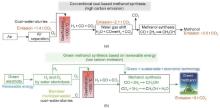
Fig 1
Comparison of traditional methanol synthesis pathway and green methanol synthesis pathway [10]."
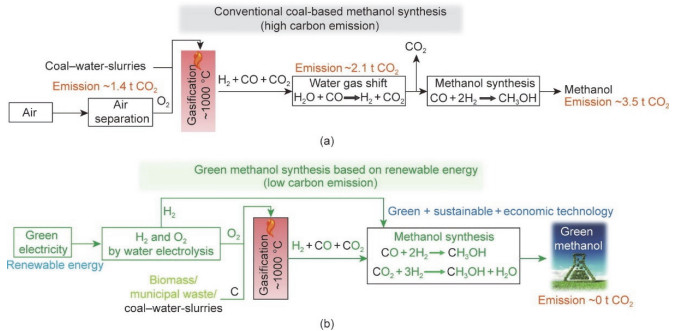
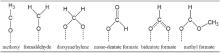
Fig 2
The intermediate structures in MSR reaction for hydrogen production [24]."
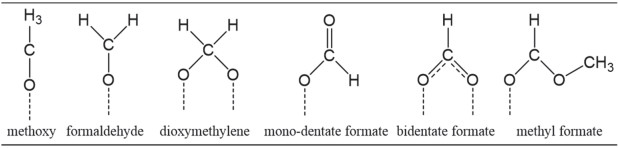
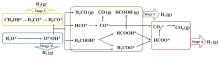
Fig 3
The formaldehyde pathway for hydrogen production via MSR reaction [25]."
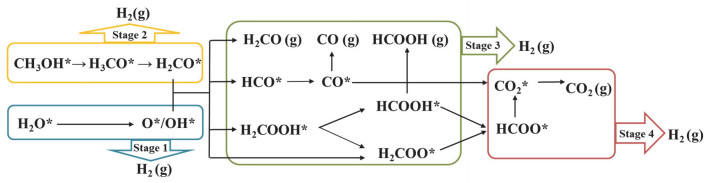
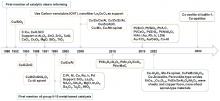
Fig 4
Development of catalysts for hydrogen production from methanol [28]."
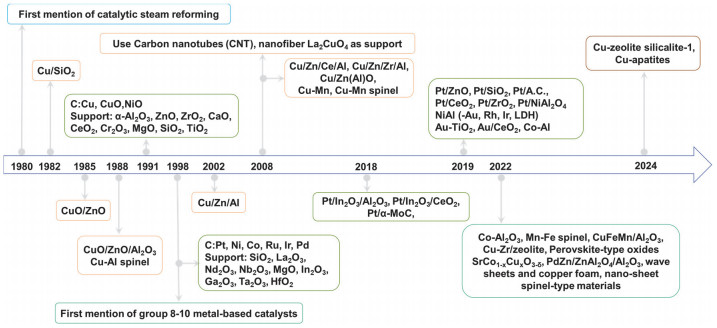
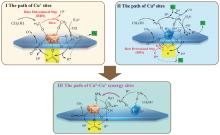
Fig 5
Copper-based catalyst reaction pathways: (Ⅰ) dual-site; (Ⅱ) single-site [116]; (Ⅲ) synergistic sites [119]."
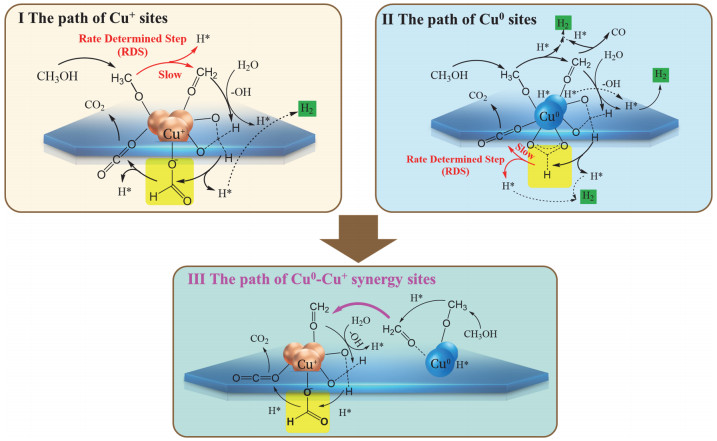
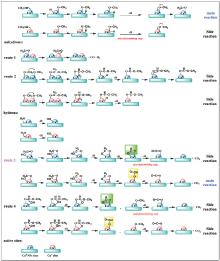
Fig 6
Possible pathways of the MSR hydrogen production reaction over Cu-based catalysts [119]."
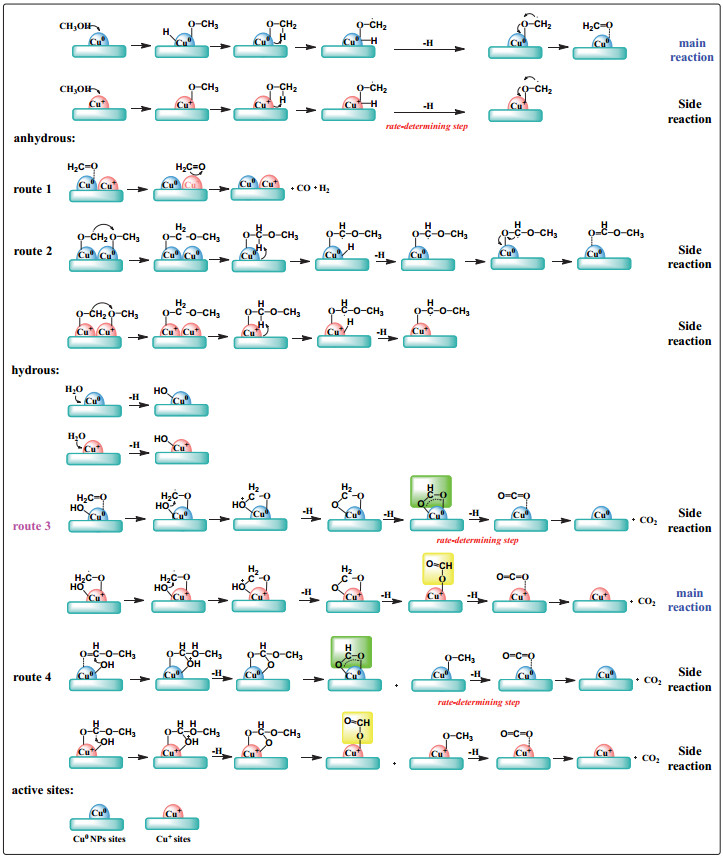
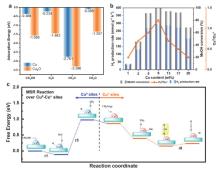
Fig 7
(a) Adsorption energies on Cu and CuO surfaces. (b) Relationship between methanol conversion, hydrogen yield, and the Cu0/Cu+ nanoparticle ratio for catalysts with different Cu loadings. (c) Energy barrier variations of the reaction pathways at synergistic sites of Cu-based catalysts [119]."
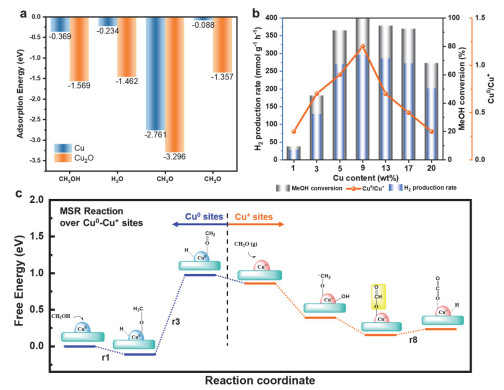
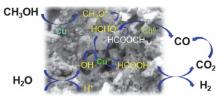
Fig 8
Synergistic effects of Cu0 and Cu+ active sites in Cu-based catalysts."
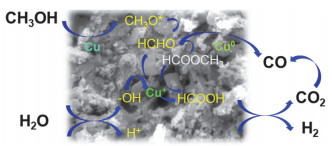
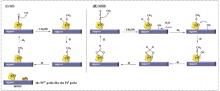
Fig 9
The pathways of Pt0 (Ptδ+) active sites: (Ⅰ) MD and (Ⅱ) MSR reaction"
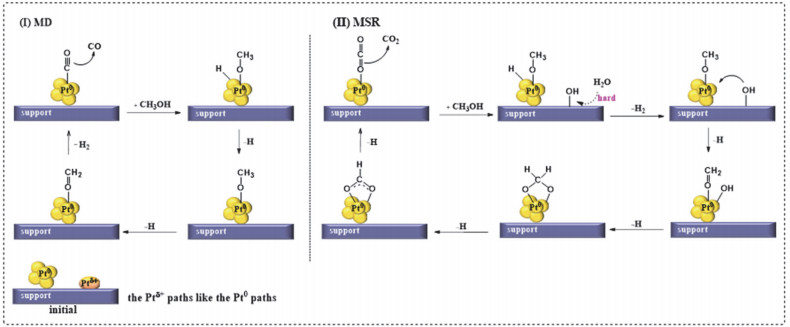
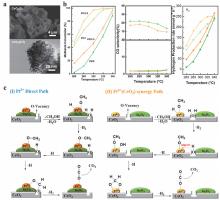
Fig 10
(a) CeO2 supports with different mesoporous structures; (b) MSR performance of various Pt/CeO2 and Pt/In2O3-CeO2 catalysts; (c) Pt2+ direct pathway and synergistic pathway at Ptδ+-CeO2 and In2O3-CeO2 active sites in Pt-based catalysts [173]."
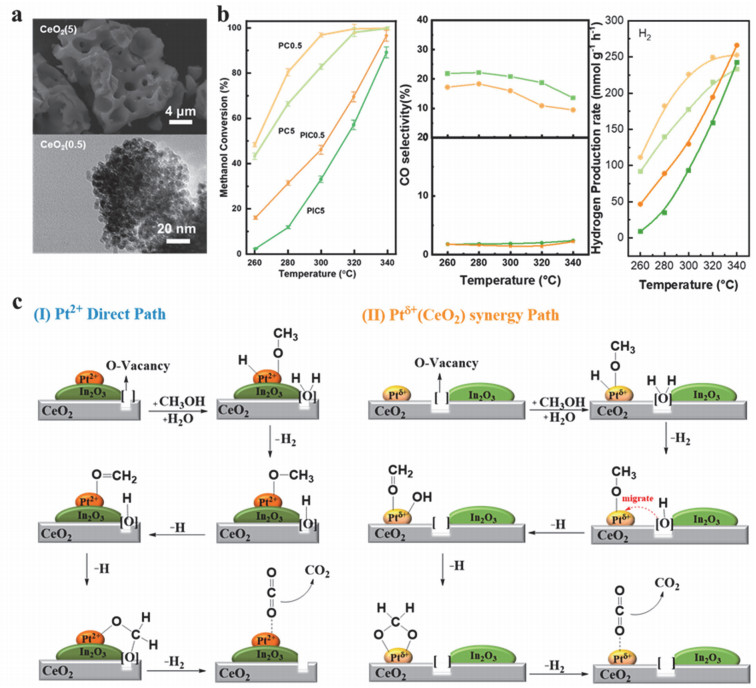
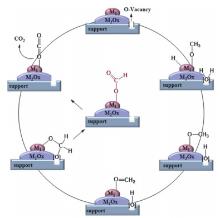
Fig 11
Direct reaction pathway in catalysts with strong interaction."
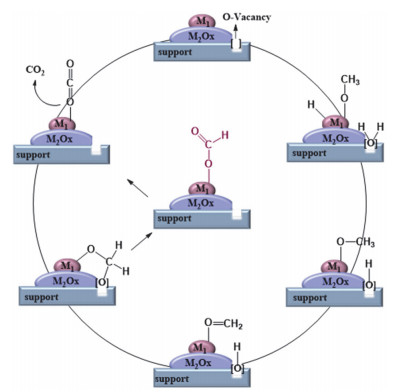
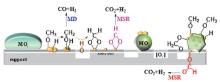
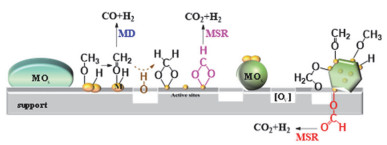
Fig 12
Various reaction pathways of Pt-based catalysts."
| 1 |
|
|
王戎; 陈祉叶; 曾嘉伟; 王怡静; 曹军骥; 汤绪; 张人禾. 科技导报, 2024, 42, 10.
doi: 10.3981/j.issn.1000-7857.2024.02.00232 |
|
| 2 |
Raimi, D.; Zhu, Y.; Newell, D. R. G.; Prest, B. C.; Bergman, A. Resources for the Future 2024. Report: https://www.rff.org/publications/reports/global-energy-outlook-2024
|
| 3 |
|
|
顾佰和; 于东晖; 王琛; 王毅. 中国科学院院刊, 2024, 39, 726.
doi: 10.16418/j.issn.1000-3045.20230505003 |
|
| 4 |
|
|
戴丽萍; 熊俊俏; 刘海英. 化工进展, 2013, 32, 2068.
doi: 10.3969/j.issn.1000-6613.2013.09.011 |
|
| 5 |
doi: 10.1504/IJNT.2020.111320 |
| 6 |
doi: 10.1016/j.ijhydene.2024.09.342 |
| 7 |
|
| 8 |
doi: 10.1016/S0920-5861(97)00050-3 |
| 9 |
doi: 10.1016/s0022-0728(03)00241-9 |
| 10 |
doi: 10.1016/j.eng.2023.08.005 |
| 11 |
|
|
蒋东方; 贾跃龙; 鲁强; 洪博文; 神瑞宝; 张岩. 中国电力, 2020, 53, 135.
doi: 10.11930/j.issn.1004-9649.202003195 |
|
| 12 |
|
|
李兴虎. 交通节能与环保, 2023, 19, 45.
doi: 10.3969/j.issn.1673-6478.2023.04.012 |
|
| 13 |
|
|
李庆勋; 刘晓彤; 刘克峰; 张天釜; 孔繁华. 天然气化工(C1化学与化工), 2015, 40, 78.
doi: 10.3969/j.issn.1001-9219.2015.01.021 |
|
| 14 |
|
|
郑励行; 赵黛青; 漆小玲; 陈毓暑. 工程热物理学报, 2022, 43, 2305.
|
|
| 15 |
|
|
邵乐; 张益; 唐燕飞; 杨鹏; 王宇欢; 王辉. 炼油与化工, 2024, 35, 10.
doi: 10.16049/j.cnki.lyyhg.2024.02.013 |
|
| 16 |
|
|
冯云; 曹田田; 宋海涛; 林伟. 石油炼制与化工, 2022, 53, 11.
|
|
| 17 |
|
| 18 |
|
|
王力鹏; 曹道帆; 刘雪; 李超; 刘科. 化学学报, 2024, 82, 819.
doi: 10.6023/A24020056 |
|
| 19 |
doi: 10.1016/j.apsusc.2023.159087 |
| 20 |
|
|
赵杭; 刘雪; 曹道帆; 李超; 江锋浩; 吴昌宁; 刘科. 天然气化工(C1化学与化工), 2022, 47(05), 49.
doi: 10.3969/j.issn.1001-9219.2022.05.007 |
|
| 21 |
|
|
汤颖; 邓强; 路勇; 何鸣元. 天然气化工(C1化学与化工), 2009, 34, 65.
|
|
| 22 |
doi: 10.1016/j.apcata.2004.09.022 |
| 23 |
doi: 10.1016/j.apcatb.2016.02.021 |
| 24 |
doi: 10.1016/j.ijhydene.2024.11.084 |
| 25 |
doi: 10.1021/acs.jpcc.8b00085 |
| 26 |
|
|
冯凯; 孟浩; 杨宇森; 卫敏. 化工进展, 5498, 43, 5498.
doi: 10.16085/j.issn.1000-6613.2023-1705 |
|
| 27 |
doi: 10.1016/j.ijhydene.2018.01.043 |
| 28 |
doi: 10.1016/j.jenvman.2022.116019 |
| 29 |
doi: 10.1016/s1566-7367(03)00132-8 |
| 30 |
doi: 10.1016/j.apcata.2005.10.043 |
| 31 |
doi: 10.1016/j.jcat.2007.05.003 |
| 32 |
doi: 10.1016/j.ijhydene.2023.03.147 |
| 33 |
doi: 10.1016/j.ijhydene.2023.05.238 |
| 34 |
doi: 10.1016/j.ijhydene.2021.12.080 |
| 35 |
doi: 10.1016/j.ijhydene.2019.03.269 |
| 36 |
|
|
王勤; 赵青; 吴荣生; 陶新明; 张宸. 现代化工, 2019, 39, 50.
doi: 10.16606/j.cnki.issn0253-4320.2019.06.010 |
|
| 37 |
|
|
倪哲明; 毛江洪; 潘国祥; 胥倩; 李小年. 物理化学学报, 2009, 25, 876.
doi: 10.3866/PKU.WHXB20090507 |
|
| 38 |
doi: 10.1002/ange.202217323 |
| 39 |
doi: 10.1021/acssuschemeng.3c02330 |
| 40 |
doi: 10.1021/acscatal.0c02120 |
| 41 |
doi: 10.1021/cs500740u |
| 42 |
doi: 10.1016/j.apcatb.2004.04.027 |
| 43 |
doi: 10.1016/j.ijhydene.2013.03.023 |
| 44 |
doi: 10.1002/er.4440 |
| 45 |
doi: 10.1016/j.apcata.2003.12.018 |
| 46 |
doi: 10.1021/cs400011m |
| 47 |
doi: 10.1016/j.cej.2012.03.063 |
| 48 |
doi: 10.1016/j.apcata.2009.01.031 |
| 49 |
doi: 10.1016/j.ijhydene.2014.08.041 |
| 50 |
doi: 10.1016/j.jcat.2015.06.020 |
| 51 |
doi: 10.1016/j.apcata.2018.01.022 |
| 52 |
doi: 10.1021/jacs.9b09431 |
| 53 |
doi: 10.1021/acs.iecr.0c03311 |
| 54 |
doi: 10.1016/j.ijhydene.2019.11.015 |
| 55 |
doi: 10.1016/j.ijhydene.2014.09.062 |
| 56 |
doi: 10.3390/molecules25071531 |
| 57 |
doi: 10.1016/j.fuel.2015.10.111 |
| 58 |
doi: 10.1039/c5gc00119f |
| 59 |
doi: 10.1039/C7CS00026J |
| 60 |
doi: 10.1021/acscatal.7b04469 |
| 61 |
doi: 10.1126/science.211.4487.1121 |
| 62 |
doi: 10.1002/ange.201300130 |
| 63 |
doi: 10.1002/anie.201400290 |
| 64 |
doi: 10.1038/nchem.2607 |
| 65 |
doi: 10.1021/acs.jpclett.6b01198 |
| 66 |
doi: 10.1021/acscatal.7b01896 |
| 67 |
doi: 10.1039/c1cs15008a |
| 68 |
doi: 10.1021/jacs.5b03668 |
| 69 |
doi: 10.1039/c4gc01818d |
| 70 |
doi: 10.1126/science.1240148 |
| 71 |
doi: 10.1002/anie.201610166 |
| 72 |
doi: 10.1002/anie.201601661 |
| 73 |
doi: 10.1021/ar800022m |
| 74 |
doi: 10.1016/s0920-5861(96)00195-2 |
| 75 |
doi: 10.1016/0009-2509(96)00008-5 |
| 76 |
doi: 10.1021/cs200311t |
| 77 |
doi: 10.1016/S0926-3373(02)00055-3 |
| 78 |
doi: 10.1021/acscatal.8b05042 |
| 79 |
doi: 10.1016/j.apcatb.2008.05.019 |
| 80 |
doi: 10.1021/acscatal.9b02773 |
| 81 |
doi: 10.1016/j.apcata.2023.119515 |
| 82 |
doi: 10.1016/j.apcata.2021.118279 |
| 83 |
doi: 10.1002/anie.201405213 |
| 84 |
doi: 10.1016/j.apcatb.2022.122043 |
| 85 |
doi: 10.1016/j.cattod.2022.04.012 |
| 86 |
doi: 10.1016/j.cattod.2020.10.019 |
| 87 |
doi: 10.1039/c2cy20604h |
| 88 |
doi: 10.3866/pku.Whxb202002017 |
| 89 |
doi: 10.1016/j.apcata.2018.11.023 |
| 90 |
doi: 10.3866/PKU.WHXB202009101 |
| 91 |
doi: 10.1021/acscatal.0c00260 |
| 92 |
doi: 10.1016/j.jpowsour.2006.04.008 |
| 93 |
doi: 10.1016/j.cej.2024.150331 |
| 94 |
doi: 10.1016/j.apcatb.2015.02.039 |
| 95 |
doi: 10.1002/anie.201411581 |
| 96 |
doi: 10.1038/s41929-021-00729-4 |
| 97 |
doi: 10.1039/D2CY01490D |
| 98 |
doi: 10.1002/anie.202301563 |
| 99 |
doi: 10.1021/jacs.2c13784 |
| 100 |
doi: 10.1016/j.apcatb.2020.119243 |
| 101 |
doi: 10.1016/j.jcat.2020.09.018 |
| 102 |
doi: 10.1016/j.jcat.2022.06.026 |
| 103 |
doi: 10.1016/j.apcatb.2019.118016 |
| 104 |
doi: 10.1021/jp206511q |
| 105 |
doi: 10.1016/s1872-2067(20)63672-5 |
| 106 |
doi: 10.1038/s41467-023-41192-y |
| 107 |
doi: 10.1039/d0cy02269a |
| 108 |
doi: 10.1039/d1cy01554k |
| 109 |
doi: 10.1002/smll.202004526 |
| 110 |
doi: 10.1016/j.apcatb.2022.121468 |
| 111 |
doi: 10.1038/s41467-024-47397-z |
| 112 |
doi: 10.1016/j.jece.2022.107676 |
| 113 |
doi: 10.1016/j.apcatb.2020.118698 |
| 114 |
doi: 10.1016/j.apcatb.2022.121515 |
| 115 |
doi: 10.1002/anie.202105118 |
| 116 |
doi: 10.1039/c9sc00015a |
| 117 |
doi: 10.1016/j.fuel.2023.130080 |
| 118 |
doi: 10.1002/anie.201710605 |
| 119 |
doi: 10.1016/j.surfin.2024.104633 |
| 120 |
doi: 10.1021/acs.jpcc.8b03764 |
| 121 |
doi: 10.1021/acssuschemeng.1c06935 |
| 122 |
doi: 10.1016/j.fuel.2023.129840 |
| 123 |
doi: 10.1038/s41467-023-43679-0 |
| 124 |
doi: 10.1021/jacs.3c06688 |
| 125 |
|
|
陈明旭; 梅占强; 陈柯臻; 罗永明. 石油化工, 2017, 46, 1536.
doi: 10.3969/j.issn.1000-8144.2017.12.017 |
|
| 126 |
|
| 127 |
doi: 10.1016/j.ijhydene.2022.10.046 |
| 128 |
doi: 10.1016/j.ijhydene.2015.08.046 |
| 129 |
doi: 10.1016/j.energy.2024.131091 |
| 130 |
doi: 10.1016/j.fuel.2016.06.081 |
| 131 |
doi: 10.1016/j.jechem.2020.02.038 |
| 132 |
doi: 10.1021/cr050198b |
| 133 |
doi: 10.3390/en14248442 |
| 134 |
doi: 10.1016/j.ijhydene.2020.04.040 |
| 135 |
doi: 10.1007/s11814-017-0111-4 |
| 136 |
doi: 10.1016/j.jcat.2020.10.023 |
| 137 |
doi: 10.1021/acscatal.1c05994 |
| 138 |
doi: 10.1021/acsnano.3c05409 |
| 139 |
doi: 10.1016/j.jcat.2022.10.002 |
| 140 |
doi: 10.1021/acscatal.0c03324 |
| 141 |
doi: 10.1007/s12274-022-4666-y |
| 142 |
doi: 10.1016/j.cej.2019.122752 |
| 143 |
doi: 10.1007/s12274-022-4251-4 |
| 144 |
doi: 10.1039/d1ta06850d |
| 145 |
doi: 10.1021/acscatal.2c06029 |
| 146 |
doi: 10.1016/j.cej.2021.131767 |
| 147 |
doi: 10.1007/s10562-018-2577-z |
| 148 |
doi: 10.1002/aenm.202103707 |
| 149 |
doi: 10.1039/d0gc01597k |
| 150 |
doi: 10.1021/acscatal.2c03709 |
| 151 |
doi: 10.1021/acscatal.0c04073 |
| 152 |
doi: 10.1021/acscatal.2c00207 |
| 153 |
doi: 10.1016/j.cej.2012.06.141 |
| 154 |
doi: 10.1016/j.jpowsour.2017.08.043 |
| 155 |
doi: 10.1016/j.ijhydene.2016.08.184 |
| 156 |
doi: 10.1016/j.ijhydene.2023.07.186 |
| 157 |
doi: 10.1016/j.apcata.2008.05.028 |
| 158 |
doi: 10.1002/cctc.201900738 |
| 159 |
doi: 10.1016/j.ces.2016.08.009 |
| 160 |
doi: 10.1021/jacs.9b04873 |
| 161 |
doi: 10.1021/acscatal.0c01968 |
| 162 |
doi: 10.1016/j.apcatb.2022.122018 |
| 163 |
doi: 10.1016/j.apcatb.2022.121669 |
| 164 |
doi: 10.1038/s41467-022-33186-z |
| 165 |
doi: 10.1021/jacs.0c10728 |
| 166 |
doi: 10.1023/A:1023571819211 |
| 167 |
doi: 10.3390/catal8110544 |
| 168 |
doi: 10.1016/j.apcatb.2019.118500 |
| 169 |
doi: 10.1038/nature21672 |
| 170 |
doi: 10.1021/acscatal.9b02243 |
| 171 |
doi: 10.1021/jacs.0c08640 |
| 172 |
doi: 10.1021/acscatal.3c02552 |
| 173 |
doi: 10.1016/j.fuel.2023.130760 |
| [1] | Xiaofeng Zhu, Bingbing Xiao, Jiaxin Su, Shuai Wang, Qingran Zhang, Jun Wang. Transition Metal Oxides/Chalcogenides for Electrochemical Oxygen Reduction into Hydrogen Peroxides [J]. Acta Phys. -Chim. Sin., 2024, 40(12): 2407005-. |
| [2] | Yuehan Cao, Rui Guo, Minzhi Ma, Zeai Huang, Ying Zhou. Effects of Electron Density Variation of Active Sites in CO2 Activation and Photoreduction: A Review [J]. Acta Phys. -Chim. Sin., 2024, 40(1): 2303029-. |
| [3] | Peng Chen, Ying Zhou, Fan Dong. Advances in Regulation Strategies for Electronic Structure and Performance of Two-Dimensional Photocatalytic Materials [J]. Acta Phys. -Chim. Sin., 2021, 37(8): 2010010-. |
| [4] | Chen Hong-Shan;Niu Jian-Zhong;Zhang Bing;Li Shu-Ben. DFT Study on the Active Sites in Mn-Na2WO4/SiO2 Catalyst [J]. Acta Phys. -Chim. Sin., 2001, 17(02): 111-115. |
| [5] | Yang Shu-Wu,Ji-Chun-Xin,Xu Jiang,Yan Wei-Hong,Zhang Yao-Jun,Ying Pin-Liang,Xin Q. TPD-MS Study of H2 and NO Adsorption Properties of γ-Mo2N [J]. Acta Phys. -Chim. Sin., 1996, 12(12): 1084-1089. |
| [6] | Zou Shou-Zhong,Gao Jin-Song,Li Chun-Zeng,Tian Zhong-Qun. Extending SERS Activity at Silver Electrodes to a Wide Potential Region [J]. Acta Phys. -Chim. Sin., 1995, 11(11): 1020-1025. |
|
||