物理化学学报 >> 2025, Vol. 41 >> Issue (3): 100022.doi: 10.3866/PKU.WHXB202311015
钠离子电池中铁基异质结构负极材料的最新研究进展
郭宇, 黄志伟, 胡雨青, 李俊哲*( ), 徐杰*()
- 安徽工业大学材料科学与工程学院, 安徽 马鞍山 243032
-
收稿日期:2023-11-09修回日期:2023-12-11录用日期:2023-12-12发布日期:2024-01-04 -
通讯作者:Email: ljz873936932@ahut.edu.cn (李俊哲)xu_jie@ahut.edu.cn (徐杰) -
基金资助:国家自然科学基金(52104129); 国家自然科学基金(22309003)
Recent Advances in Iron-based Heterostructure Anode Materials for Sodium Ion Batteries
Yu Guo, Zhiwei Huang, Yuqing Hu, Junzhe Li*(), Jie Xu*()
- School of Materials Science and Engineering, Anhui University of Technology, Maanshan 243032, Anhui Province, China
-
Received:2023-11-09Revised:2023-12-11Accepted:2023-12-12Published:2024-01-04 -
Contact:Email: ljz873936932@ahut.edu.cn (Junzhe Li)xu_jie@ahut.edu.cn (Jie Xu) -
Supported by:the National Natural Science Foundations of China(52104129); the National Natural Science Foundations of China(22309003)

摘要:
由于资源丰富、价格低廉以及较高比容量,铁(Fe)基材料在钠离子电池负极材料中具有广泛应用前景。然而,Fe基负极材料存在电导率低和在充放电过程中发生的较大体积变化等问题,导致其倍率性能和循环稳定性较差,严重限制了其在钠离子电池领域的大规模应用。构建具有异质结构的Fe基电极材料对提高电导率、增强动力学特性、以及缓解循环过程中由于较大体积变化引起的结构破坏至关重要,从而显著提高Fe基电极材料的综合电化学性能。本文详细综述了具有异质结构的Fe基负极材料在钠离子电池中的研究进展,重点阐述了异质结构Fe基电极材料的合成方法、表征手段和储能机制。同时,对异质结构Fe基氧化物、硫化物、磷化物、硒化物负极材料以及双阴离子Fe基负极材料的储钠特性、改性策略和强化机制等最新研究进展进行归纳。最后,对Fe基异质结构负极材料面临的挑战和发展前景进行总结,以期促进Fe基异质结构钠离子电池负极材料的快速发展和实际应用。
引用本文
郭宇, 黄志伟, 胡雨青, 李俊哲, 徐杰. 钠离子电池中铁基异质结构负极材料的最新研究进展[J]. 物理化学学报, 2025, 41(3), 100022. doi: 10.3866/PKU.WHXB202311015
Yu Guo, Zhiwei Huang, Yuqing Hu, Junzhe Li, Jie Xu. Recent Advances in Iron-based Heterostructure Anode Materials for Sodium Ion Batteries[J]. Acta Phys. -Chim. Sin. 2025, 41(3), 100022. doi: 10.3866/PKU.WHXB202311015
图1
"
图2
"
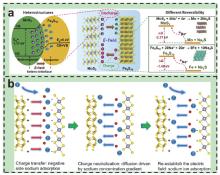
图3
"
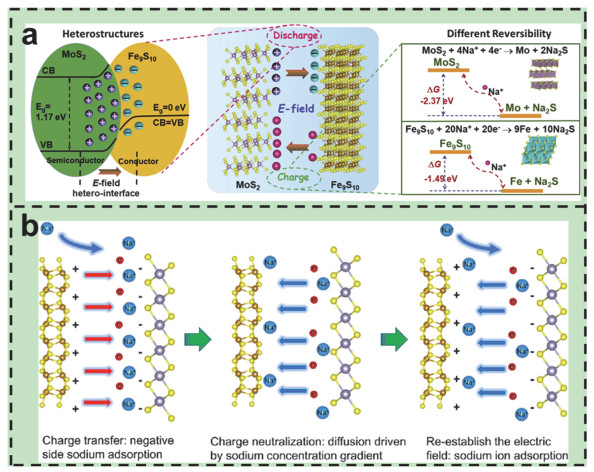
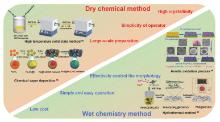
图4
"
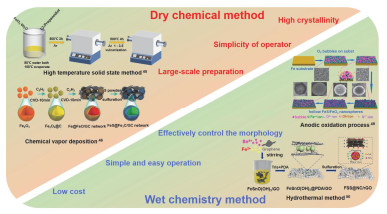
图5
"
图6
"
图7
"
图8
"
图9
"
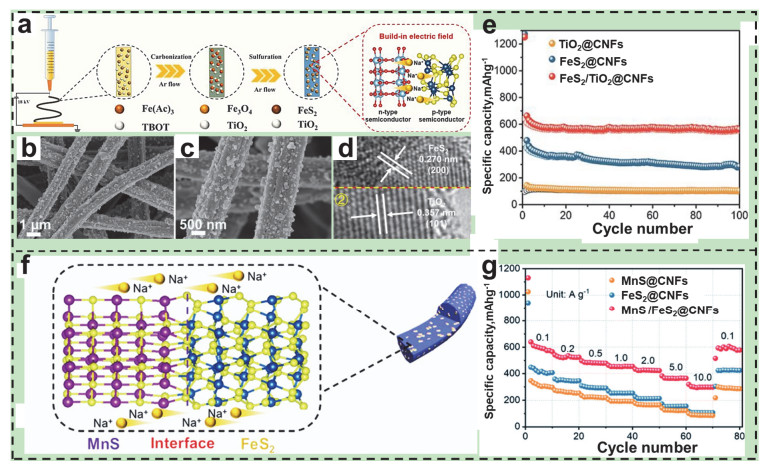
图10
"
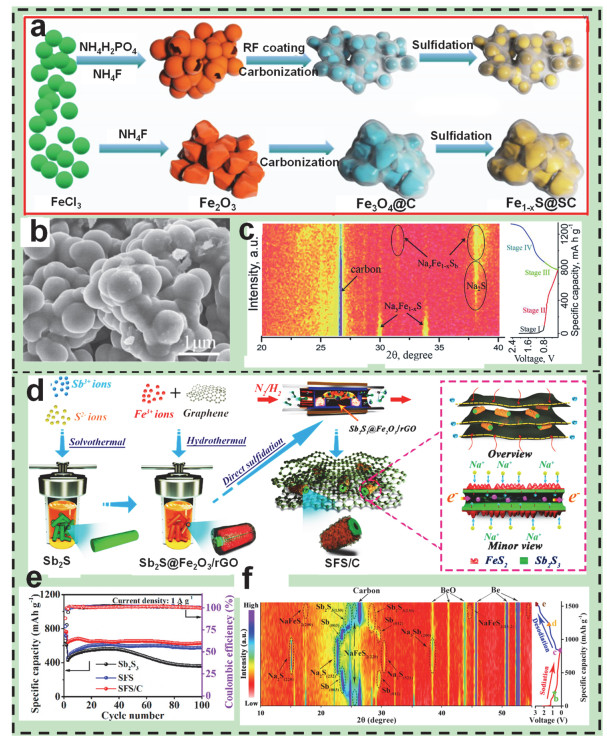
表1
"
| Materials | Specific capacity (mAh·g−1@A·g−1) | Rate capability (mAh·g−1@A·g−1) | Cycle life (mAh·g−1, mA·g−1@cycles) | Ref. |
| FeS@Fe3C@ | 575.7@0.1 | 451@1 | 482.2, 0.2@200 | |
| Graphitic Carbon | ||||
| FeS2/SnS2@NC/rGO | 451.8@0.2 | 315.9@1 | 451.8, 0.2@200 | |
| FeS2/FeS@MGN | 513.0@0.1 | 360@1 | 513, 0.1@100 | |
| FeS2@TiO2 nanorods | 637.8@0.2 | 222.2@10 | 374.9, 5@600 | |
| FeS2/MoS2-rGO | 468.0@0.1 | 346.5@3 | 468.0, 0.1@150 | |
| CoS2/FeS2/C | 538.1@1.0 | 453.9@5 | 500.4, 5@700 | |
| Ti3C2Tx/FeS2 | 500.1@0.5 | 456.6@10 | 474.9, 5@600 | |
| SnS2/FeS2@rGO | 768.3@0.1 | 639.4@1 | 653.3, 0.2@50 | |
| SnS/Fe7S8/NS-CNs | 498.7@0.2 | 417.2@1 | 498.7, 0.2@100 | |
| SnS2/FeS2/rGO | 653.3@0.2 | 428.9@1 | 768.3, 0.1@100 |
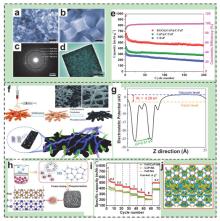
图11
"
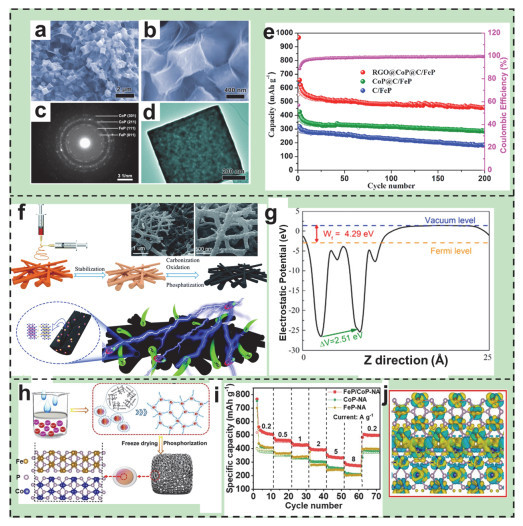
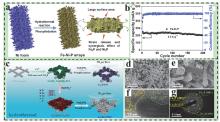
图12
"
图13
"
图14
"
图15
"

图16
"
| 1 |
doi: 10.1038/451652a |
| 2 |
doi: 10.3866/PKU.WHXB202204049 |
|
李莹; 来雪琦; 曲津朋; 赖勤志; 伊廷锋; 等. 物理化学学报, 2022, 38, 2204049.
doi: 10.3866/PKU.WHXB202204049 |
|
| 3 |
doi: 10.1002/adma.202210082 |
| 4 |
doi: 10.1016/j.cej.2018.09.018 |
| 5 |
doi: 10.1016/j.ensm.2018.06.027 |
| 6 |
doi: 10.3866/PKU.WHXB202001003 |
|
王思岚; 杨国锐; NasirM. S.; 王筱珺; 王嘉楠; 延卫. 物理化学学报, 2021, 37, 2001003.
doi: 10.3866/PKU.WHXB202001003 |
|
| 7 |
doi: 10.1002/adfm.202207751 |
| 8 |
doi: 10.1021/acsnano.2c11357 |
| 9 |
doi: 10.3866/PKU.WHXB202007075 |
|
陈瑶; 董浩洋; 李园园; 刘金平. 物理化学学报, 2021, 37, 2007075.
doi: 10.3866/PKU.WHXB202007075 |
|
| 10 |
doi: 10.3866/PKU.WHXB201906024 |
|
卢晓霞; 董升阳; 陈志杰; 吴朗源; 张校刚. 物理化学学报, 2020, 36, 1906024.
doi: 10.3866/PKU.WHXB201906024 |
|
| 11 |
doi: 10.1039/C2EE02781J |
| 12 |
doi: 10.3390/nano9121770 |
| 13 |
doi: 10.1016/j.nanoen.2018.11.040 |
| 14 |
doi: 10.1002/adfm.202006425 |
| 15 |
doi: 10.1016/j.nanoen.2017.07.007 |
| 16 |
doi: 10.1016/j.jechem.2019.05.018 |
| 17 |
doi: 10.3866/PKU.WHXB202209002 |
|
傅焰鹏; 朱昌宝. 物理化学学报, 2023, 39, 2209002.
doi: 10.3866/PKU.WHXB202209002 |
|
| 18 |
doi: 10.1002/aenm.202202577 |
| 19 |
doi: 10.1134/1.1187350 |
| 20 |
doi: 10.1007/s12274-017-1531-5 |
| 21 |
doi: 10.1002/adma.202001460 |
| 22 |
doi: 10.1002/adma.202101730 |
| 23 |
doi: 10.1002/chem.201705855 |
| 24 |
doi: 10.1002/adma.201902603 |
| 25 |
doi: 10.1002/adma.202106195 |
| 26 |
doi: 10.1016/j.nanoen.2016.12.052 |
| 27 |
doi: 10.1002/adfm.202214538 |
| 28 |
doi: 10.1002/smll.202001905 |
| 29 |
doi: 10.1021/acssuschemeng.0c03263 |
| 30 |
doi: 10.1016/j.matt.2022.09.009 |
| 31 |
doi: 10.1002/advs.202102081 |
| 32 |
doi: 10.1021/acs.nanolett.0c00741 |
| 33 |
doi: 10.1016/j.apmt.2019.04.006 |
| 34 |
doi: 10.1016/j.cej.2019.123839 |
| 35 |
doi: 10.1016/j.cej.2018.05.024 |
| 36 |
doi: 10.1016/j.ensm.2019.08.018 |
| 37 |
doi: 10.1002/smll.202202582 |
| 38 |
doi: 10.1002/adma.202100855 |
| 39 |
doi: 10.1016/j.cej.2023.141827 |
| 40 |
doi: 10.1002/aenm.202003689 |
| 41 |
doi: 10.1002/adfm.202008351 |
| 42 |
doi: 10.1039/c8ta04618b |
| 43 |
doi: 10.1016/j.matt.2023.03.013 |
| 44 |
doi: 10.1002/aenm.202300334 |
| 45 |
doi: 10.1016/j.jallcom.2022.166810 |
| 46 |
doi: 10.1002/adfm.201703390 |
| 47 |
doi: 10.1002/cey2.14 |
| 48 |
doi: 10.1007/s40820-019-0245-5 |
| 49 |
doi: 10.1016/j.jpowsour.2020.229268 |
| 50 |
doi: 10.1016/j.apsusc.2022.154864 |
| 51 |
doi: 10.1007/s12274-022-4943-9 |
| 52 |
doi: 10.1016/j.jelechem.2023.117219 |
| 53 |
doi: 10.1038/srep00591 |
| 54 |
doi: 10.1039/c7ra00134g |
| 55 |
doi: 10.1016/j.jechem.2023.03.011 |
| 56 |
doi: 10.1002/adfm.201807971 |
| 57 |
doi: 10.1007/s40820-023-01082-w |
| 58 |
doi: 10.1002/aenm.201904162 |
| 59 |
doi: 10.1039/c5ta09141a |
| 60 |
doi: 10.1002/sia.3389 |
| 61 |
doi: 10.1016/j.matlet.2016.04.200 |
| 62 |
doi: 10.3390/nano10040782 |
| 63 |
doi: 10.1002/adma.200401101 |
| 64 |
doi: 10.1088/1755-1315/844/1/012008 |
| 65 |
doi: 10.1021/acsaem.1c00167 |
| 66 |
doi: 10.1016/j.cej.2022.141243 |
| 67 |
doi: 10.1002/aenm.202000741 |
| 68 |
doi: 10.1002/advs.202204837 |
| 69 |
doi: 10.1039/C6NR09613A |
| 70 |
doi: 10.1007/s12598-020-01492-4 |
| 71 |
doi: 10.1016/j.electacta.2019.05.152 |
| 72 |
doi: 10.1002/ange.201805972 |
| 73 |
doi: 10.1007/s40820-019-0311-z |
| 74 |
doi: 10.1088/1361-6528/aac645 |
| 75 |
doi: 10.1002/smll.202105310 |
| 76 |
doi: 10.1016/j.cej.2022.140824 |
| 77 |
doi: 10.1016/j.nanoen.2016.08.054 |
| 78 |
doi: 10.1039/d1ta06760e |
| 79 |
doi: 10.1039/C9TA07302G |
| 80 |
doi: 10.1021/acsnano.0c00020 |
| 81 |
doi: 10.1039/C8CC03827A |
| 82 |
doi: 10.1039/C4CC09604E |
| 83 |
doi: 10.1016/j.cej.2019.122168 |
| 84 |
doi: 10.1016/j.cjche.2020.07.011 |
| 85 |
doi: 10.1016/j.jallcom.2019.153222 |
| 86 |
doi: 10.1002/zaac.202300158 |
| 87 |
doi: 10.1002/aenm.202202052 |
| 88 |
doi: 10.1021/acsami.1c08801 |
| 89 |
doi: 10.1016/j.apsusc.2022.155992 |
| 90 |
doi: 10.1021/acsanm.3c03360 |
| 91 |
doi: 10.1016/j.nanoen.2017.01.009 |
| 92 |
doi: 10.1039/D0NR07359H |
| 93 |
doi: 10.1016/j.cej.2020.127449 |
| 94 |
doi: 10.1016/j.jelechem.2021.115420 |
| 95 |
doi: 10.1016/j.jpowsour.2022.231940 |
| 96 |
doi: 10.1039/C7NR08255J |
| 97 |
doi: 10.1038/srep22432 |
| 98 |
doi: 10.1007/s12274-017-1537-z |
| 99 |
doi: 10.1002/smll.201803043 |
| 100 |
doi: 10.1021/acsnano.0c08818 |
| 101 |
doi: 10.1016/j.ensm.2017.08.006 |
| 102 |
doi: 10.1016/j.cej.2021.129279 |
| 103 |
doi: 10.1007/s12598-022-01995-2 |
| 104 |
doi: 10.1016/j.compositesb.2021.109166 |
| 105 |
doi: 10.1016/j.ensm.2022.01.025 |
| 106 |
doi: 10.1039/D2NR06672F |
| 107 |
doi: 10.1002/anie.201706426 |
| 108 |
doi: 10.1039/C9EE03549D |
| 109 |
doi: 10.1063/1.4940131 |
| 110 |
doi: 10.1088/1361-6528/aabd6e |
| 111 |
doi: 10.1021/acsnano.0c00101 |
| 112 |
doi: 10.1002/adma.202002976 |
| 113 |
doi: 10.1016/S1872-5805[17]60133-1 |
| 114 |
doi: 10.1007/s40820-020-0381-y |
| 115 |
doi: 10.1016/j.cej.2021.130882 |
| 116 |
doi: 10.1039/d2ta04174j |
| [1] | Débora Ferreira dos Santos Morais, José Luis Tirado, Carlos Pérez-Vicente, Fabiana Villela da Motta, Pedro Lavela, Mauricio Bomio, Sergio Lavela. 通过Nb2O5包覆提升Na3V2(PO4)3正极的储钠性能[J]. 物理化学学报, 2026, 42(2): 100180 - . |
| [2] | 赵珊, 刘旭, 郭昊天, 柳宗琳, 王鹏飞, 舒杰, 伊廷锋. 高熵P2/O3双相正极的协同设计助力高性能钠离子电池[J]. 物理化学学报, 2026, 42(1): 100129 - . |
| [3] | 宋亮亮, 梁颢严, 李顺清, 邱报, 刘兆平. 超高比能电池高锰富锂层状氧化物正极材料面临的挑战与解决策略[J]. 物理化学学报, 2025, 41(8): 100085 - . |
| [4] | 诸海渝, 文卓群, 熊稳, 魏兴战, 王峙. 二维半金属/硅异质结中肖特基势垒高度的准确高效预测[J]. 物理化学学报, 2025, 41(7): 100078 - . |
| [5] | 王禹尧, 曹志涛, 杜泽宇, 曹鑫鑫, 梁叔全. 钠离子电池铁基聚阴离子正极材料研究进展[J]. 物理化学学报, 2025, 41(4): 100035 - . |
| [6] | 邵毅宏, 沈荣晨, 王松, 李世杰, 张鹏, 李鑫. 共价有机框架中的组分工程用于定制光催化[J]. 物理化学学报, 2025, 41(12): 100176 - . |
| [7] | 李文慧, 唐亚昆, 周玉生, 张月, 张文海, 马庆涛, 刘浪, 董森, 曹余良. 通过分子内氧化提升沥青衍生硬碳的储钠性能以用于高性能钠离子电池[J]. 物理化学学报, 2025, 41(10): 100119 - . |
| [8] | 黄辰悦, 郑鸿飞, 秦宁, 王灿沛, 王利光, 陆俊. 单晶高镍三元正极材料:挑战与策略[J]. 物理化学学报, 2024, 40(9): 2308051 - . |
| [9] | 陆世玉, 豆文钊, 张均, 王玲, 武春洁, 易欢, 王融, 金梦. 优化结晶度的CrS/CoS2少层异质结非晶/晶态界面耦合增强水裂解和甲醇辅助节能制氢[J]. 物理化学学报, 2024, 40(8): 2308024 - . |
| [10] | 肖雪, 李佳纯, 孟祥桐, 邱介山. 硫掺杂碳包覆Fe0.95S1.05纳米球复合材料的储钠性能[J]. 物理化学学报, 2024, 40(6): 2307006 - . |
| [11] | 胡紫霖, 牛耀申, 容晓晖, 胡勇胜. Ni3+抑制具有阴离子氧化还原活性钠离子电池正极材料的电压衰减[J]. 物理化学学报, 2024, 40(6): 2306005 - . |
| [12] | 薛晴, 李圣驿, 赵亚楠, 盛鹏, 徐丽, 李正曦, 张波, 李慧, 王博, 杨立滨, 曹余良, 陈重学. 基于活性炭||Na0.44MnO2的低成本、高倍率和长寿命碱性钠离子电池电容器[J]. 物理化学学报, 2024, 40(2): 2303041 - . |
| [13] | 辛燕, 葛运年, 李泽中, 张桥保, 田华军. 储能电池有机电极材料改性策略研究进展[J]. 物理化学学报, 2024, 40(2): 2303060 - . |
| [14] | 张志全, RhimiBaker, 刘喆旸, 周敏, 邓国伟, 魏巍, 毛梁, 李华明, 姜志锋. 铜基光催化剂二氧化碳转化研究进展[J]. 物理化学学报, 2024, 40(12): 2406029 - . |
| [15] | 梅建宝, 李贝, 张舒, 肖东东, 胡朴, 张更. 高性能三元NASICON型Na3.5−xMn0.5V1.5−xZrx(PO4)3/C钠离子电池正极材料[J]. 物理化学学报, 2024, 40(12): 2407023 - . |
|
||