物理化学学报 >> 2025, Vol. 41 >> Issue (8): 100085.doi: 10.1016/j.actphy.2025.100085
超高比能电池高锰富锂层状氧化物正极材料面临的挑战与解决策略
宋亮亮1,2, 梁颢严1, 李顺清1,2, 邱报1,2,*( ), 刘兆平1,2,*()
- 1 中国科学院宁波材料技术与工程研究所, 浙江 宁波 315201
2 中国科学院大学化学科学学院, 北京 100049
-
收稿日期:2025-02-17修回日期:2025-03-17录用日期:2025-03-27发布日期:2025-06-07 -
通讯作者:Email: qiubao@nimte.ac.cn (邱报)liuzp@nimte.ac.cn (刘兆平) -
基金资助:中国科学院对外合作计划(181GJHZ2024126MI); 低成本正极材料(TC220H06P); 中科杭州湾研究所(宁波)新材料有限公司(NIMTE-61-2024-2); 宁波市自然科学基金(2024QL041); 中国科学院青年创新促进会(2022299)
Challenges and strategies on high-manganese Li-rich layered oxide cathodes for ultrahigh-energy-density batteries
Liangliang Song1,2, Haoyan Liang1, Shunqing Li1,2, Bao Qiu1,2,*(), Zhaoping Liu1,2,*()
- 1 Ningbo Institute of Materials Technology & Engineering (NIMTE), Chinese Academy of Sciences, Ningbo 315201, Zhejiang Province, China
2 School of Chemical Sciences, University of Chinese Academy of Sciences, Beijing 100049, China
-
Received:2025-02-17Revised:2025-03-17Accepted:2025-03-27Published:2025-06-07 -
Contact:Email: qiubao@nimte.ac.cn (Bao Qiu)liuzp@nimte.ac.cn (Zhaoping Liu) -
Supported by:the External Cooperation Program of Chinese Academy of Sciences(181GJHZ2024126MI); the Low Cost Cathode Material(TC220H06P); the Zhongke Hangzhou Bay Institute (Ningbo) New Materials Co. Ltd.(NIMTE-61-2024-2); the Natural Science Foundation of Ningbo(2024QL041); the Youth Innovation Promotion Association of Chinese Academy of Sciences(2022299)

摘要:
得益于过渡金属和晶格氧共同参与氧化还原反应,富锂层状氧化物(LLOs)具有大于250 mAh·g−1的比容量,因而成为下一代商用锂离子电池的潜在候选正极材料。为进一步提高理论比容量并减少对环境和健康有害的钴、镍元素依赖,开发高锰富锂层状氧化物(HM-LLOs)成为一种可行的策略。通过引入更多的Li–O–Li构型,可以促进更多晶格氧参与氧化还原反应,从而提升理论比容量。然而,锰含量的增加也带来了如活化困难和不可逆氧释放等挑战,显著限制了HM-LLOs理论比容量的实际利用。基于此,本文首先探讨了HM-LLOs高理论比容量的来源,随后深入分析了高锰特性引发的结构变化及其对实际比容量利用的限制,最后系统总结了从合成到活性材料改性的多种优化策略,并展望了可能提升HM-LLOs实际比容量的未来方向。
引用本文
宋亮亮, 梁颢严, 李顺清, 邱报, 刘兆平. 超高比能电池高锰富锂层状氧化物正极材料面临的挑战与解决策略[J]. 物理化学学报, 2025, 41(8), 100085. doi: 10.1016/j.actphy.2025.100085
Liangliang Song, Haoyan Liang, Shunqing Li, Bao Qiu, Zhaoping Liu. Challenges and strategies on high-manganese Li-rich layered oxide cathodes for ultrahigh-energy-density batteries[J]. Acta Phys. -Chim. Sin. 2025, 41(8), 100085. doi: 10.1016/j.actphy.2025.100085
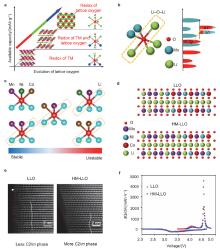
图1
"
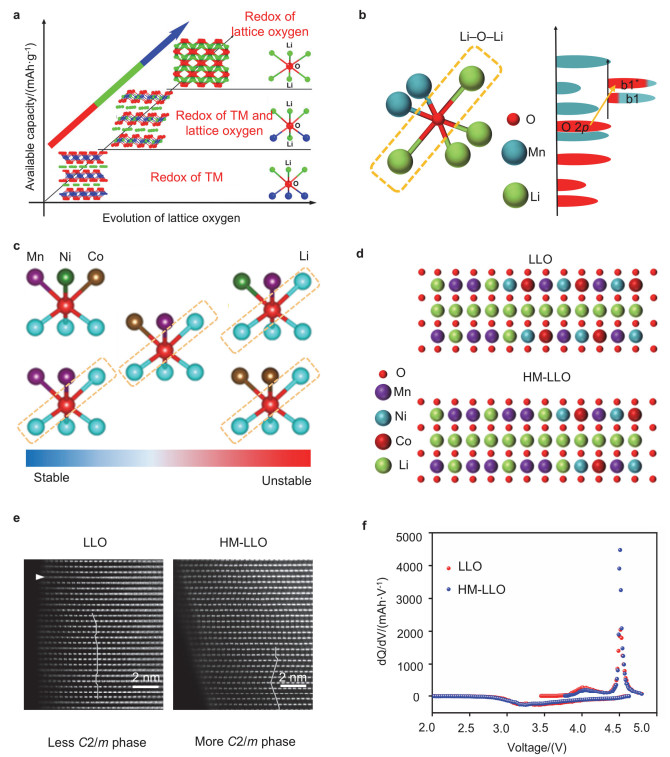
图2
"
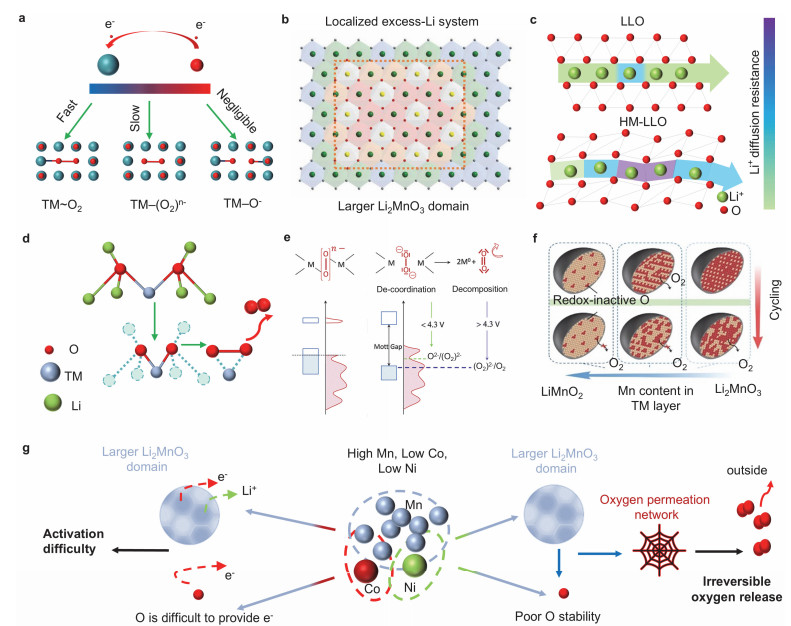
图3
"
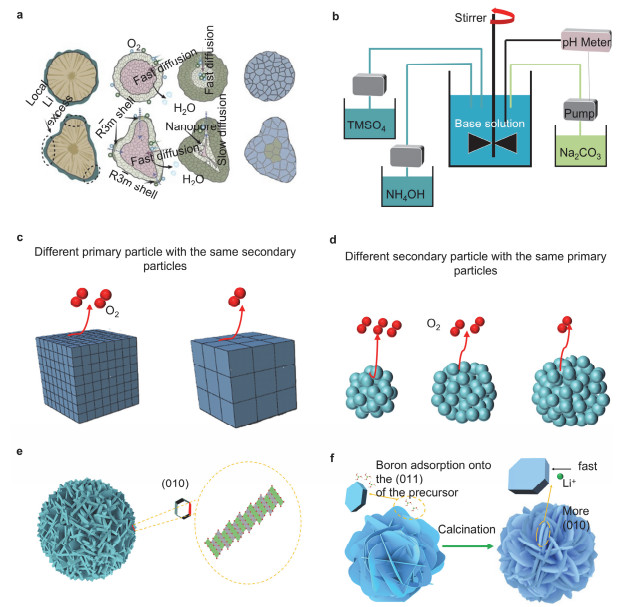
图4
"
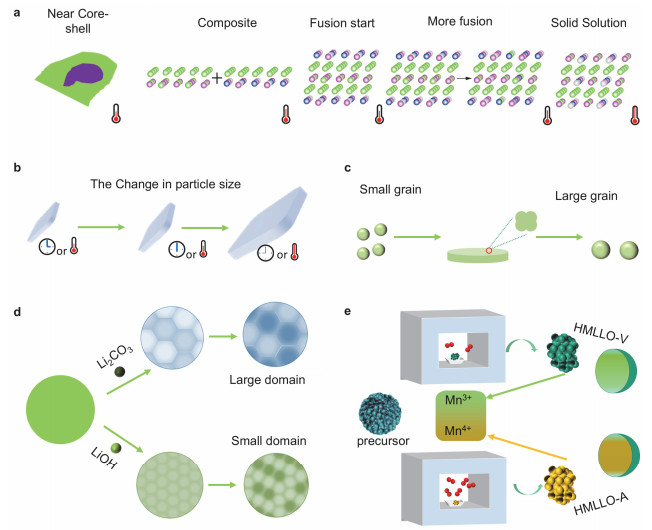
图5
"
图6
"
图7
"
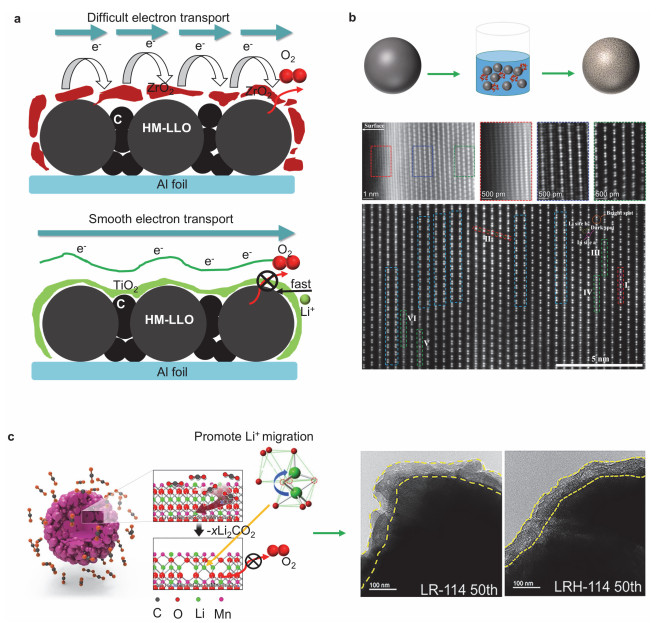
图8
"
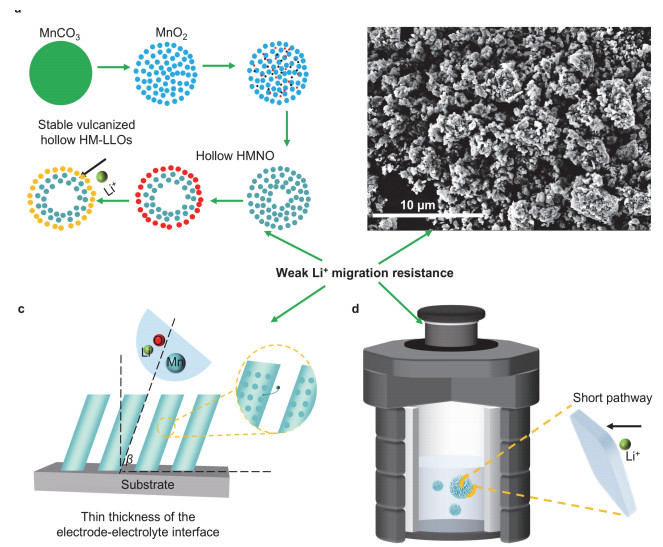
图9
"
图10
"
| 1 |
doi: 10.1038/35104644 |
| 2 |
doi: 10.1126/science.1198591 |
| 3 |
doi: 10.1021/acsenergylett.3c00563 |
| 4 |
doi: 10.1016/j.jechem.2023.03.005 |
| 5 |
doi: 10.1016/j.ensm.2020.11.034 |
| 6 |
doi: 10.1016/j.xcrp.2020.100028 |
| 7 |
doi: 10.1016/j.commatsci.2023.112426 |
| 8 |
doi: 10.1002/adma.202001944 |
| 9 |
doi: 10.1016/j.jpowsour.2022.231022 |
| 10 |
doi: 10.1016/j.nanoen.2019.02.040 |
| 11 |
doi: 10.1016/j.nanoen.2024.109390 |
| 12 |
doi: 10.1016/j.mattod.2022.09.013 |
| 13 |
doi: 10.1038/s41586-021-03509-z |
| 14 |
doi: 10.1021/acs.chemmater.6b04815 |
| 15 |
doi: 10.1038/nchem.2524 |
| 16 |
doi: 10.1021/acsami.7b09835 |
| 17 |
doi: 10.1021/ja01379a006 |
| 18 |
doi: 10.1021/acsenergylett.9b02799 |
| 19 |
doi: 10.3866/PKU.WHXB201312252 |
| 20 |
doi: 10.1016/j.mattod.2021.10.020 |
| 21 |
doi: 10.1038/s41563-023-01679-x |
| 22 |
doi: 10.1021/acsnano.4c06932 |
| 23 |
doi: 10.1038/s41557-021-00775-2 |
| 24 |
doi: 10.1038/s41563-022-01278-2 |
| 25 |
doi: 10.1021/acsaem.2c01556 |
| 26 |
doi: 10.1038/ncomms9014 |
| 27 |
doi: 10.1149/1945-7111/ad6d99 |
| 28 |
doi: 10.1002/adfm.202306804 |
| 29 |
doi: 10.1021/acs.chemmater.5b04862 |
| 30 |
doi: 10.1021/jacs.4c08115 |
| 31 |
doi: 10.1002/eem2.12722 |
| 32 |
doi: 10.1002/aenm.201502143 |
| 33 |
doi: 10.1038/s41467-024-54312-z |
| 34 |
doi: 10.1039/c4ta03692a |
| 35 |
doi: 10.1016/j.est.2023.110073 |
| 36 |
doi: 10.1021/acsmaterialslett.1c00088 |
| 37 |
doi: 10.1002/aenm.202102646 |
| 38 |
doi: 10.1002/adma.202100352 |
| 39 |
doi: 10.1038/s41467-020-17126-3 |
| 40 |
doi: 10.1039/c5ee03048j |
| 41 |
doi: 10.1126/science.aac8260 |
| 42 |
doi: 10.1038/nmat4551 |
| 43 |
doi: 10.1039/c6ee02328b |
| 44 |
doi: 10.1038/s41563-024-01833-z |
| 45 |
doi: 10.1038/s41560-021-00780-2 |
| 46 |
doi: 10.1002/adma.202403307 |
| 47 |
doi: 10.1038/s41563-024-01873-5 |
| 48 |
doi: 10.1038/s41560-018-0184-2 |
| 49 |
doi: 10.1038/s41467-019-13240-z |
| 50 |
doi: 10.1038/s41467-018-07080-6 |
| 51 |
doi: 10.1039/c9ee04123k |
| 52 |
doi: 10.1002/anie.202407477 |
| 53 |
doi: 10.3866/PKU.WHXB202404042 |
| 54 |
doi: 10.3866/PKU.WHXB201506151 |
| 55 |
doi: 10.1021/acs.jpcb.8b12004 |
| 56 |
doi: 10.1039/c3ta00153a |
| 57 |
doi: 10.1038/s41560-021-00832-7 |
| 58 |
doi: 10.1016/j.ensm.2022.10.008 |
| 59 |
doi: 10.1002/adma.201402541 |
| 60 |
doi: 10.1021/acsami.1c18651 |
| 61 |
doi: 10.1016/j.electacta.2022.141047 |
| 62 |
doi: 10.1039/d4ee90043j |
| 63 |
doi: 10.1149/1945-7111/ac5545 |
| 64 |
doi: 10.1039/c7ta04002d |
| 65 |
doi: 10.1039/d3ta01624b |
| 66 |
doi: 10.1021/acsami.1c00723 |
| 67 |
doi: 10.1016/j.jcis.2022.10.105 |
| 68 |
doi: 10.1039/d4ta03917c |
| 69 |
doi: 10.1039/d4ee00487f |
| 70 |
doi: 10.1016/j.cej.2023.145728 |
| 71 |
doi: 10.1016/j.mtener.2022.101039 |
| 72 |
doi: 10.1016/j.jechem.2023.02.034 |
| 73 |
doi: 10.1149/1945-7111/ac3526 |
| 74 |
doi: 10.1021/acsnano.3c03666 |
| 75 |
doi: 10.1016/j.electacta.2019.04.040 |
| 76 |
doi: 10.1039/d4ee02511c |
| 77 |
doi: 10.1002/aenm.201902445 |
| 78 |
doi: 10.3866/PKU.WHXB201406172 |
| 79 |
doi: 10.1021/jacs.3c01999 |
| 80 |
doi: 10.1039/c3ta11703k |
| 81 |
doi: 10.1039/c9ee04197d |
| 82 |
doi: 10.1016/j.ensm.2024.103559 |
| 83 |
doi: 10.1016/j.nanoen.2019.01.080 |
| 84 |
doi: 10.1088/1361-6528/ab9579 |
| 85 |
doi: 10.1038/nchem.2923 |
| 86 |
doi: 10.1002/aenm.201802379 |
| 87 |
doi: 10.1021/acssuschemeng.8b02552 |
| 88 |
doi: 10.1016/j.jcis.2021.07.141 |
| 89 |
doi: 10.1021/acssuschemeng.8b04905 |
| 90 |
doi: 10.1149/2.059204jes |
| 91 |
doi: 10.3866/PKU.WHXB202011007 |
| 92 |
doi: 10.1016/j.electacta.2018.09.134 |
| 93 |
doi: 10.1007/s11581-019-03202-2 |
| 94 |
doi: 10.1016/j.nanoen.2019.103887 |
| 95 |
doi: 10.1038/s41467-021-23154-4 |
| 96 |
doi: 10.3866/PKU.WHXB202009077 |
| 97 |
doi: 10.1126/sciadv.add5189 |
| 98 |
doi: 10.1002/aenm.202001120 |
| 99 |
doi: 10.3866/PKU.WHXB201704145 |
| 100 |
doi: 10.1016/j.jpowsour.2016.09.028 |
| 101 |
doi: 10.1021/acsami.5b04932 |
| 102 |
doi: 10.3866/PKU.WHXB201406251 |
| 103 |
doi: 10.1016/j.jpowsour.2018.09.082 |
| 104 |
doi: 10.1007/s11581-015-1484-1 |
| 105 |
doi: 10.1002/adfm.202302236 |
| 106 |
doi: 10.1021/acssuschemeng.8b04285 |
| 107 |
doi: 10.1002/adma.202109564 |
| 108 |
doi: 10.1002/adma.202303612 |
| 109 |
doi: 10.1002/adfm.202213260 |
| 110 |
doi: 10.1021/cm5031415 |
| 111 |
doi: 10.1002/smll.202307156 |
| 112 |
doi: 10.1039/d3ee01318a |
| 113 |
doi: 10.1002/adma.201801751 |
| 114 |
doi: 10.1002/adma.202103173 |
| 115 |
doi: 10.1002/adfm.202401249 |
| 116 |
doi: 10.1149/1945-7111/acaa5c |
| 117 |
doi: 10.1021/acsami.2c17534 |
| 118 |
doi: 10.1007/s10854-019-02315-8 |
| 119 |
doi: 10.1002/adfm.201803392 |
| 120 |
doi: 10.1038/s41560-019-0508-x |
| 121 |
doi: 10.1016/j.nanoen.2020.104644 |
| 122 |
doi: 10.1038/ncomms12108 |
| 123 |
doi: 10.1002/aenm.202301216 |
| 124 |
doi: 10.1016/j.jechem.2021.07.023 |
| 125 |
doi: 10.1016/j.jechem.2023.12.050 |
| 126 |
doi: 10.1016/j.jpowsour.2017.11.004 |
| 127 |
doi: 10.1021/acsaem.0c01303 |
| 128 |
doi: 10.1021/acsami.1c19399 |
| 129 |
doi: 10.1038/ncomms13598 |
| 130 |
doi: 10.1002/adma.202307617 |
| 131 |
doi: 10.1021/acsami.6b04687 |
| 132 |
doi: 10.1016/j.seta.2022.102006 |
| 133 |
doi: 10.1021/acsami.6b13229 |
| 134 |
doi: 10.1039/d0nr08980j |
| 135 |
doi: 10.1016/j.powtec.2013.02.039 |
| 136 |
doi: 10.1021/acsaem.3c00630 |
| 137 |
doi: 10.1021/acsaem.9b00259 |
| 138 |
doi: 10.1021/acssuschemeng.8b00126 |
| 139 |
doi: 10.1021/acsami.7b12080 |
| 140 |
doi: 10.1016/j.jpowsour.2015.04.034 |
| 141 |
doi: 10.1246/cl.2012.418 |
| 142 |
doi: 10.1021/acs.nanolett.4c01532 |
| 143 |
doi: 10.1038/s41467-020-14927-4 |
| 144 |
doi: 10.1021/jacs.3c11569 |
| 145 |
doi: 10.1038/s41467-018-05802-4 |
| 146 |
doi: 10.1002/adma.201901808 |
| 147 |
doi: 10.1002/adma.202000190 |
| 148 |
doi: 10.1038/s41467-022-8793-9 |
| 149 |
doi: 10.1038/s41467-024-48890-1 |
| 150 |
doi: 10.1021/jacs.0c02302 |
| 151 |
doi: 10.1038/s41467-021-23430-3 |
| 152 |
doi: 10.1016/j.chempr.2022.04.012 |
| [1] | 祝鑫彤, 曹斌, 闫崇, 唐城, 陈爱兵, 张强. 锂离子电池石墨负极包覆研究进展[J]. 物理化学学报, 2025, 41(9): 100096 - . |
| [2] | 邱领邦, 蒋江民, 王李波, 白浪, 周飞, 周羔宇, 庄全超, 崔艳华. 原位电化学阻抗谱监测长寿命热电池Nb12WO33正极材料的高温双放电机制[J]. 物理化学学报, 2025, 41(5): 100040 - . |
| [3] | 黄奥羽, 许君, 黄玉, 储圭, 王卯, 王黎丽, 孙永奇, 蒋臻, 朱晓波. 通过简单的浆料添加剂调整电极-电解液界面以实现稳定的高电压锂离子电池[J]. 物理化学学报, 2025, 41(4): 100037 - . |
| [4] | 王禹尧, 曹志涛, 杜泽宇, 曹鑫鑫, 梁叔全. 钠离子电池铁基聚阴离子正极材料研究进展[J]. 物理化学学报, 2025, 41(4): 100035 - . |
| [5] | 林学宇, 王瑞琦, 董武杰, 黄富强. 高性能双金属氧化物负极的理性设计及储锂特性[J]. 物理化学学报, 2025, 41(3): 100021 - . |
| [6] | 郭宇, 黄志伟, 胡雨青, 李俊哲, 徐杰. 钠离子电池中铁基异质结构负极材料的最新研究进展[J]. 物理化学学报, 2025, 41(3): 100022 - . |
| [7] | 邵毅宏, 沈荣晨, 王松, 李世杰, 张鹏, 李鑫. 共价有机框架中的组分工程用于定制光催化[J]. 物理化学学报, 2025, 41(12): 100176 - . |
| [8] | 黄辰悦, 郑鸿飞, 秦宁, 王灿沛, 王利光, 陆俊. 单晶高镍三元正极材料:挑战与策略[J]. 物理化学学报, 2024, 40(9): 2308051 - . |
| [9] | 张景硕, 翟越, 赵子云, 何家兴, 魏伟, 肖菁, 吴士超, 杨全红. 锂离子电池硅基负极用功能粘结剂的研究进展[J]. 物理化学学报, 2024, 40(6): 2306006 - . |
| [10] | 李莹, 赵钰燊, 陈凯, 刘旭, 伊廷锋, 陈立锋. 高性能锂离子电池用N掺杂C-Sn交联纳米纤维自支撑电极的理性设计[J]. 物理化学学报, 2024, 40(3): 2305007 - . |
| [11] | 辛燕, 葛运年, 李泽中, 张桥保, 田华军. 储能电池有机电极材料改性策略研究进展[J]. 物理化学学报, 2024, 40(2): 2303060 - . |
| [12] | 胡雪晨, 夏求应, 岳钒, 何欣怡, 梅正浩, 王金石, 夏晖, 黄晓东. LiNbO3负极薄膜电化学性能及全固态薄膜锂离子电池应用[J]. 物理化学学报, 2024, 40(2): 2309046 - . |
| [13] | 梅建宝, 李贝, 张舒, 肖东东, 胡朴, 张更. 高性能三元NASICON型Na3.5−xMn0.5V1.5−xZrx(PO4)3/C钠离子电池正极材料[J]. 物理化学学报, 2024, 40(12): 2407023 - . |
| [14] | 张志全, RhimiBaker, 刘喆旸, 周敏, 邓国伟, 魏巍, 毛梁, 李华明, 姜志锋. 铜基光催化剂二氧化碳转化研究进展[J]. 物理化学学报, 2024, 40(12): 2406029 - . |
| [15] | 李琪, 黎平安, 刘泽通, 张佳辉, 张浩, 余维来, 胡先罗. 同轴静电纺丝构筑微/纳米结构隔膜与电极材料用于锂离子电池:从原理到应用[J]. 物理化学学报, 2024, 40(10): 2311030 - . |
|
||