物理化学学报 >> 2025, Vol. 41 >> Issue (2): 100011.doi: 10.3866/PKU.WHXB202308048
高压锂电池正极电解质界面研究进展
刘建东1,2, 张志佳3, MikhailKamenskii4, FilippVolkov4, SvetlanaEliseeva4, 马建民1,*
- 1 天津工业大学化学学院, 天津 300387
2 湖南大学物理与微电子科学学院, 长沙 410022
3 天津工业大学材料科学与工程学院, 天津 300387
4 Institute of Chemistry, Saint Petersburg State University, Saint Petersburg 199034, Russia
-
收稿日期:2023-08-30修回日期:2023-10-06录用日期:2023-10-30发布日期:2023-12-20 -
通讯作者:Email: nanoelechem@hnu.edu.cn (马建民) -
基金资助:国家自然科学基金(U21A20311)
Research Progress on Cathode Electrolyte Interphase in High-Voltage Lithium Batteries
Jiandong Liu1,2, Zhijia Zhang3, Kamenskii Mikhail4, Volkov Filipp4, Eliseeva Svetlana4, Jianmin Ma1,*
- 1 School of Chemistry, Tiangong University, Tianjin 300387, China
2 School of Physics and Electronics, Hunan University, Changsha 410022, China
3 School of Material Science and Engineering, Tiangong University, Tianjin 300387, China
4 Institute of Chemistry, Saint Petersburg State University, Saint Petersburg 199034, Russia
-
Received:2023-08-30Revised:2023-10-06Accepted:2023-10-30Published:2023-12-20 -
Contact:Email: nanoelechem@hnu.edu.cn (Jianmin Ma) -
Supported by:the National Natural Science Foundation of China(U21A20311)

摘要:
提高电池的截止电压上限可以显著提升锂电池的能量密度。然而,高截止电压也会导致正极材料在高压下发生不可逆相变和副反应,从而损害电池性能。为了解决这一问题,建立一个稳定的正极电解质界面(CEI)在提高电池性能方面起到了关键作用。本文探讨了CEI的形成机制,并概述了构建CEI的方法,包括人工构建CEI和原位生成CEI。此外,从电解质的角度出发,我们还展望了构建高压正极CEI的设计思路。
引用本文
刘建东, 张志佳, MikhailKamenskii, FilippVolkov, SvetlanaEliseeva, 马建民. 高压锂电池正极电解质界面研究进展[J]. 物理化学学报, 2025, 41(2), 100011. doi: 10.3866/PKU.WHXB202308048
Jiandong Liu, Zhijia Zhang, Kamenskii Mikhail, Volkov Filipp, Eliseeva Svetlana, Jianmin Ma. Research Progress on Cathode Electrolyte Interphase in High-Voltage Lithium Batteries[J]. Acta Phys. -Chim. Sin. 2025, 41(2), 100011. doi: 10.3866/PKU.WHXB202308048
图1
"
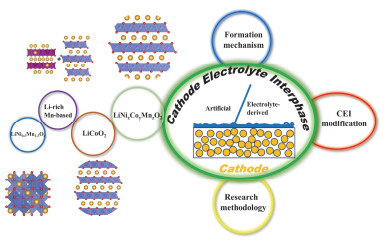
图2
"
图3
"
图4
"
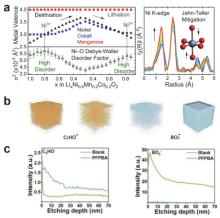
图5
"
表1
"
| Methods | Advantage | Disadvantage |
| XPS | Provides the content of elements on the surface/ analyze the valence states of elements/ better quantitative ability | Not easy to focus/ the large irradiation area/ the detection limit |
| SEM | Simple to prepare samples/ dynamically observed/ high resolution | The lower resolution/ vacuum environment limits the type of sample/ only the surface morphology observed/ no height direction information/ not liquid samples |
| TEM | High resolution/ observing the crystal lattice on the crystal surface | Certain destructive effects on the sample/ high material requirements/ small observation range |
| Cryo-EM | Close to the living state/ observing microstructure of different split surfaces/ withstanding electron beam bombardment and long-term preservation | Artificial damage to samples/ Limitations of observation area selection |
| XRD | High analysis speed/ no extra changes in the chemical state/ measured repeatedly with good reproducibility/ simple sample preparation | Poor absolute analysis/ quantitative analysis needs standard samples/ less sensitive to light elements/ easily affected by mutual element interference and superposition peaks |
| AFM | True three-dimensional surface map/ not require any special treatment of the sample/ work well at atmospheric pressure | Small imaging range/ slow speed/ great influence of the probe |
| XAS | More accurate atomic structure identification/ the coordination environment and the chemical state/ low sample requirements/ nondestructive | Only the planar average structure and no three-dimensional information |
| ToF-SIMS | High resolution/ high sensitivity/ accurate mass measurement/ three-dimensional manner | Little damage to the sample/ mainly solid at present |
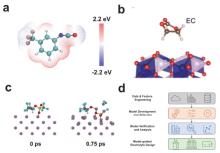
图6
"
图7
"
图8
"
图9
"
图10
"
| 1 |
doi: 10.1021/ja3091438 |
| 2 |
doi: 10.1016/j.trechm.2022.04.010 |
| 3 |
doi: 10.1016/j.ensm.2021.02.001 |
| 4 |
doi: 10.1063/1.5144280 |
| 5 |
doi: 10.1002/adma.202108353 |
| 6 |
doi: 10.1039/C6CS00875E |
| 7 |
doi: 10.1002/aenm.201901756 |
| 8 |
doi: 10.1016/j.chempr.2018.05.002 |
| 9 |
doi: 10.1002/aenm.202000521 |
| 10 |
doi: 10.1002/adma.202206009 |
| 11 |
doi: 10.1016/j.ensm.2023.02.022 |
| 12 |
doi: 10.1038/s41467-021-26815-6 |
| 13 |
doi: 10.1016/j.ensm.2020.09.015 |
| 14 |
doi: 10.1021/acs.chemmater.8b01077 |
| 15 |
doi: 10.1021/acs.chemmater.9b02916 |
| 16 |
doi: 10.1016/j.ensm.2021.03.015 |
| 17 |
doi: 10.1149/1.2776160 |
| 18 |
doi: 10.1016/j.nantod.2016.04.004 |
| 19 |
doi: 10.1002/aenm.201703154 |
| 20 |
doi: 10.1002/anie.201801533 |
| 21 |
doi: 10.1016/j.jpowsour.2018.10.094 |
| 22 |
doi: 10.1016/j.ceramint |
| 23 |
doi: 10.1016/j.electacta |
| 24 |
doi: 10.1016/j.jallcom |
| 25 |
doi: 10.1016/j.matt.2020.10.021 |
| 26 |
doi: 10.1021/acs.nanolett.9b00179 |
| 27 |
doi: 10.1039/D1TA02563E |
| 28 |
doi: 10.1149/1.2114158 |
| 29 |
doi: 10.1016/S0022-0728(96)04862-0 |
| 30 |
doi: 10.1002/adma.201902029 |
| 31 |
doi: 10.1021/ed060pA25.1 |
| 32 |
doi: 10.1016/j.jpowsour.2017.09.050 |
| 33 |
doi: 10.1016/j.ensm.2018.02.016 |
| 34 |
doi: 10.1016/j.jechem.2023.01.046 |
| 35 |
doi: 10.1038/ncomms6381 |
| 36 |
doi: 10.1016/j.apsusc.2022.154119 |
| 37 |
doi: 10.1021/acs.jpcc.0c08095 |
| 38 |
doi: 10.1002/anie.202300057 |
| 39 |
doi: 10.1002/aenm.202300084 |
| 40 |
|
| 41 |
doi: 10.1002/wcms.1327 |
| 42 |
doi: 10.1103/PhysRevLett.77.3865 |
| 43 |
doi: 10.1002/wcms.1159 |
| 44 |
doi: 10.1038/s41565-018-0183-2 |
| 45 |
doi: 10.1002/adfm.202104395 |
| 46 |
doi: 10.1073/pnas.2214357120 |
| 47 |
doi: 10.1016/j.cej.2020.126138 |
| 48 |
doi: 10.1016/j.nanoen.2017.12.036 |
| 49 |
doi: 10.1016/j.chempr.2022.10.027 |
| 50 |
doi: 10.1002/smll.201802570 |
| 51 |
doi: 10.1016/j.electacta.2014.04.155 |
| 52 |
doi: 10.1016/j.cej.2020.124403 |
| 53 |
doi: 10.1039/C4TA04018J |
| 54 |
doi: 10.1002/anie.202101627 |
| 55 |
doi: 10.1002/adfm.202212150 |
| 56 |
doi: 10.1002/anie.202107957 |
| 57 |
doi: 10.1002/adfm.202300629 |
| 58 |
doi: 10.1016/j.cej.2021.128904 |
| 59 |
doi: 10.1016/j.jechem.2019.05.023 |
| 60 |
doi: 10.1021/la203712s |
| 61 |
doi: 10.1149/2.0831608jes |
| 62 |
doi: 10.1039/D1CS00450F |
| 63 |
doi: 10.1016/j.powera.2020.100043 |
| 64 |
doi: 10.1021/acsaem.2c00861 |
| 65 |
doi: 10.1021/acsaem.3c00196 |
| 66 |
doi: 10.1016/j.ensm.2021.08.030 |
| 67 |
doi: 10.1016/j.elecom.2012.02.037 |
| 68 |
doi: 10.1016/j.electacta.2023.142496 |
| 69 |
doi: 10.1002/appl.202200096 |
| 70 |
doi: 10.1002/adfm.202002824 |
| 71 |
doi: 10.1016/j.psep.2022.02.018 |
| 72 |
doi: 10.3390/molecules.27103107 |
| 73 |
doi: 10.1002/aenm.202103033 |
| 74 |
doi: 10.1016/j.electacta.2022.140765 |
| 75 |
doi: 10.1021/acsenergylett.2c00316 |
| 76 |
doi: 10.1149/2.053311jes |
| 77 |
doi: 10.1039/C5EE03360H |
| 78 |
doi: 10.1002/adfm.202004664 |
| 79 |
doi: 10.1016/j.cej.2022.134745 |
| 80 |
doi: 10.1038/s41560-023-01275-y |
| [1] | 金彩云, 吴泽轩, 李国鹏, 罗战, 李念武. 用于金属锂电池的磷腈基阻燃人工界面层[J]. 物理化学学报, 2025, 41(8): 100094 - . |
| [2] | 张恒睿, 徐熹骏, 李璕琭, 杲祥文. 生成式人工智能在电池研究中的应用:现状与展望[J]. 物理化学学报, 2025, 41(10): 100115 - . |
| [3] | 韩卓, 张丹丰, 王海先, 郑国瑞, 柳明, 贺艳兵. 长寿命高镍锂电池界面重构电解液添加剂研究进展[J]. 物理化学学报, 2024, 40(9): 2307034 - . |
| [4] | 吕寒梅, 陈昕, 孙麒富, 赵宁, 郭向欣. 纳米石榴石固体电解质粉体在聚合物电解质中的均匀分散[J]. 物理化学学报, 2024, 40(3): 2305016 - . |
| [5] | 赵永智, 陈晨阳, 刘文燚, 胡伟飞, 刘金平. 固态锂电池界面优化策略的研究进展[J]. 物理化学学报, 2023, 39(8): 2211017 -0 . |
| [6] | 夏求应, 蔡雨, 刘威, 王金石, 吴川智, 昝峰, 徐璟, 夏晖. 锂负极失效的全固态薄膜锂电池的直接回收再利用[J]. 物理化学学报, 2023, 39(8): 2212051 -0 . |
| [7] | 岳昕阳, 马萃, 包戬, 杨思宇, 陈东, 吴晓京, 周永宁. 金属锂负极失效机制及其先进表征技术[J]. 物理化学学报, 2021, 37(2): 2005012 - . |
| [8] | 关俊, 李念武, 于乐. 人工界面层在金属锂负极中的应用[J]. 物理化学学报, 2021, 37(2): 2009011 - . |
| [9] | 杨毅, 闫崇, 黄佳琦. 锂电池中固体电解质界面研究进展[J]. 物理化学学报, 2021, 37(11): 2010076 - . |
| [10] | 石浩东, 李亚光, 路鹏飞, 吴忠帅. 石墨烯负载的氧配位钴单原子稳定金属锂负极[J]. 物理化学学报, 2021, 37(11): 2008033 - . |
| [11] | 张世超, 沈泽宇, 陆盈盈. 金属锂电池的热失控与安全性研究进展[J]. 物理化学学报, 2021, 37(1): 2008065 - . |
| [12] | 蔡明俐, 姚柳, 靳俊, 温兆银. 水溶液法原位构建ZnO亲锂层稳定锂-石榴石电解质界面[J]. 物理化学学报, 2021, 37(1): 2009006 - . |
| [13] | 邱晓光, 刘威, 刘九鼎, 李俊志, 张凯, 程方益. 金属锂负极的成核机制与载体修饰[J]. 物理化学学报, 2021, 37(1): 2009012 - . |
| [14] | 潘弘毅, 李泉, 禹习谦, 李泓. 多空间尺度下的金属锂负极表征技术[J]. 物理化学学报, 2021, 37(1): 2008091 - . |
| [15] | 孙宇恒, 高铭达, 李慧, 徐丽, 薛晴, 王欣然, 白莹, 吴川. 金属有机骨架材料在金属锂电池界面的应用[J]. 物理化学学报, 2021, 37(1): 2007048 - . |
|
||