物理化学学报 >> 2024, Vol. 40 >> Issue (8): 2306048.doi: 10.3866/PKU.WHXB202306048
MXenes基光催化剂的进展、挑战和展望
蔡宇珊, 肖方兴*( )
)
- 福州大学材料科学与工程学院, 福州 350108
-
收稿日期:2023-07-27修回日期:2023-09-14录用日期:2023-09-14发布日期:2023-09-22 -
通讯作者:Email: fxxiao@fzu.edu.cn; Tel: +86-18850459117 (肖方兴) -
基金资助:国家自然科学基金(21703038); 国家自然科学基金(22072025)
Revisiting MXenes-based Photocatalysis Landscape: Progress, Challenges, and Future Perspectives
Yushan Cai, Fang-Xing Xiao*()
- College of Materials Science and Engineering, Fuzhou University, Fuzhou 350108, China
-
Received:2023-07-27Revised:2023-09-14Accepted:2023-09-14Published:2023-09-22 -
Contact:Email: fxxiao@fzu.edu.cn; Tel: +86-18850459117 (Fang-Xing Xiao) -
Supported by:the National Natural Science Foundation of China(21703038); the National Natural Science Foundation of China(22072025)

摘要:
随着科学技术的不断进步,传统的能源资源如石油和煤炭正面临大规模耗竭的问题,同时也释放出大量的温室气体,导致能源短缺和极端气候变化,这已成为威胁人类生存和发展的紧迫挑战。在这一背景下,光催化技术备受关注,因为它可以将太阳能有效地转化为化学能,被认为是解决能源和环境问题的新兴途径。要实现高效的光催化反应,选择合适的催化剂至关重要。然而,常用的光催化剂,如二氧化钛(TiO2)、硫化镉(CdS)、氮化碳(g-C3N4)等存在着一系列问题,包括光生电荷复合率高、光能利用效率低、稳定性差、电荷转移速度慢等,这些缺陷限制了光催化效率的提高。为应对这些挑战,二维(2D)材料MXenes备受关注。MXenes具有独特的结构柔韧性、多样性的元素组成、优越的导电性、卓越的载流子迁移性能以及丰富的催化活性位点,这些特性有助于加速界面电荷转移并抑制光生电荷复合,因此MXenes作为助催化剂,被广泛应用于光催化反应中。本文综合总结了制备高质量MXenes的各种方法,包括水溶液刻蚀、无水刻蚀以及其他物理辅助方法。同时,还讨论了构建MXenes复合光催化体系的多种策略,例如原位生长合成、原位氧化合成和静电自组装等。此外,文中还回顾了MXene与其他材料如TiO2、CdS、g-C3N4、WO3、BiOBr等在光催化制氢、二氧化碳还原、环境修复、氮固定、杀菌等领域的研究进展。最后,鉴于MXene本身存在的局限性以及产业化需求,文章还展望了MXene基复合材料在光催化领域的未来发展前景和面临的挑战。总的来说,本文为MXenes在光催化太阳能转化中的应用提供了详实而丰富的信息。
引用本文
蔡宇珊, 肖方兴. MXenes基光催化剂的进展、挑战和展望[J]. 物理化学学报, 2024, 40(8), 2306048. doi: 10.3866/PKU.WHXB202306048
Yushan Cai, Fang-Xing Xiao. Revisiting MXenes-based Photocatalysis Landscape: Progress, Challenges, and Future Perspectives[J]. Acta Phys. -Chim. Sin. 2024, 40(8), 2306048. doi: 10.3866/PKU.WHXB202306048
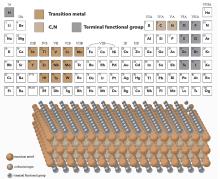
图1
"
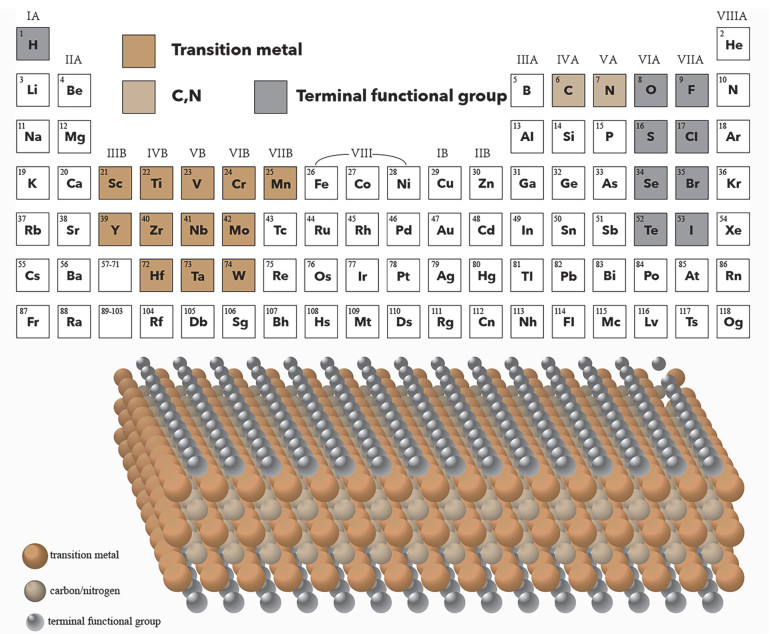
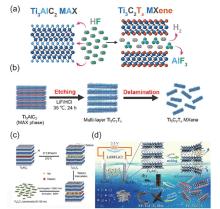
图2
"
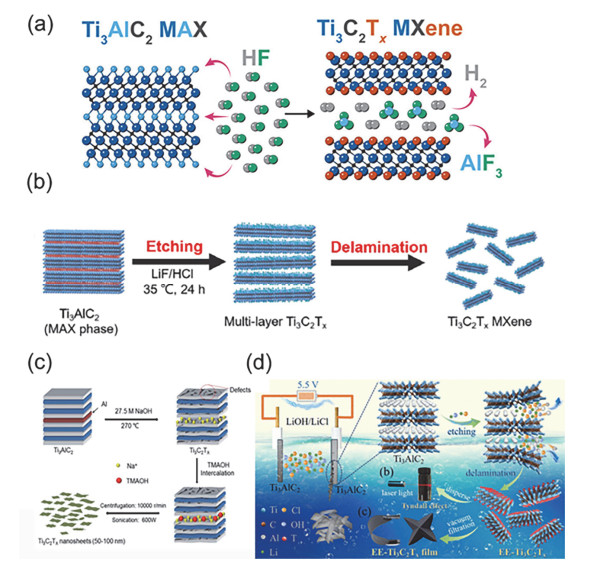
图3
"
图4
"
表1
"
| Precursor | Product | Synthesis method | Sacrificial reagent | Temperature/℃ | Time | Ref. |
| Ti2AlN | Ti2N | Selective etching | HCl and KF | 40 | 1 h | |
| V2AlN | V2NTx | Selective etching | LiF and HCl | 40 | 3 h | |
| Ti3AlC2 | Ti3C2Tx | Selective etching | H2SO4 and H2O2 | 40 | 30 min | |
| Cr2AlC | Cr2CTx | Selective etching | LiF and diluted acid | 30 | 30 min | |
| Ti3AlC2 | Ti3C2Tx | Iodine etching | Iodine nanocrystals and CH3CN | |||
| Mo2Ga2C | Mo2CTx | Hydrothermal etching | NaOH | 180 | 24 h | |
| Mo-In-C non-MAX | Mo2CTx | UV-assisted safe etching | Concentrated phosphoric acid | 3–5 h | ||
| Ti3AlC2 | Ti3C2Tx | Hydrothermal | LiF and HCl | 30 | 30 min | |
| Ti3AlC2 | Ti3C2Tx | Soft Delamination | HF and HCl | 35 | ||
| Ti3AlC2 | Ti3C2Tx | Microwave‑assisted synthesis | LiF, HCl and TBAF | |||
| Ti3AlC2 | Ti3C2Tx | Power-focused delamination | HCl and LiF | 45 | 24 h | |
| Ti3AlC2 | Ti3C2Tx | Ion exchange approach | HF and HCl | 50 | 72 h | |
| Ti3AlC2 | Ti3C2Tx | Acoustomicrofluidic Synthesis | HF and PTFE | 30 | 24 h | |
| Ti3AlC2 | Ti3C2Tx | State-of-the-art approaches | LiF and HCl | 5 min | ||
| Ti3AlC2 | Ti3C2Tx | EN-MILD | LiF and HCl | 40 | 30 min | |
| Ti3AlC2 | Ti3C2Tx | Salt-based method | LiF | 80 | 15 min | |
| Mo2GaC | Mo2C | UV-induced selective etching | Phosphoric acid | 3–5 h | ||
| Mo2Ga2C | Mo2C | Hydrothermal | LiF and HCl | 30 min | ||
| Ti3AlC2 | Ti3C2Tx | Solution-phase flocculation | HF | 30 | 72 h | |
| Ti2SC | Ti2CTx | Thermal reduction | 900 | 30 min |

图5
"
图6
"
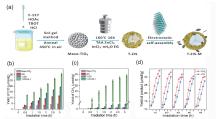
图7
"
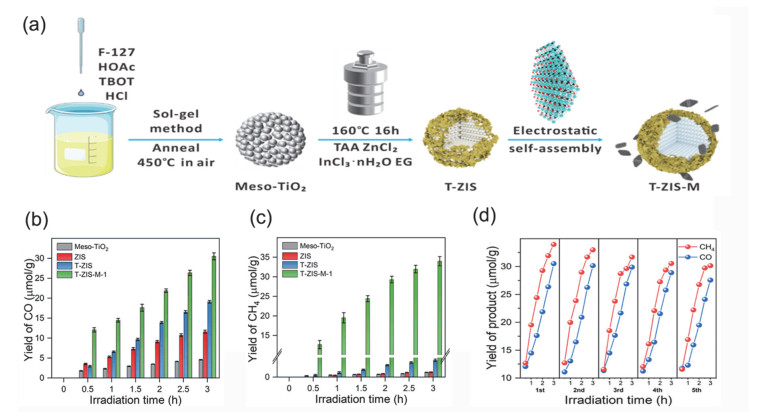
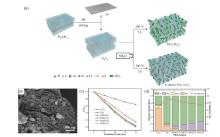
图8
"
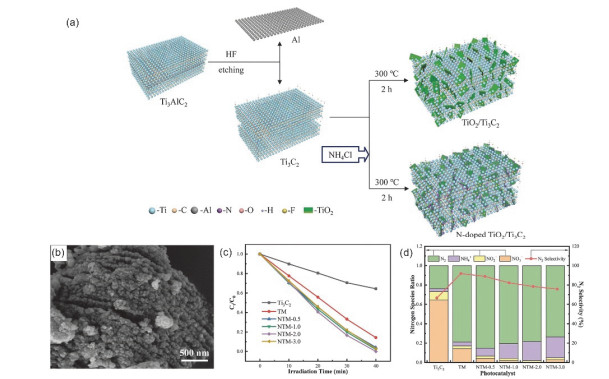
图9
"
表2
"
| Catalyst | Co-catalyst | Synthetic method | Light range | Degraded substances | Time | Degree | Ref. |
| CuO | Ti3C2Tx | Hydrothermal | Visible light | MB | 80 min | 99% | |
| CuFe2O4 | Ti3C2Tx | Self-assembly | MB | 40 min | 94% | ||
| BiOCl-PPy | Ti3C2Tx | Self-assembly | Antibiotics | 60 min | 96% | ||
| NiFe2O4/V2O5 | Ti3C2Tx | Self-assembly | RhB, | 240 min | 88.7% | ||
| ln2S3/CdS | Ti3C2-OH | Self-assembly | RHB | 8 min | 99.1% | ||
| TiO2 | Ti3C2Tx | Hydrothermal | MB | 150 min | 75% | ||
| TiO2 | Ti3C2Tx | Insitu grown | MO | 240 min | 100% | ||
| CdS/Nb2O5 | Nb2C | Hydrothermal | CBZ | 240 min | 92% | ||
| SnS2 | Ti3C2Tx | Hydrothermal | Tetracycline hydrochloride | 60 min | 96% | ||
| g-C3N4 | Ti3C2Tx | Calcination | Urea | 30 min | 90.1% | ||
| Bi2WO6 | Ti3C2Tx | Hydrothermal | TOC | 60 min | 79.5% | ||
| TiO2 | Ti3C2Tx | In situ growth | PFOA | 16 h | 100% | ||
| Bi12O17Cl2 | Ti3C2Tx | Ultrasonic | RHB | 20 min | 97.3% | ||
| BiOBr/Montmorillonite | Ti3C2Tx | In situ grown | RhB, | 120 min | 99% | ||
| Pd | Ti3C2Tx | Self-assembly | NIR | RHB | 40 min | 49.8% | |
| TiO2 | Ti3C2Tx | Hydrothermal | UV | MO | 30 min | 98% |
表3
"
| Catalyst | Co-Catalyst | Synthetic Method | Light Range | Yield Rate | Ref. |
| CdS/Au | Ti3C2Tx | Solvothermal | Visible light | 5371 μmol∙g−1∙h−1 | |
| CdS | Nb2CTx | Solvothermal | 5.3 mmol∙g−1∙h−1 | ||
| CdS | Nb2CTx | Solvothermal | 5040 μmol∙g−1∙h−1 | ||
| g-C3N4 | Ti3C2Tx | Self-assembly | 1840.83 mmol∙g−1∙L−1 | ||
| g-C3N4 | Ti3C2Tx | Self-assembly | 72.3 μmol∙g−1∙h−1 | ||
| CeO2 | Ti3C2Tx | Self-assembly | 454.32 μmol∙g−1∙h−1 | ||
| Polypyrrole | Pt/Ti3C2 | Self-assembly | 4.78 H2 s−1 | ||
| Nb2O5 | Ag/Nb2CTx | Hydrothermal | 824.2 μmol∙g−1∙h−1 | ||
| CdS/MoO2 | Mo2C | Hydrothermal | 22, 672 μmol∙g−1∙h−1 | ||
| Zn0.7Cd0.3S/Fe2O3 | Ti3C2Tx | Hydrothermal | 27.24 mmol ∙g−1∙h−1 | ||
| g-C3N4 | Ti3C2Tx | Molten salt | 840.83 mmol∙g−1∙h−1 | ||
| g-C3N4/TiO2 | Ti3C2Tx | Ultrasonic | 310 μmol ∙g−1∙h−1 | ||
| g-C3N4 | Ti3C2Tx | Self-assembly | 2181 μmol∙g−1 | ||
| g-C3N4 | Ti3C2Tx | Self-assembly | 565 mmol∙g−1∙h−1 | ||
| TiO2 | Ni2P/Ti3C2 | Calcination | 9425 ppm∙g−1∙h−1 | ||
| CdS | Ti3C2Tx | Self-assembly | 1295 μmol∙g−1∙h−1 | ||
| CdS | Ti3C2Tx | Self-assembly | 219.7 mmol∙g−1∙h−1 | ||
| Bi2MoO6 | 75.2 mmol∙g−1∙h−1 | ||||
| ZxC1−xS | Ti3C2Tx | Solvothermal | 14.17 mmol∙g−1∙h−1 | ||
| Cds | Ti3C2Tx | Hydrothermal | 63.53 μmol∙g−1∙h−1 |
表4
"
| Reaction | Catalyst | Co-catalyst | Synthetic method | Light range | Product | Yield rate | Ref. |
| CO2 Reduction | g-C3N4 | Ti3C2Tx | Self-assembly | Visible light | CH4 | 2.117 μmol∙g−1∙h−1 | |
| g-C3N4 | Ti3C2-OH | Self-assembly | CO | 11.21 μmol∙g−1 | |||
| Ni | Nb2C | Hydrothermal | CO2 | 8.50 mol∙g−1∙h−1 | |||
| g-C3N4 | Ti3C2Tx | Calcination | CH4 | 0.044 μmol∙g−1∙h−1 | |||
| CO | 5.19 μmol∙g−1∙h−1 | ||||||
| FAPbBr3 | Ti3C2Tx | In situ growth | CO | 93.82 μmol∙g−1∙h−1 | |||
| g-C3N4/Bt | Ti3C2Tx | Ultrasonic | CO | 285 µmol∙gcat−1∙h−1 | |||
| Bactericide | COF/Cu2O | Ti3C2 | Insitu grown | Visible light | Antibacterial | 99.62% | |
| Nitrogen fixation | CdS | Ti3C2Tx | Hydrothermal | Visible light | 293.06 μmol∙L−1∙h−1 |
| 1 |
doi: 10.1016/j.apcatb.2020.118970 |
| 2 |
doi: 10.1038/ncomms14542 |
| 3 |
doi: 10.1016/j.apcatb.2016.10.037 |
| 4 |
doi: 10.1016/j.apcatb.2018.12.027 |
| 5 |
doi: 10.1016/j.apcatb.2014.12.050 |
| 6 |
doi: 10.1021/acs.inorgchem.3c00295 |
| 7 |
doi: 10.1016/j.jhazmat.2023.131939 |
| 8 |
doi: 10.1016/j.jcat.2022.10.026 |
| 9 |
doi: 10.1016/j.cej.2021.133641 |
| 10 |
doi: 10.1021/acs.inorgchem.2c03148 |
| 11 |
doi: 10.1002/adma.201500033 |
| 12 |
doi: 10.1002/adma.201605148 |
| 13 |
doi: 10.1002/adma.201400288 |
| 14 |
doi: 10.1002/adma.201701774 |
| 15 |
doi: 10.1002/anie.201705628 |
| 16 |
doi: 10.1021/acs.chemrev.9b00223 |
| 17 |
doi: 10.1002/adma.201806482 |
| 18 |
doi: 10.1016/j.chemosphere.2021.130154 |
| 19 |
doi: 10.1021/jp204364a |
| 20 |
doi: 10.1016/j.apcatb.2012.05.036 |
| 21 |
doi: 10.1016/s0927-0248(02)00255-6 |
| 22 |
doi: 10.1016/j.chemosphere.2021.131607 |
| 23 |
doi: 10.1007/s12274-018-2225-3 |
| 24 |
doi: 10.1039/c1cs15172j |
| 25 |
doi: 10.1002/adma.201102752 |
| 26 |
doi: 10.1016/j.watres.2010.02.039 |
| 27 |
doi: 10.1021/cr1001645 |
| 28 |
doi: 10.1021/cm020027c |
| 29 |
doi: 10.1016/j.apcata.2004.01.007 |
| 30 |
doi: 10.1021/ja103798k |
| 31 |
doi: 10.1126/science.1061051 |
| 32 |
doi: 10.1021/am5065409 |
| 33 |
doi: 10.1021/acsami.5b01212 |
| 34 |
doi: 10.1002/aenm.201701503 |
| 35 |
doi: 10.1002/smll.201500926 |
| 36 |
doi: 10.1002/adma.201800128 |
| 37 |
doi: 10.1039/c9ta08361h |
| 38 |
doi: 10.1002/smll.201200564 |
| 39 |
doi: 10.1038/nmat3008 |
| 40 |
doi: 10.1038/nnano.2013.272 |
| 41 |
doi: 10.1016/j.carbon.2019.04.104 |
| 42 |
doi: 10.1039/c3ta14493c |
| 43 |
doi: 10.1038/ncomms12165 |
| 44 |
doi: 10.1002/adma.201102306 |
| 45 |
doi: 10.1039/c4cp00467a |
| 46 |
doi: 10.1016/j.cej.2021.130340 |
| 47 |
doi: 10.1002/adma.201704561 |
| 48 |
doi: 10.1002/adfm.202008033 |
| 49 |
doi: 10.1002/adfm.201202502 |
| 50 |
doi: 10.1002/adma.201304138 |
| 51 |
doi: 10.1021/ja501520b |
| 52 |
doi: 10.1016/j.cej.2020.128349 |
| 53 |
doi: 10.1002/adfm.201505328 |
| 54 |
doi: 10.1021/acsaem.7b00054 |
| 55 |
doi: 10.1021/acsenergylett.6b00247 |
| 56 |
doi: 10.1039/c7nr06721f |
| 57 |
doi: 10.1038/natrevmats.2016.98 |
| 58 |
doi: 10.1002/aelm.201600255 |
| 59 |
doi: 10.1021/acs.chemmater.7b00745 |
| 60 |
doi: 10.1002/cssc.201702317 |
| 61 |
doi: 10.1016/j.cej.2019.123178 |
| 62 |
doi: 10.1038/ncomms13907 |
| 63 |
doi: 10.1039/d2nr05983e |
| 64 |
doi: 10.1002/anie.201410174 |
| 65 |
doi: 10.1016/j.elecom.2012.01.002 |
| 66 |
doi: 10.1002/adma.201404140 |
| 67 |
doi: 10.1021/acs.chemmater.7b02847 |
| 68 |
doi: 10.1038/nature13970 |
| 69 |
doi: 10.1126/science.1241488 |
| 70 |
doi: 10.1021/acsnano.7b06251 |
| 71 |
doi: 10.1002/adma.201804779 |
| 72 |
doi: 10.1021/acsnano.7b07460 |
| 73 |
doi: 10.1016/j.trechm.2019.02.016 |
| 74 |
doi: 10.1088/0953-8984/26/50/505503 |
| 75 |
doi: 10.1088/1468-6996/15/1/014208 |
| 76 |
doi: 10.1021/acs.chemmater.2c02194 |
| 77 |
doi: 10.1007/s40964-023-00424-9 |
| 78 |
doi: 10.1002/celc.202001449 |
| 79 |
doi: 10.1016/j.ceramint.2021.06.107 |
| 80 |
doi: 10.1039/d1se00918d |
| 81 |
doi: 10.1039/c5dt01247c |
| 82 |
doi: 10.1002/cssc.201801759 |
| 83 |
doi: 10.1021/acs.chemmater.9b00401 |
| 84 |
doi: 10.1038/ncomms2664 |
| 85 |
doi: 10.1016/j.jiec.2022.10.014 |
| 86 |
doi: 10.1016/j.eurpolymj.2022.111063 |
| 87 |
doi: 10.1016/j.diamond.2022.109277 |
| 88 |
doi: 10.1002/adfm.202211610 |
| 89 |
doi: 10.1016/j.apsusc.2017.04.239 |
| 90 |
doi: 10.1002/smll.201902085 |
| 91 |
doi: 10.1016/j.jhazmat.2019.121367 |
| 92 |
doi: 10.1016/j.apsusc.2019.02.249 |
| 93 |
doi: 10.1039/c9ta03254a |
| 94 |
doi: 10.1016/j.mtphys.2021.100469 |
| 95 |
doi: 10.1002/anie.201606643 |
| 96 |
doi: 10.1002/aenm.201700700 |
| 97 |
doi: 10.1002/inf2.12328 |
| 98 |
doi: 10.1021/acsnano.1c09004 |
| 99 |
doi: 10.1021/jacs.9b02578 |
| 100 |
doi: 10.1021/acsnano.0c10671 |
| 101 |
doi: 10.1002/smll.202203767 |
| 102 |
doi: 10.1126/science.aba7977 |
| 103 |
doi: 10.1021/acsami.1c06161 |
| 104 |
doi: 10.1038/s41563-020-0657-0 |
| 105 |
doi: 10.1016/s0079-6425(99)00010-9 |
| 106 |
doi: 10.1021/acsaem.0c02081 |
| 107 |
doi: 10.1016/s0042-207x(99)00189-x |
| 108 |
doi: 10.1016/0040-6090(93)90636-4 |
| 109 |
doi: 10.1016/j.ijleo.2020.165046 |
| 110 |
doi: 10.1038/nmat4374 |
| 111 |
doi: 10.1039/d2tc00568a |
| 112 |
doi: 10.1021/acsomega.0c01215 |
| 113 |
doi: 10.3389/fchem.2022.962528 |
| 114 |
doi: 10.1016/j.mtener.2021.100668 |
| 115 |
doi: 10.1002/anie.202015627 |
| 116 |
doi: 10.26599/JAC.2023.9220795 |
| 117 |
doi: 10.1016/j.matchemphys.2022.126429 |
| 118 |
doi: 10.1021/acsnano.2c04506 |
| 119 |
doi: 10.1007/s00339-021-04970-3 |
| 120 |
doi: 10.1002/advs.202202748 |
| 121 |
doi: 10.1021/acs.chemmater.1c03508 |
| 122 |
doi: 10.1021/acsnano.1c03428 |
| 123 |
doi: 10.1039/d1cc04989e |
| 124 |
doi: 10.1039/d0nr06671k |
| 125 |
doi: 10.1021/acsnano.0c07242 |
| 126 |
doi: 10.1016/j.susmat.2020.e00156 |
| 127 |
doi: 10.1016/j.ceramint.2020.05.008 |
| 128 |
doi: 10.1021/acs.jpclett.9b03682 |
| 129 |
doi: 10.1016/j.cej.2020.125111 |
| 130 |
doi: 10.1002/smll.201804736 |
| 131 |
doi: 10.1016/j.chempr.2018.08.037 |
| 132 |
doi: 10.1021/acsnano.8b06136 |
| 133 |
doi: 10.1126/science.aag2421 |
| 134 |
doi: 10.1002/adfm.201701264 |
| 135 |
doi: 10.1038/ncomms7544 |
| 136 |
doi: 10.1007/s40820-019-0309-6 |
| 137 |
doi: 10.1002/admi.202200480 |
| 138 |
doi: 10.1038/s41699-019-0089-3 |
| 139 |
doi: 10.1021/acs.chemmater.2c02013 |
| 140 |
doi: 10.1016/j.cej.2020.126129 |
| 141 |
doi: 10.1039/c4cc01646g |
| 142 |
doi: 10.1039/c9nr00168a |
| 143 |
doi: 10.1016/j.matt.2019.05.020 |
| 144 |
doi: 10.1016/j.jhazmat.2020.124066 |
| 145 |
doi: 10.1016/j.apcatb.2018.08.053 |
| 146 |
doi: 10.1002/smll.201703419 |
| 147 |
doi: 10.1021/acsami.9b14543 |
| 148 |
doi: 10.1016/j.apcatb.2019.118382 |
| 149 |
doi: 10.1016/j.apcatb.2018.05.070 |
| 150 |
doi: 10.1021/acs.chemmater.6b01244 |
| 151 |
doi: 10.1039/c7tc01991b |
| 152 |
doi: 10.1016/j.cej.2020.127177 |
| 153 |
doi: 10.1016/j.jmst.2020.02.037 |
| 154 |
doi: 10.1016/j.apcatb.2019.118539 |
| 155 |
doi: 10.1016/s0926-3373(00)00276-9 |
| 156 |
doi: 10.1007/s10311-022-01503-z |
| 157 |
doi: 10.1021/acssuschemeng.8b03406 |
| 158 |
doi: 10.1016/j.apcatb.2023.122613 |
| 159 |
doi: 10.1021/acsaem.8b02268 |
| 160 |
doi: 10.1016/j.memsci.2022.120761 |
| 161 |
doi: 10.1021/acsnano.0c10666 |
| 162 |
doi: 10.1016/s1872-2067(21)63915-3 |
| 163 |
doi: 10.1002/cssc.201600165 |
| 164 |
doi: 10.1016/j.materresbull.2016.12.049 |
| 165 |
doi: 10.1016/j.jcat.2018.03.009 |
| 166 |
doi: 10.1021/acs.iecr.1c00713 |
| 167 |
doi: 10.1016/j.cej.2022.139392 |
| 168 |
doi: 10.1016/j.jece.2022.108654 |
| 169 |
doi: 10.1016/j.cej.2020.126526 |
| 170 |
doi: 10.1016/j.jhazmat.2022.130036 |
| 171 |
doi: 10.1021/ja203564w |
| 172 |
doi: 10.1016/j.apcatb.2017.06.003 |
| 173 |
doi: 10.1039/d1qi01614h |
| 174 |
doi: 10.1016/j.cclet.2019.11.038 |
| 175 |
doi: 10.1016/j.molliq.2023.122189 |
| 176 |
doi: 10.1002/aenm.201500010 |
| 177 |
doi: 10.1039/c7ee03640j |
| 178 |
doi: 10.1021/acs.jpcc.6b00126 |
| 179 |
doi: 10.1002/adma.201601047 |
| 180 |
doi: 10.1016/j.jcat.2009.06.024 |
| 181 |
doi: 10.1021/jacs.7b00369 |
| 182 |
doi: 10.1016/j.jphotochem.2008.10.012 |
| 183 |
doi: 10.1021/ed059p550 |
| 184 |
doi: 10.1002/solr.202000414 |
| 185 |
doi: 10.1016/j.apcatb.2020.118783 |
| 186 |
doi: 10.1002/adfm.202002528 |
| 187 |
doi: 10.1021/acscatal.2c04632 |
| 188 |
doi: 10.1021/acs.chemrev.6b00075 |
| 189 |
doi: 10.1016/j.apcatb.2018.08.071 |
| 190 |
doi: 10.1038/nmat2317 |
| 191 |
doi: 10.1002/anie.201101182 |
| 192 |
doi: 10.1039/c8cs00479j |
| 193 |
doi: 10.1080/09593330.2022.2068379 |
| 194 |
doi: 10.1021/jp809119m |
| 195 |
doi: 10.1016/j.apsusc.2015.11.112 |
| 196 |
doi: 10.1016/j.apcatb.2017.02.020 |
| 197 |
doi: 10.1016/j.ijhydene.2018.09.078 |
| 198 |
doi: 10.1016/s1872-2067(18)63189-4 |
| 199 |
doi: 10.1016/s1872-2067(19)63501-1 |
| 200 |
doi: 10.1016/j.nanoen.2017.11.059 |
| 201 |
doi: 10.1002/smll.202006851 |
| 202 |
doi: 10.1039/d1ee02369a |
| 203 |
doi: 10.1021/acsaem.3c00162 |
| 204 |
doi: 10.1039/d3se00416c |
| 205 |
doi: 10.1016/j.jcis.2022.12.169 |
| 206 |
doi: 10.1016/j.jcis.2019.12.091 |
| 207 |
doi: 10.1088/2053-1583/ac97a6 |
| 208 |
doi: 10.1016/j.chemosphere.2022.133849 |
| 209 |
doi: 10.1016/j.scitotenv.2021.152280 |
| 210 |
doi: 10.1039/d2en00340f |
| 211 |
doi: 10.1016/j.memsci.2021.119697 |
| 212 |
doi: 10.3390/chemistry5010036 |
| 213 |
doi: 10.1016/j.chemosphere.2021.132319 |
| 214 |
doi: 10.1016/j.seppur.2022.121037 |
| 215 |
doi: 10.1016/j.catcom.2020.106152 |
| 216 |
doi: 10.1038/s41467-018-05758-5 |
| 217 |
doi: 10.1002/adma.201604799 |
| 218 |
doi: 10.1021/cr400641x |
| 219 |
doi: 10.1038/ncomms11335 |
| 220 |
doi: 10.1016/j.jallcom.2021.160223 |
| 221 |
doi: 10.1016/j.jcat.2021.09.001 |
| 222 |
doi: 10.3390/nano12142464 |
| 223 |
doi: 10.3390/ma14164739 |
| 224 |
doi: 10.1021/acsami.5b11973 |
| 225 |
doi: 10.1016/j.cej.2022.135609 |
| 226 |
doi: 10.1016/j.cej.2021.128766 |
| 227 |
doi: 10.1016/j.ceramint.2021.10.147 |
| 228 |
doi: 10.1016/j.memsci.2021.120188 |
| 229 |
doi: 10.1016/j.ceramint.2021.12.315 |
| 230 |
doi: 10.1016/j.ceramint.2021.07.048 |
| 231 |
doi: 10.1016/j.jece.2022.108284 |
| 232 |
doi: 10.1016/j.jssc.2019.120981 |
| 233 |
doi: 10.1039/d1cy00239b |
| 234 |
doi: 10.1016/j.apcatb.2020.119140 |
| 235 |
doi: 10.1016/j.matlet.2021.131550 |
| 236 |
doi: 10.1007/s43207-022-00269-y |
| 237 |
doi: 10.1016/j.seppur.2022.121715 |
| 238 |
doi: 10.1016/j.scitotenv.2020.141009 |
| 239 |
doi: 10.1016/j.materresbull.2022.112110 |
| 240 |
doi: 10.3390/nano9071009 |
| 241 |
doi: 10.1016/j.jallcom.2022.165459 |
| 242 |
doi: 10.1021/acscatal.1c02018 |
| 243 |
doi: 10.1016/j.apsusc.2021.151491 |
| 244 |
doi: 10.1016/j.jallcom.2022.166256 |
| 245 |
doi: 10.1021/acsomega.2c01674 |
| 246 |
doi: 10.1007/s12678-022-00731-9 |
| 247 |
doi: 10.1007/s40145-022-0621-3 |
| 248 |
doi: 10.1016/j.cej.2021.132587 |
| 249 |
doi: 10.1016/j.ijhydene.2021.11.059 |
| 250 |
doi: 10.1021/acs.energyfuels.1c00204 |
| 251 |
doi: 10.1016/j.gee.2021.03.011 |
| 252 |
doi: 10.1021/acs.energyfuels.1c01340 |
| 253 |
doi: 10.1007/s43207-021-00158-w |
| 254 |
doi: 10.1039/d1ta03573h |
| 255 |
doi: 10.1007/s00216-021-03870-y |
| 256 |
doi: 10.1016/j.apsusc.2021.149111 |
| 257 |
doi: 10.1021/acsnano.1c00990 |
| 258 |
doi: 10.1016/j.apcatb.2020.118738 |
| 259 |
doi: 10.1016/j.jcis.2021.11.094 |
| 260 |
doi: 10.1016/j.cej.2020.125868 |
| 261 |
doi: 10.1016/j.cej.2021.132663 |
| 262 |
doi: 10.1039/c8ta10379h |
| 263 |
doi: 10.1039/c9ta08107k |
| 264 |
doi: 10.1039/d2ta00572g |
| 265 |
doi: 10.1039/c7nr04802e |
| 266 |
doi: 10.1039/c9ta07569k |
| 267 |
doi: 10.1039/c9ta01144g |
| 268 |
doi: 10.1039/d2ta07813a |
| 269 |
doi: 10.1039/c7ta04333c |
| 270 |
doi: 10.1039/d0ta07235d |
| 271 |
doi: 10.1002/adfm.202210332 |
| 272 |
doi: 10.1039/d0ta05297c |
| 273 |
doi: 10.1002/smll.202300804 |
| 274 |
doi: 10.1002/smll.202302372 |
| 275 |
doi: 10.1039/d1ta10284b |
| 276 |
doi: 10.1039/c9ta11579j |
| 277 |
doi: 10.1002/adfm.202106338 |
| 278 |
doi: 10.1039/c7nr06697j |
| 279 |
doi: 10.1039/d2ta08547j |
| 280 |
doi: 10.1039/d0ta02122a |
| 281 |
doi: 10.1039/c8ta08841a |
| 282 |
doi: 10.1039/c8ta02802h |
| 283 |
doi: 10.1039/c7ta09119b |
| 284 |
doi: 10.1039/d2ta02755k |
| [1] | 刘华艳, 陈逸飞, 杨梦召, 顾佳俊. 二维材料基超级电容器的容量与倍率性能提升策略[J]. 物理化学学报, 2025, 41(6): 100063 - . |
| [2] | 董鹏宇, 姜月, 杨正池, 刘立城, 李固, 文鑫洋, 王祯, 施信波, 周国富, 刘俊明, 高进伟. NbSe2纳米片优化钙钛矿太阳能电池的埋底界面[J]. 物理化学学报, 2025, 41(3): 100029 - . |
| [3] | 贺梦菲, 陈超, 唐月, 孟思, 王遵法, 王立煜, 行家宝, 张欣宇, 黄佳慧, 卢江波, 井红梅, 刘翔宇, 徐华. 外延生长具有厚度可调导电属性的非层状二维碲化锰纳米片用于p-型场效应晶体管和优异的接触电极[J]. 物理化学学报, 2025, 41(2): 100016 - . |
| [4] | 秦春玲, 陈爽, GomaaHassanien, ShenashenMohamed A., El-SaftySherif A., 刘倩, 安翠华, 刘熙俊, 邓齐波, 胡宁. 外加物理场调控二维材料的HER和OER性能[J]. 物理化学学报, 2024, 40(9): 2307059 - . |
| [5] | 孙巍, 王永靖, 项坤, 白赛帅, 王海涛, 邹菁, Arramel, 江吉周. CoP修饰Ti3C2Tx MXene纳米复合材料作为高效析氢反应电催化剂[J]. 物理化学学报, 2024, 40(8): 2308015 - . |
| [6] | 徐勇庆, 杨玉瑶, 武孟娜, 杨潇潇, 别璇, 张时语, 李清海, 张衍国, 张宸伟, PrzekopRobert E., SztorchBogna, BrzakalskiDariusz, 周会. 基于碳化钼材料CO2加氢制备高附加值化学品的热催化研究进展[J]. 物理化学学报, 2024, 40(4): 2304003 - . |
| [7] | 何建印, 陈柳云, 谢新玲, 秦祖赠, 纪红兵, 苏通明. ZnCoP/CdLa2S4肖特基异质结的构建促进光催化产氢[J]. 物理化学学报, 2024, 40(11): 2404030 - . |
| [8] | 许修涛, 邵春风, 张金锋, 王中辽, 代凯. S型CeO2/Bi2MoO6微球异质结的理性设计及其高效光催化CO2还原[J]. 物理化学学报, 2024, 40(10): 2309031 - . |
| [9] | 刘倩倩, 杜兴, 李宛飞, 戴维林, 刘波. 内建电场与偶极场协同增强SnNb2O6/富氮C3N5 S型异质结光催化性能[J]. 物理化学学报, 2024, 40(10): 2311016 - . |
| [10] | 冀连连, 王现鹏, 张莹莹, 申学礼, 薛娣, 王璐, 王滋, 王文冲, 黄丽珍, 迟力峰. 有机-有机界面效应的原位及非原位研究[J]. 物理化学学报, 2024, 40(1): 2304002 - . |
| [11] | 张珂瑜, 李云锋, 袁仕丹, 张洛红, 王倩. S型异质结H2O2光催化剂的研究进展[J]. 物理化学学报, 2023, 39(6): 2212010 - . |
| [12] | 刘欢, 马宇, 曹斌, 朱奇珍, 徐斌. MXenes在水系锌离子电池中的应用研究进展[J]. 物理化学学报, 2023, 39(5): 2210027 -0 . |
| [13] | 张明旭, 周琪森, 梅馨怡, 陈婧萱, 邱俊明, 李修志, 李霜, 于牧冰, 秦朝朝, 张晓亮. 贫PbI2基体的胶体量子点固体用于高效红外太阳能电池[J]. 物理化学学报, 2023, 39(3): 2210002 -0 . |
| [14] | 林凯风, 钟叮, 邵嘉惠, 刘开辉, 王金焕, 左勇刚, 周旭. 二维材料复合光纤调制器件研究进展[J]. 物理化学学报, 2023, 39(10): 2306026 - . |
| [15] | 曹晓辉, 侯成义, 李耀刚, 李克睿, 张青红, 王宏志. 基于MXenes的功能纤维的制备及其在智能可穿戴领域的应用[J]. 物理化学学报, 2022, 38(9): 2204058 - . |
|
||