物理化学学报 >> 2025, Vol. 41 >> Issue (5): 100044.doi: 10.1016/j.actphy.2024.100044
所属专题: 能源与环境催化
碳基催化剂催化有机液体氢载体脱氢研究进展
王雪杰1,†, 崔国庆1,†, 王淙恺1, 杨扬1, 姜桂元1,*( ), 徐春明1,2,*()
- 1 中国石油大学(北京)重质油全国重点实验室, 北京 102249
2 物质绿色创造与制造海河实验室, 天津 300192
-
收稿日期:2024-09-13修回日期:2024-11-13录用日期:2024-11-15发布日期:2025-04-18 -
通讯作者:Email: jianggy@cup.edu.cn (姜桂元)xcm@cup.edu.cn (徐春明) -
作者简介:†These authors contributed equally to this work.
-
基金资助:国家重点研发计划“纳米科技”重点专项课题(2020YFA0210903); 国家自然科学基金(22225807); 国家自然科学基金(22021004); 国家自然科学基金(22109177); 物质绿色创造与制造海河实验室资助(CYZC202309); 第九届中国科协青年人才托举工程(2023QNRC001); 碳中和联合研究院自主基金(CNIF20230211); 碳中和联合研究院自主基金(CNIF20230303); 碳中和联合研究院自主基金(CNIF20240102)
Research Progress on Carbon-based Catalysts for Catalytic Dehydrogenation of Liquid Organic Hydrogen Carriers
Xuejie Wang1, Guoqing Cui1, Congkai Wang1, Yang Yang1, Guiyuan Jiang1,*(), Chunming Xu1,2,*()
- 1 State Key Laboratory of Heavy Oil Processing, China University of Petroleum, Beijing 102249, China
2 Haihe Laboratory of Sustainable Chemical Transformations, Tianjin 300192, China
-
Received:2024-09-13Revised:2024-11-13Accepted:2024-11-15Published:2025-04-18 -
Contact:Email: jianggy@cup.edu.cn (Guiyuan Jiang)xcm@cup.edu.cn (Chunming Xu) -
Supported by:the National Key Research and Development Program(2020YFA0210903); the National Natural Science Foundation of China(22225807); the National Natural Science Foundation of China(22021004); the National Natural Science Foundation of China(22109177); Haihe Laboratory of Sustainable Chemical Transformations(CYZC202309); the Young Elite Scientists Sponsorship Program by CAST(2023QNRC001); the Carbon Neutrality Research Institute Fund(CNIF20230211); the Carbon Neutrality Research Institute Fund(CNIF20230303); the Carbon Neutrality Research Institute Fund(CNIF20240102)

摘要:
氢能是一种来源广泛、灵活高效的二次能源,同时也是一种重要的能源介质。目前,低成本、高密度的储氢技术被认为是制约氢能产业规模化发展的瓶颈。有机液体储氢具有质量储氢密度高、液体储运安全以及易于长距离运输等优势,受到研究者的广泛关注。然而,与发展相对成熟的加氢工艺相比,有机液体氢载体脱氢过程仍存在反应温度高、效率低等难题。解决上述问题的关键在于开发高效的脱氢催化剂。近年来,碳基催化剂因其具有活性组分高分散、碳载体组成结构及表面理化性质可调、导电导热性能优异等特点,在有机液体氢载体脱氢反应中表现出优异的反应性能。本文首先详细分析了以环己烷、甲基环己烷、十氢化萘、十二氢乙基咔唑等为代表的有机液体氢载体脱氢热力学、动力学及常用氢载体的理化性质,总结了活性炭、碳纳米管、碳纤维、还原氧化石墨烯等作为催化剂载体的独特优势,并从碳基催化剂结构特点、催化性能、构效关系及脱氢反应机理等方面进行归纳和分析。在此基础上,提出了有机液体储氢领域面临的主要挑战,展望了碳载体的改性及粉体成型、反应机理以及化工过程强化的研究是该领域未来发展的重要方向。
引用本文
王雪杰, 崔国庆, 王淙恺, 杨扬, 姜桂元, 徐春明. 碳基催化剂催化有机液体氢载体脱氢研究进展[J]. 物理化学学报, 2025, 41(5), 100044. doi: 10.1016/j.actphy.2024.100044
Xuejie Wang, Guoqing Cui, Congkai Wang, Yang Yang, Guiyuan Jiang, Chunming Xu. Research Progress on Carbon-based Catalysts for Catalytic Dehydrogenation of Liquid Organic Hydrogen Carriers[J]. Acta Phys. -Chim. Sin. 2025, 41(5), 100044. doi: 10.1016/j.actphy.2024.100044
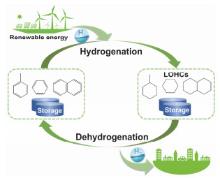
图1
"
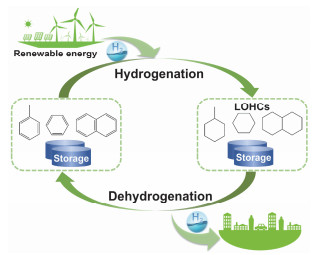
表1
"
| LOHCs | Mass hydrogen storage density (wt.%) | Melting point (℃) | Boiling point (℃) | Enthalpy of reaction (kJ∙molH2−1) | Ref. |
| Cyclohexane | 7.2 | 7 | 81 | 68.6 | [ |
| Methylcyclohexane | 6.2 | −127 | 101 | 68.3 | [ |
| Decalin | 7.3 | −30 | 187 | 66.4 | [ |
| Perhydro-dibenzyl toluene | 6.2 | −58 | 371 | 65.0 | [ |
| Perhydro-carbazole | 6.7 | 58 | 264 | 51.1 | [ |
| Perhydro-N-ethylcarbazole | 5.8 | −85 | 281 | 50.6 | [ |
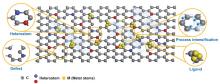
图2
"
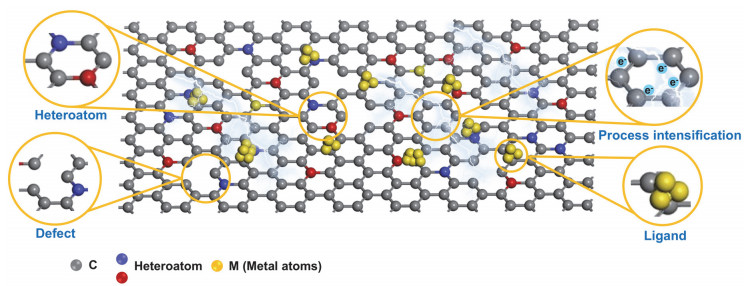
表2
"
| LOHCs | Catalyst | Temperature/℃ | Conversion/% | Hydrogen release | Ref. |
| H12-NEC | Pt/C | 180 | 90.5 a | 5.69 b | [ |
| H12-NEC | Pt/TiO2 | 180 | 63.9 a | 5.62 b | [ |
| H12-NEC | Pt/Al2O3 | 180 | 50.6 a | 5.69 b | [ |
| H12-NEC | Pt/SiO2 | 180 | 17.2 a | 3.29 b | [ |
| Decalin | Pt/AC | 300 | 83 | 880 c | [ |
| Decalin | Pt/Al2O3 | 300 | 42 | 460 c | [ |
| Methylcyclohexane | Pt/AC | 300 | 88 | 1274 d | [ |
| Methylcyclohexane | Pt/PTC-S | 300 | 84.3 | 991.5 d | [ |
| Methylcyclohexane | Pt/GAC-S | 300 | 63 | 741.1 d | [ |
| Methylcyclohexane | Pt/NPC-550-CEH | 300 | 18 | 1086 d | [ |
| Methylcyclohexane | Pt/NPC-550-IEH | 300 | 66 | 3620 d | [ |
图3
"
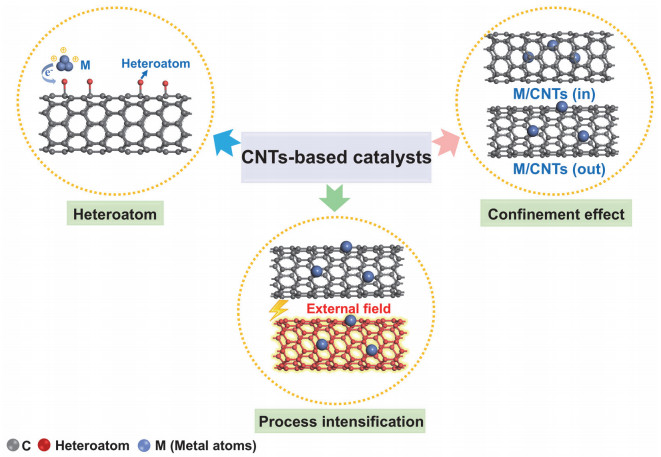
表3
"
| LOHCs | Catalyst | Temperature/℃ | Hydrogen evolution rate a | Conversion/% | Ref. |
| Decalin | Pt/CNT-N | 185 | – | 1.52 | [ |
| Decalin | Pt/CNT | 185 | – | 0.62 | [ |
| Decalin Decalin Decalin | Pt/CNTs Pt/CB Pt/CNFs | 196.6 194.1 167.5 | 320.5 251.1 102.1 | – – – | [ [ [ |
图4
"
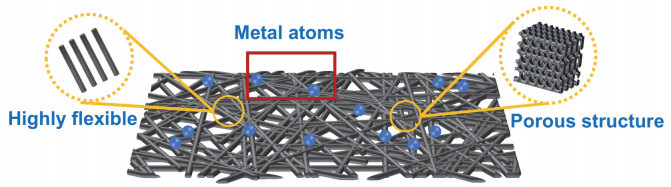
图5
"
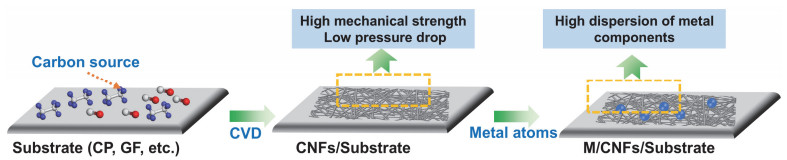
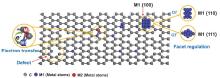
图6
"
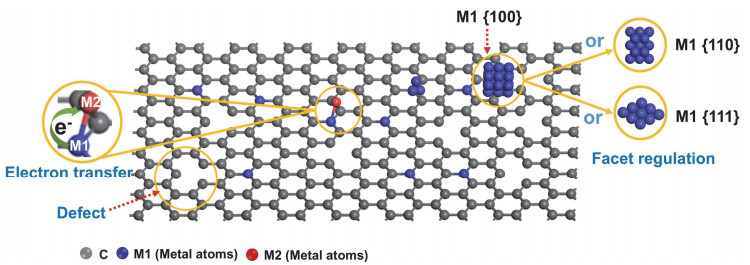
表4
"
| LOHCs | Catalyst | Temperature (℃) | Conversion (%) | Hydrogen release (wt.%) | Ref. |
| H12-NEC | Pd/rGO | 180 | 100 | 5.74 | [ |
| H12-NEC | Pd/Al2O3 | 180 | 100 | 4.64 | [ |
| H12-NEC | Pd1.2Cu/rGO | 180 | 100 | 5.79 | [ |
| H12-NEC | Pd1.2Cu0.5/rGO | 180 | 100 | 5.50 | [ |
| H12-NEC | Pd1.2Cu2/rGO | 180 | 100 | 4.82 | [ |
| H12-NEC | Pd{100} | 180 | 100 | 5.73 | [ |
| H12-NEC | Pd{110} | 180 | 100 | 4.71 | [ |
| H12-NEC | Pd{111} | 180 | 100 | 3.24 | [ |
| 1 |
doi: 10.1002/adma.202311355 |
| 2 |
doi: 10.1002/adma.202001818 |
| 3 |
doi: 10.1039/d0cs00515k |
| 4 |
doi: 10.3390/ijms25021359 |
| 5 |
doi: 10.1016/j.ijhydene.2023.04.304 |
| 6 |
doi: 10.3390/membranes11120955 |
| 7 |
doi: 10.1021/acscatal.7b04278 |
| 8 |
doi: 10.3390/en13226040 |
| 9 |
doi: 10.1021/jacs.3c01304 |
| 10 |
doi: 10.1016/j.mcat.2020.110971 |
| 11 |
doi: 10.1038/s41467-022-28607-y |
| 12 |
doi: 10.1002/adfm.202405328 |
| 13 |
doi: 10.1007/s12274-021-3932-8 |
| 14 |
doi: 10.1002/kin.21360 |
| 15 |
doi: 10.1080/10916466.2011.584103 |
| 16 |
doi: 10.1021/acscatal.2c01420 |
| 17 |
doi: 10.1016/j.apcata.2005.01.010 |
| 18 |
doi: 10.1016/j.ijhydene.2021.08.039 |
| 19 |
doi: 10.1016/j.ijhydene.2016.03.157 |
| 20 |
|
| 21 |
doi: 10.1021/acs.energyfuels.0c03085 |
| 22 |
doi: 10.1016/j.apsusc.2017.04.245 |
| 23 |
doi: 10.1021/acs.jpca.9b05715 |
| 24 |
doi: 10.1016/j.jpowsour.2018.04.011 |
| 25 |
doi: 10.1021/acsanm.1c00128 |
| 26 |
doi: 10.1021/acscatal.0c00151 |
| 27 |
doi: 10.1016/j.apcatb.2022.121169 |
| 28 |
doi: 10.1016/j.gee.2018.05.003 |
| 29 |
doi: 10.1016/j.jcat.2018.02.001 |
| 30 |
doi: 10.1016/j.fuel.2022.125732 |
| 31 |
doi: 10.1007/s12206-020-0638-x |
| 32 |
Pez, G. P.; Scott, A. R.; Cooper, A. C.; Cheng, H.; Wilhelm, F. C.; Abdourazak, A. H. Hydrogen Storage by Reversible Hydrogenation of Pi-conjugated Substrates. US7351395, 2008-04-01.
|
| 33 |
doi: 10.1016/j.fuel.2020.117896 |
| 34 |
doi: 10.1016/j.ensm.2020.12.007 |
| 35 |
doi: 10.1039/d4cc02057j |
| 36 |
doi: 10.1021/acs.jpcc.1c04783 |
| 37 |
doi: 10.1016/j.fuel.2022.125473 |
| 38 |
doi: 10.1016/j.ijhydene.2021.11.076 |
| 39 |
doi: 10.1021/acsaem.2c03630 |
| 40 |
doi: 10.3390/nano11112846 |
| 41 |
doi: 10.1016/j.jcat.2023.115233 |
| 42 |
doi: 10.1016/j.fuel.2023.128266 |
| 43 |
doi: 10.1002/anie.202305915 |
| 44 |
doi: 10.1016/j.cej.2023.148231 |
| 45 |
doi: 10.1021/acscatal.0c03286 |
| 46 |
doi: 10.1002/aenm.202200817 |
| 47 |
doi: 10.1002/aenm.202200928 |
| 48 |
doi: 10.1016/j.cej.2023.148293 |
| 49 |
doi: 10.1016/j.jcat.2023.05.011 |
| 50 |
doi: 10.1016/j.apcatb.2023.123166 |
| 51 |
doi: 10.1016/j.cej.2023.147784 |
| 52 |
doi: 10.1016/j.catcom.2023.106737 |
| 53 |
doi: 10.1016/j.fuel.2023.130758 |
| 54 |
doi: 10.1002/eem2.12240 |
| 55 |
doi: 10.1016/j.cej.2021.129027 |
| 56 |
doi: 10.1016/j.apcatb.2022.122015 |
| 57 |
doi: 10.1016/j.carbon.2020.01.025 |
| 58 |
doi: 10.1002/cssc.201801767 |
| 59 |
doi: 10.1038/s41586-023-05845-8 |
| 60 |
doi: 10.1016/j.joule.2020.08.008 |
| 61 |
doi: 10.1038/s41586-022-04568-6 |
| 62 |
doi: 10.1016/j.apcatb.2023.122837 |
| 63 |
|
|
崔国庆; 姜桂元; 徐春明; 段雪. 中国科学: 化学, 2024,
doi: 10.1360/SSC-2024-0143 |
|
| 64 |
doi: 10.1007/s11356-020-09698-w |
| 65 |
|
|
叶洪丽; 张翠; 刘双喜. 化学工业与工程, 2016, 33, 6.
doi: 10.13353/j.issn.1004.9533.20141112 |
|
| 66 |
doi: 10.1016/j.apcata.2012.03.001 |
| 67 |
doi: 10.1039/c7cy00569e |
| 68 |
doi: 10.1016/s1872-2067(08)60027-3 |
| 69 |
doi: 10.3390/catal12020211 |
| 70 |
doi: 10.1039/d1ra05480e |
| 71 |
doi: 10.1016/j.ijhydene.2021.05.074 |
| 72 |
doi: 10.1016/j.carbon.2020.06.055 |
| 73 |
doi: 10.1007/s12274-023-5771-2 |
| 74 |
|
|
王雪杰; 崔国庆; 王文涵; 杨扬; 王淙恺; 姜桂元; 徐春明. 化工学报, 2024, 75, 292.
doi: 10.11949/0438-1157.20230848 |
|
| 75 |
doi: 10.1016/j.cej.2023.142902 |
| 76 |
doi: 10.1016/j.cej.2022.138616 |
| 77 |
doi: 10.1016/j.ijhydene.2011.10.111 |
| 78 |
doi: 10.1016/j.carbon.2021.12.069 |
| 79 |
doi: 10.1016/j.apcatb.2023.122443 |
| 80 |
doi: 10.1016/j.fuel.2022.127267 |
| 81 |
doi: 10.1016/j.ces.2023.118586 |
| 82 |
doi: 10.1021/jp903799w |
| 83 |
doi: 10.1016/j.ijhydene.2020.09.225 |
| 84 |
doi: 10.1007/s11356-023-30205-4 |
| 85 |
doi: 10.1016/j.fuel.2012.12.028 |
| 86 |
doi: 10.1016/j.molcata.2010.03.005 |
| 87 |
doi: 10.1016/j.apcatb.2023.123255 |
| 88 |
doi: 10.1016/j.cep.2023.109432 |
| 89 |
doi: 10.1016/j.carbon.2013.10.071 |
| 90 |
doi: 10.1016/j.ijhydene.2017.02.161 |
| 91 |
doi: 10.1016/j.chemosphere.2021.130832 |
| 92 |
doi: 10.1016/j.jcat.2022.07.027 |
| 93 |
doi: 10.1016/j.apcatb.2023.123046 |
| 94 |
doi: 10.1016/j.jallcom.2023.171889 |
| 95 |
doi: 10.1021/ef040083v |
| 96 |
doi: 10.1016/j.cattod.2008.05.011 |
| 97 |
doi: 10.1016/j.fuproc.2007.11.010 |
| 98 |
doi: 10.1016/j.ijhydene.2015.07.093 |
| 99 |
doi: 10.1016/j.ijhydene.2016.04.072 |
| 100 |
|
|
杜亚东; 孟祥桐; 汪珍; 赵鑫; 邱介山. 物理化学学报, 2022, 38, 2101009.
doi: 10.3866/PKU.WHXB202101009 |
|
| 101 |
|
|
刘若娟; 刘冰之; 孙靖宇; 刘忠范. 物理化学学报, 2023, 39, 2111011.
doi: 10.3866/PKU.WHXB202111011 |
|
| 102 |
doi: 10.1002/advs.202201428 |
| 103 |
doi: 10.1016/j.fuproc.2023.107653 |
| 104 |
doi: 10.1016/j.carbon.2023.02.014 |
| 105 |
doi: 10.1016/j.jcou.2021.101542 |
| 106 |
doi: 10.1016/j.ijhydene.2018.02.156 |
| 107 |
doi: 10.1016/j.apcatb.2019.03.071 |
| 108 |
doi: 10.1016/j.apcatb.2020.118658 |
| 109 |
doi: 10.1038/s41467-023-38361-4 |
| 110 |
doi: 10.1038/s41467-022-34674-y |
| 111 |
doi: 10.1021/jacs.1c12261 |
| 112 |
doi: 10.1038/s41929-022-00769-4 |
| 113 |
doi: 10.3390/nano13152262 |
| 114 |
doi: 10.1021/acscatal.2c05894 |
| 115 |
doi: 10.1016/j.ces.2023.118483 |
| 116 |
|
|
刘丹; 胡艳艳; 曾超; 屈德宇. 物理化学学报, 2016, 32, 2826.
doi: 10.3866/PKU.WHXB201609141 |
|
| 117 |
doi: 10.1016/j.ijhydene.2013.04.016 |
| 118 |
doi: 10.1021/acsaem.9b01135 |
| 119 |
doi: 10.1016/j.petsci.2022.01.008 |
| 120 |
doi: 10.1016/j.colsurfa.2022.129348 |
| 121 |
doi: 10.1016/j.fuel.2021.121186 |
| [1] | 段睿智, 王小梅, 周潘旺, 刘扬, 李灿. 羟基物种在过渡金属表面碱性析氢反应中的作用[J]. 物理化学学报, 2025, 41(9): 100111 - . |
| [2] | 刘华艳, 陈逸飞, 杨梦召, 顾佳俊. 二维材料基超级电容器的容量与倍率性能提升策略[J]. 物理化学学报, 2025, 41(6): 100063 - . |
| [3] | 冯磊, 朱泽敏, 杨颖, 何宗兵, 邹家丰, 李漫波, 赵燕, 伍志鲲. 长期探寻的Au23(S-Adm)16结构及未曾预期的掺杂效应[J]. 物理化学学报, 2024, 40(5): 2305029 - . |
| [4] | 辛燕, 葛运年, 李泽中, 张桥保, 田华军. 储能电池有机电极材料改性策略研究进展[J]. 物理化学学报, 2024, 40(2): 2303060 - . |
| [5] | 罗耀武, 王定胜. 单原子催化剂电子结构调控实现高效多相催化[J]. 物理化学学报, 2023, 39(9): 2212020 -0 . |
| [6] | 刘真, 孟祥福, 古万苗, 查珺, 闫楠, 尤青, 夏楠, 王辉, 伍志鲲. 组合掺杂引入新型、多种镉配位方式增强金纳米团簇的电催化性能[J]. 物理化学学报, 2023, 39(12): 2212064 - . |
| [7] | 吴明亮, 章烨晖, 付战照, 吕之阳, 李强, 王金兰. 原子尺度钴基氮碳催化剂对析氧反应的构效关系的研究[J]. 物理化学学报, 2023, 39(1): 2207007 -0 . |
| [8] | 马明军, 冯志超, 张小委, 孙超越, 王海青, 周伟家, 刘宏. 基于微生物作为智能模板的电催化剂制备与应用研究进展[J]. 物理化学学报, 2022, 38(6): 2106003 - . |
| [9] | 刘苗苗, 杨茅茂, 舒欣欣, 张进涛. 燃料电池碳基氧还原催化剂的设计与应用[J]. 物理化学学报, 2021, 37(9): 2007072 - . |
| [10] | 熊辉, 谢歆雯, 王苗, 侯雅琦, 侯旭. 网状骨架CVD生长碳纳米管用于重盐水脱盐[J]. 物理化学学报, 2020, 36(9): 1912008 - . |
| [11] | 李超, 沈明, 胡炳文. 面向金属离子电池研究的固体核磁共振和电子顺磁共振方法[J]. 物理化学学报, 2020, 36(4): 1902019 - . |
| [12] | 史永超, 唐明学. 可充电池的磁共振研究[J]. 物理化学学报, 2020, 36(4): 1905004 - . |
| [13] | 刘太宏, 苗荣, 彭浩南, 刘静, 丁立平, 房喻. 薄膜基荧光气体传感器中的涂层化学[J]. 物理化学学报, 2020, 36(10): 1908025 - . |
| [14] | 陈明树. 催化剂活性位本质和构效关系的模型催化研究[J]. 物理化学学报, 2017, 33(12): 2424 -2437 . |
| [15] | 李路路,刘帅,章琴,胡南滔,魏良明,杨志,魏浩. 共价有机框架材料研究进展[J]. 物理化学学报, 2017, 33(10): 1960 -1977 . |
|
||